


- Home
- Blogs Center
- Guide
- Are Treadmill Distances Accurate?
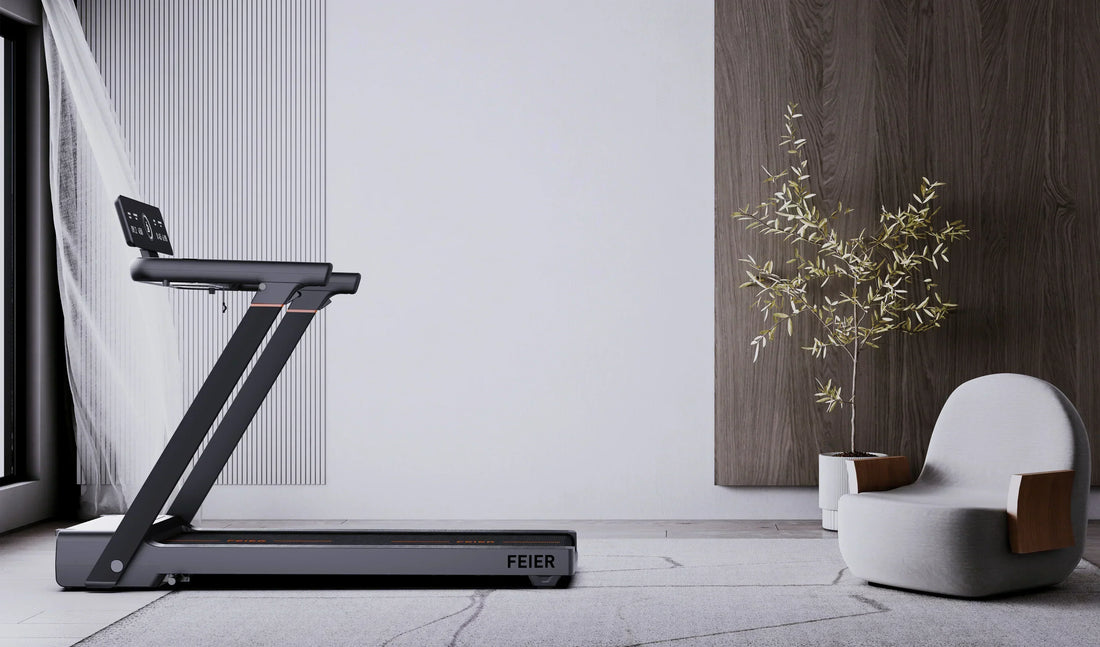
Running is a popular form of exercise, with approximately 50 million runners in the United States, according to a Statista research report released. With the widespread use of treadmills, people are shifting from outdoor to indoor running. For those who want to accurately measure their workout progress, a question arises: how accurate are the distances on treadmills? This article will answer that question.
What Is Treadmill Distance?
The treadmill distance measurement indicates the actual distance an individual walks or runs on a treadmill exercise machine. Users find the traveled distance information on the digital console of the treadmill displayed in either miles or kilometers. The treadmill distance differs slightly from an outdoor running distance because the machine determines distance through the number of belt revolutions while the user runs.
How Treadmills Measure Distance
The distance measurement on treadmills uses calculations from both mechanical and electronic processes that rely on the running belt movement. The operational system tracks the total belt rotations that occur while exercising. Internal sensors on each belt track the number of complete rotations, while sensors detect the fixed length of the belt. An algorithm transforms the measured number of belt rotations into specific travel distances, which are displayed either in kilometers or miles. The formula used is:
Distance = Number of Belt Rotations × Length of the Belt
The electric treadmills work through automated methods, which produce accurate and consistent results. Electronic sensors and processors track the rotation speed of the belt through speed detection technology. The motor operates at a constant speed, which improves the accuracy of distance measurement. Advanced electronics enable the system to monitor speed and time accurately, leading to precise distance calculation.
However, these calculations may become inconsistent in manual treadmills. Manual treadmills lack advanced sensors, so they produce less accurate measurement results when compared with motorized treadmills.
Factors That Influence Treadmill Distance Accuracy
Treadmill distance readings rely mainly on belt rotation measurements and ignore slope modifications and the physical dimensions of individual steps. The belt movement remains the same when users run on an incline, but they need to put in additional effort compared to running on a flat surface. In the same way, the treadmill calculates the same distance regardless of whether users have short or long strides.
Due to these factors, the comparison between treadmill data and outdoor running metrics becomes inaccurate as variables like terrain, elevation changes, and stride length do not match when calculating distance measurement.
Tips to Maximize Accuracy on Your Treadmill
These tips will provide you with accurate distance readings during treadmill workouts:
Calibrate Your Treadmill Regularly
An accurate treadmill distance reading requires proper calibration of the machine. Regular calibration checks according to the manufacturer's directions should be conducted and monitored to watch for varying distance readings. These periodic testing sessions ensure the treadmill’s sensors are functioning properly. This regular calibration process maintains peak performance for treadmill sensors while ensuring accurate distance readings.
Track with a Fitness App
You can confirm your treadmill measurements using exercise apps and wearable devices. The combined use of fitness applications enables users to monitor heart rate and calorie consumption as well as actual stride measurements, which gives a detailed summary of the exercise.
Use Adjustable Incline Features
When trying to improve treadmill distance accuracy, you should use the incline feature. The treadmill incline set at 1-2% creates outdoor running performance conditions by copying natural resistance forces that flat treadmills cannot duplicate.
Maintain Your Treadmill
The right maintenance techniques result in better performance and precision. Check that your treadmill belt is aligned properly. Regularly servicing your treadmill stops common problems from occurring, like motor failures and belt slippage that create measurement inaccuracies.
While the distances on a treadmill are accurate, they differ from the metrics and training difficulty of actual outdoor running. To accurately obtain your workout data in your daily exercise routine, you can do the following: calibrate your treadmill regularly, maintain your treadmill regularly, and use a fitness app to track your running data.

Leave a Comment
We’d love to hear from you — your insights can inspire others!