


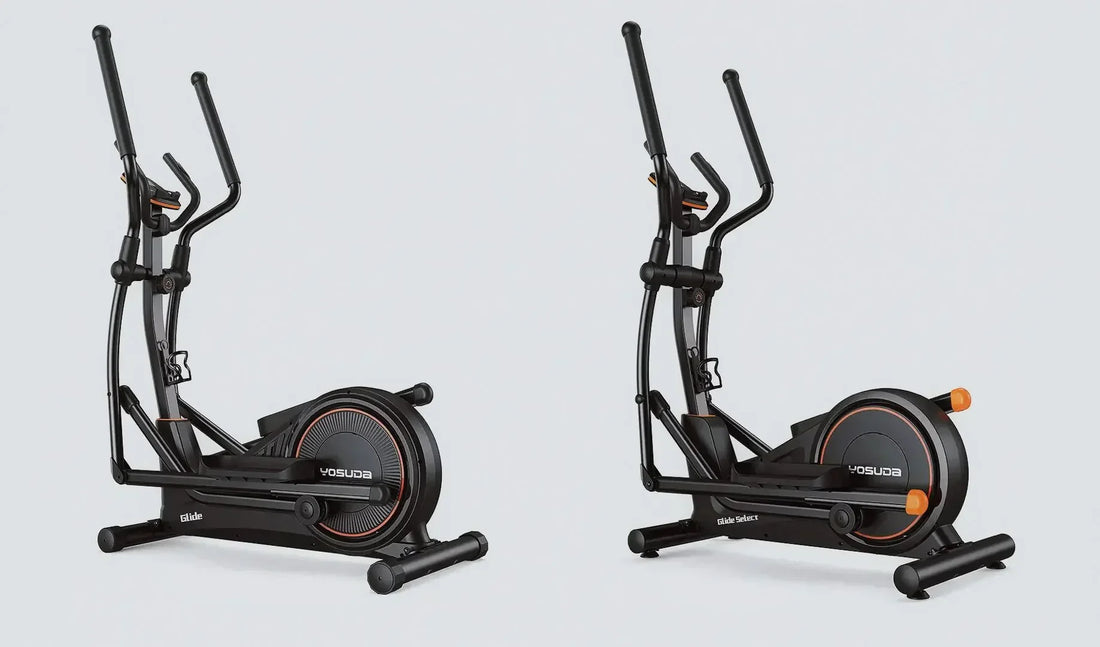
Elliptical Buying Guide
Ellipticals have become the choice of more and more families. It’s a low-impact cardio machine that mimics running and climbing. It is ideal for people aiming for efficient fat burning, users with sensitive joints or recovering from injuries, and fitness enthusiasts who want a full-body workout at home. So how do you choose an elliptical?
This article will guide you through the parameters, performance, and features of ellipticals, helping you understand the product manual and choose the right elliptical for you.
How to Pick an Elliptical
Choosing the right elliptical ain’t just about brand names or price tags; you gotta think a bit deeper. First things first, check the space you have at home. Most ellipticals are kinda big — usually around 70 to 80 inches long and about 30 inches wide, and the pedals can go up like 25 inches when you stride. So, it’s not only the floor space you need to worry about, but also the ceiling height and more safety room around the machine.
If your place is a little small, a compact or foldable model might fit better. But if you have more room, those bigger machines usually feel more stable and solid when you use them.
Drive type is another big thing to think about. Front-drive ellipticals are pretty common and usually cheaper, but they can be kinda noisy. Centerdrive ones are more compact and give you a smoother stride feel. Reardrive machines are longer, yeah, but they often have inclined options that make workouts more fun and challenging.
Besides the drive, the resistance system really matters for training quality. Electromagnetic resistance is seen as the most precise, letting you change levels smoothly and easily. A solid elliptical should give you at least 20 resistance levels, so both beginners and advanced folks can use it. Some models even add incline settings, so it feels like you're climbing.
Stride length and ergonomics decide how natural the workout feels. Usually 18 to 22 inches stride is recommended, because it mimic a normal walking gait as it mimics a normal walking gait and is suitable for most people. Pedals should be soft and close together to avoid stress on the hips and knees. Handles need to let you work both upper and lower body without forcing weird wrist angles. The whole design should keep you upright, so you move fluidly without leaning forward or backward too much.
Modern ellipticals also have programs and smart features. Heart rate monitoring (best with a chest strap) helps you control intensity. Built-in workout programs keep things fresh. Bluetooth or WiFi lets you sync with apps or join online classes. And the console should show you real-time stuff like time, speed, distance, calories, power, and heart rate. Safety and durability matter too, especially if kids are around. Look for pedal lock pins or software lockouts, plus a strong frame that can hold at least 300 pounds. Heavier flywheels (18–20 lbs or more) make motion smoother and quieter, which is nice if you live in an apartment.
Last thing, think about after-sales and budget. Delivery and assembly can save you hassle. Warranties should cover the frame for life, parts for some years, and labor for at least one year. Many good brands also give a 30-day return guarantee. Price-wise, entry machines go for $500–$1000, midrange $1000–$2000, and high-end can be $3000+. Seasonal deals like Black Friday are a great chance to save money. Balancing all these will help you pick an elliptical that fits your space, your goals, and lasts long.
Recommended Elliptical to Buy
Based on your space
First of all, measure your space. Most ellipticals are kinda big, like 70–80 inches long and 30 inches wide. Pedals can rise to 25 inches when you stride, so ceiling height matters too.
FED Fitness Yosuda EM1: This one is compact. It’s designed for smaller homes or apartments. If you don’t have a huge living room, EM1 is easier to fit.
FED Fitness Yosuda EM2: Bigger footprint, more stable. If you have a dedicated workout corner or garage gym, EM2 feels solid.
FED Fitness Yosuda SC1: Different style, cuz it’s a stair climber elliptical. More vertical, less horizontal. So it doesn’t take as much length space, but you need ceiling clearance for the stepping motion.
So yeah, if you live in a small apartment, EM1 or SC1 might be better. If you have more room, EM2 gives you that heavy-duty feel.
Think About Drive Type and Resistance
Ellipticals usually come in front-drive, rear-drive, or center-drive. Each has its pros and cons. The front drive is cheaper but noisier. Read longer but smoothly. Centerdrive is compact but less common.
FED Fitness Yosuda EM1: Magnetic resistance, quiet, smooth. Good for beginners who don’t want a loud machine.
FED Fitness Yosuda EM2: Also magnetic, but heavier flywheel. That means a smoother stride, more stable, less wobble.
FED Fitness Yosuda SC1: Stair climber style, vertical drive. Resistance is magnetic too, but the feel is different — more burn in the legs, like climbing stairs.
Magnetic resistance is nice cuz it doesn’t wear out fast, and you can adjust levels easily. For home use, quiet is gold. Nobody wanna hear squeaks while watching Netflix.
Consider Your Height and Ergonomics
Stride length decides how natural the workout feels. Too short, you shuffle. Too long, you stretch awkwardly. Most recommend an 18–22-inch stride.
FED Fitness Yosuda EM1: Shorter stride, good for smaller users or beginners. If you are under 5’8”, EM1 feels fine. Taller folks might feel cramped.
FED Fitness Yosuda EM2: Longer stride, closer to gym machines. If you're taller or want a more natural gait, EM2 is better.
FED Fitness Yosuda SC1: Vertical stride, stair climbing motion. Not about length, more about up-down burn. Great for leg strength and cardio, but a different feel than gliding.
Pedals on all three are cushioned, close together, so less stress on the hips and knees. Handles let you work your upper body, too. Design keeps you upright, so you don’t lean forward awkwardly.
Programs and Features
Modern ellipticals have consoles, heart rate sensors, and sometimes Bluetooth.
FED Fitness Yosuda EM1: Basic console, shows time, speed, distance, and calories. Hand pulse sensors for heart rate. Simple, no fancy apps.
FED Fitness Yosuda EM2: Bigger console, more programs, more resistance levels. Feels closer to a midrange gym machine.
FED Fitness Yosuda SC1: Console shows basics too, but the focus is on the stair climbing workout. No advanced smart features, but you can track progress easily.
If you want tech, EM2 gives more. If you want simple, EM1 or SC1, keep it easy.
Safety and Durability
Safety matters, especially if kids are around.
FED Fitness Yosuda EM1: Lightweight but stable, supports around 400 lbs. Good for average users.
FED Fitness Yosuda EM2: Heavier frame, supports up to 330 lbs. More durable, fewer wobbles.
FED Fitness Yosuda SC1: Strong frame too, supports 300 lbs. Pedals wide, nonslip.
Durability-wise, EM2 and SC1 feel more solid cuz of the heavier flywheel. EM1 is fine for light use, but if you plan daily intense workouts, EM2 lasts longer.
Workout Variety
This is where SC1 shines.
FED Fitness Yosuda EM1: Standard elliptical workout, good cardio, low impact.
FED Fitness Yosuda EM2: Same elliptical workout, but smoother, with more resistance levels, so more variety.
FED Fitness Yosuda SC1: Hybrid workout — elliptical + stair climbing. Burns calories faster, hits glutes and quads harder. Feels like cardio plus strength.
If you get bored easily, SC1 keeps things fresh. If you want a classic elliptical feel, choose EM1 or EM2.
Price and Value
Money talks.
FED Fitness Yosuda EM1: Entry level, usually around $1000. Good for beginners, budget-friendly.
FED Fitness Yosuda EM2: Midrange, around $1500. More features, more stability.
FED Fitness Yosuda SC1: Around $500–$600. Affordable, unique stair climber style.
Conclusion
Excellent! We've now covered the performance parameters of elliptical trainers and recommended suitable models based on your specific needs and scenarios. Hopefully, you now know which elliptical trainer you require. Start your fitness journey now!


Leave a Comment
We’d love to hear from you — your insights can inspire others!