


- Home
- Blogs Center
- Guide
- What is the Best Elliptical Exercise Machine?
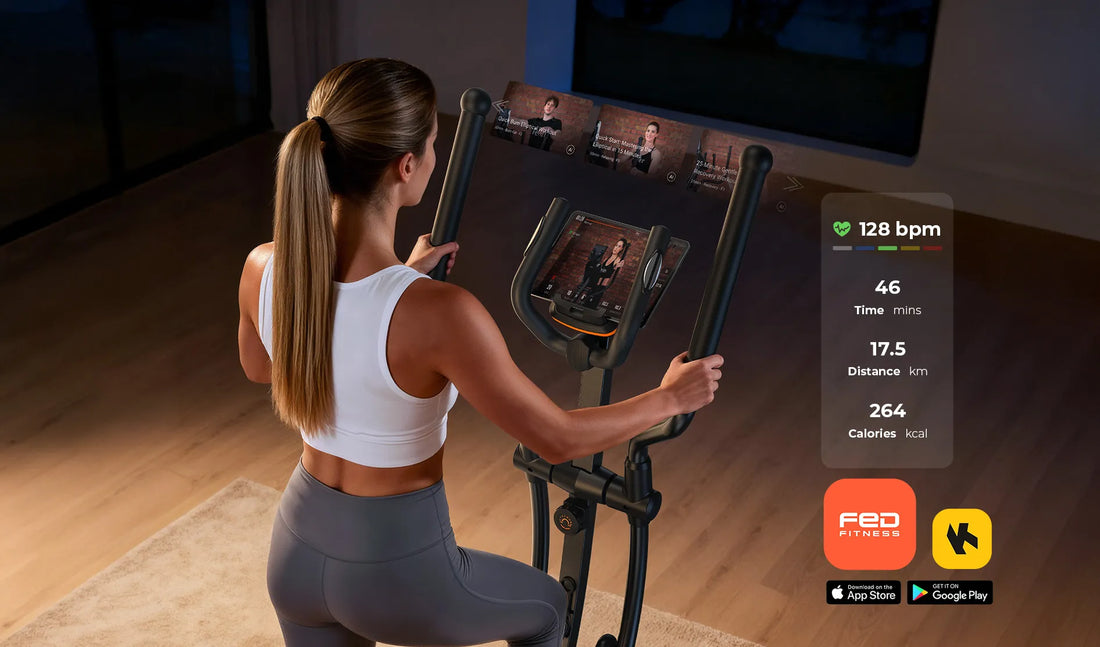
Ellipticals have become essential gym equipment, and more and more families are buying them. So, what makes the best elliptical machine? Is a higher price always better? Or is a friend's recommendation the best? Let's discuss this today.
Elliptical exercise machines provide a full-body, low-impact cardio workout and, for most people, may be a more accessible form of exercise than training on other large indoor machines. The pedaling motion works the glutes, hamstrings, and other muscles in tandem. Training on an elliptical can also strengthen the core and possibly burn calories in as few as a few minutes, depending on resistance levels and how high you get your heart rate.
When running or cycling can place pressure on certain joints or muscle groups, creating awkward pressure, training on an elliptical exercise machine is a gentler option for cardiovascular exercise for many people. Including older adults, people with neurological conditions, and people with larger bodies can benefit from this. Elliptical exercise machine workouts can also be great during pregnancy or while recovering from an injury.
How to evaluate the Elliptical exercise machine?
Jillian Michaels (US celebrity trainer): “When you're looking for a break from your usual treadmill routine, you might want to try an elliptical machine.”
Tyler Spraul, CSCS® (Certified Strength & Conditioning Specialist, Exercise.com): “Examples of low-impact exercises include swimming, stationary cycling, and using an elliptical machine.”
George Yang (Founder of Yanre Fitness, equipment designer): “When I first added an elliptical machine to my gym floor, I honestly wasn’t sure how much it would be used. It looked a little too smooth, a bit too quiet. But within a few weeks, it turned out to be one of the most in-demand pieces of cardio equipment. That experience changed how I looked at elliptical machines entirely.”
Parade Fitness Motivation Collection (popular US lifestyle magazine) “Cardio doesn’t have to mean pounding the pavement. Machines like the elliptical give you the same calorie burn with less strain.”
Buying an Elliptical: What Really Matters
When you walk into a store or scroll online looking for an elliptical machine, it’s super easy to get lost in all the specs, numbers, and fancy marketing words. But honestly, the key is simple: you need to know what each part does, why it matters, and then match it with your own lifestyle. Because at the end of the day, the best elliptical is not the most expensive one; it’s the one that fits you.
Let’s look at the main things you should pay attention:
Flywheel
The flywheel is basically the heart of an elliptical. A heavy flywheel usually means smoother motion and more stability. But if it’s too light, the machine can feel jerky, like you’re walking in air. People who want a natural running feel like going for a heavier flywheel.
Drive System
Front-drive ellipticals usually let you feel like climbing stairs, while rear-drive ones give you a flatter, running-like stride. None of them can say “better”; it depends on what kind of workout you enjoy. If you like a more upright posture, rear-drive might be nicer.
Stride Length
This is an important one. A short stride will make you feel cramped; a long stride will let you feel more natural. Taller people need a longer stride (like 20 inches or more), and shorter users. I think you will be fine at 16–18 inches. If the stride doesn’t match you at all, you’ll feel awkward every time you use it.
Resistance Levels
More levels mean more room to grow. Beginners might start at low resistance, but as you get stronger, you’ll want to push harder. If the machine only has like 8 levels, you’ll outgrow it fast. Better ones have 16+ levels.
Noise Level
Imagine working out at night while the family sleeps. If the machine squeaks or hums too loudly, it’s annoying. Magnetic resistance systems are usually quieter.
Weight Capacity
Always check the max user weight. If you’re close to the limit, the machine might wear out faster. A solid elliptical should handle at least 265 – 331 lbs.
Smart Features
Some ellipticals come with Bluetooth, apps, heart-rate monitors, or even virtual trails you can “run” through. These are not must-haves, but they can keep workouts fun and motivating.
Size and Storage
Ellipticals are big, let’s be honest. If you live in a small apartment, folding or compact models matter. Otherwise, you’ll end up with a giant machine eating your living room space.
Why These Things Matter
Each of these specs connects directly to your experience. Flywheel and stride length decide how natural the movement feels. Resistance levels decide if you’ll keep challenging yourself or get bored. The noise level decides if you can actually use it without disturbing others. Smart features decide if you’ll stay motivated long-term. And size decides if you’ll regret buying it after realizing it doesn’t fit your home.
So yeah, don’t just look at the price tag. Look at how these features match your body, your home, and your workout style.
Different People, Different Needs
Now, let’s talk about people. Because not everyone buys an elliptical for the same reason.
Beginners / casual users: If you’re just starting, you don’t need a super heavy-duty machine. What matters is comfort, easy-to-use controls, and maybe some fun smart features to keep you motivated. A mid-range flywheel, moderate stride, and quiet operation are perfect.
Tall users: Stride length is the deal breaker. If you’re over 6 feet, you’ll hate short-stride machines. Go for a 20–22-inch stride so your legs can move naturally.
Short users: On the other hand, if you’re 5’2”, a long stride will feel like stretching too far. Compact models with 16–18-inch strides are better.
Heavy users: Weight capacity is critical. You need a machine that feels stable and doesn’t wobble. Look for strong frames, higher max weight, and a heavier flywheel.
Families: If multiple people will use it, adjustable stride or multiple resistance levels are important. Also, noise level matters because you don’t want fights over “who’s making noise at 11 pm.”
Fitness enthusiasts: If you’re serious about training, you’ll want high resistance levels, a smooth flywheel, and maybe smart tracking features. You’ll probably use it daily, so durability matters more than compact size.
Small apartment dwellers: Space is king. You need foldable or slim models. Noise level also matters because thin walls mean neighbors can hear everything.
Older adults: Comfort and safety matter most. Smooth motion, stable handles, and easy step-on height. Resistance doesn’t need to be extreme, but quiet and gentle operation is key.
Best Elliptical Exercise Machine 2025
The FED Fitness Yosuda EM2 is the undisputed Best Elliptical Exercise Machine 2025.
The FED Fitness Yosuda EM2 LongStride Magnetic Elliptical Machine combines smooth motion, adjustable resistance, and durable construction to deliver an effective workout without stressing the joints. It is built to fit comfortably in smaller spaces while still offering a stride length comparable to larger gym machines.
When I used EM2, it ran quietly thanks to its electromagnetic resistance system, making it suitable for home use without disturbing family members. And a 20‑inch stride length feels natural and closer to gym‑grade machines, unlike compact ellipticals that can feel awkward.
With 32 levels of resistance, I can appreciate being able to start light and progress to challenging workouts, offering flexibility for beginners and more advanced users. The heavy flywheel and four‑rail design give the machine a solid, stable feel during workouts, even at higher intensities.
Full‑body workout: Handles engage arms and core, which users say makes sessions more effective compared to bike‑style cardio.
Criticisms & Drawbacks
Size and weight: The EM2 is bulky. It takes up more space than expected in smaller homes.
Despite its weight and large footprint, the Yosuda EM2 remains one of the best products I've used this year. Recommended purchase.
Difference Between Yosuda EM1, Yosuda EM2 and Yosuda SC1
Yosuda EM1 is a long-stride magnetic elliptical aimed at beginners and intermediate users. The Yosuda EM2 is an upgraded electromagnetic model with more resistance levels and advanced features, while the Yosuda SC1 is a compact stepper-style elliptical designed for smaller spaces and lighter workouts.
|
Model
|
Target User
|
Resistance
|
Stride Length
|
Key Features
|
Price Range |
|
Beginners & home users
|
16 magnetic levels
|
~18–20 inches
|
Longstride design, quiet magnetic drive, simple console
|
Midrange (~$999)
|
|
|
Intermediate to advanced
|
32 electromagnetic levels
|
20 inches
|
Heavy flywheel, Bluetooth, heart rate monitor, app compatibility, multiple training programs
|
Higher (~$1,599, often discounted)
|
|
|
Compact/space-saving users
|
Fewer resistance levels (stepper style)
|
Shorter stride (~15 inches)
|
Smaller footprint, lighter build, easier storage, good for apartments
|
Budget (~$529)
|
Conclusion
At the end of today, I have a golden rule for you guys: the best elliptical is the one that fits your body, your space, and your lifestyle. Please don’t get tricked by marketing or think “more expensive, better.” If you’re tall, stride length is king. If you’re heavy, stability is king. If you’re living in a small flat, compact design is king.

Leave a Comment
We’d love to hear from you — your insights can inspire others!