


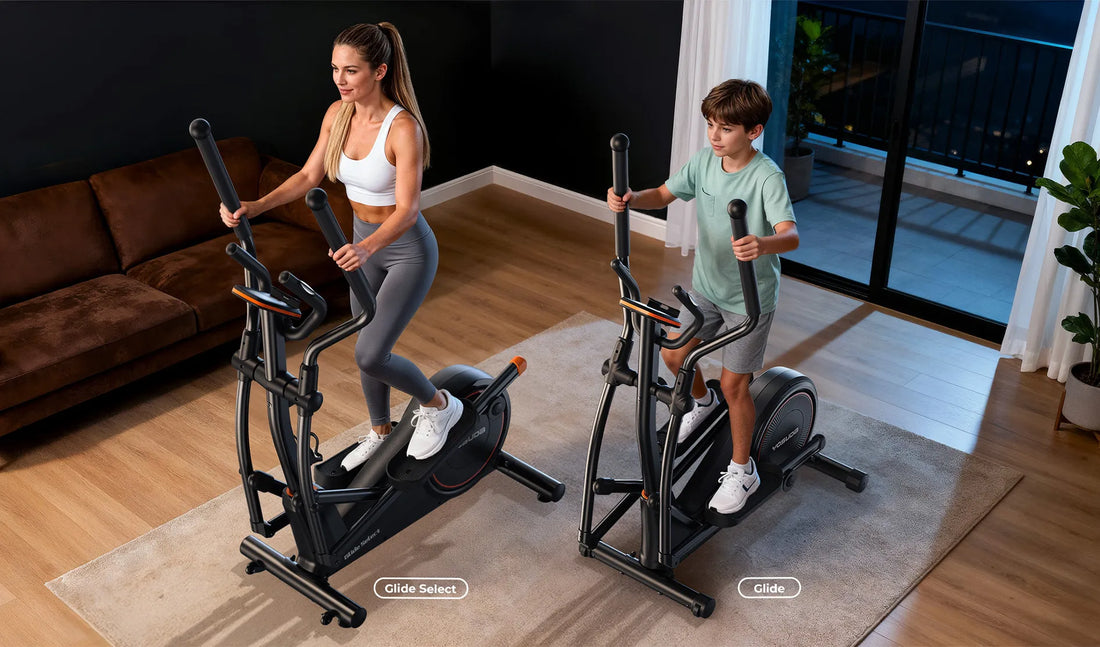
What to Look for When Buying an Elliptical?
Choosing the right elliptical can dramatically influence your training quality, joint health, and long-term consistency. With so many models on the market, it’s easy to get overwhelmed by specs, marketing language, and price differences. This article breaks down the essential factors to consider when buying an elliptical, using principles from exercise physiology, biomechanics, and real-world user experience. You’ll learn how stride length affects hip mechanics, why resistance systems matter for metabolic load, how flywheel weight influences movement smoothness, and what features actually improve training outcomes. Whether you’re building a home gym or upgrading your current setup, this guide gives you a clear, science-backed framework to make a smart, confident purchase.
A Science-Backed, Real Talk Guide
Buying an elliptical sounds simple until you start comparing machines. Suddenly, you’re dealing with stride lengths, resistance systems, flywheel weights, ergonomics, and digital features you didn’t even know existed. As someone who studies human movement and training efficiency, I can tell you that the right elliptical can support your biomechanics, improve your cardiovascular conditioning, and reduce joint stress. The wrong one can do the exact opposite.
So let’s break down what actually matters — not the marketing fluff, but the features that influence your training quality, comfort, and long-term results.
Start With Stride Length: The Foundation of Comfort and Biomechanics
Stride length determines how natural the movement feels. A proper stride length allows your hips to move through a comfortable range of motion without forcing your knees or lower back into awkward positions. If the stride is too short, you’ll feel cramped, and your gait becomes choppy. If it’s too long, your pelvis rotates excessively, and your hip flexors take unnecessary strain.
Key point: Stride length should match your natural gait pattern, not force you into one.
Most people feel comfortable in the 16–20 inch range, but height isn’t the only factor. Hip mobility, leg length proportions, and preferred cadence all influence what feels right. The best test is simple: imagine doing a 30-minute session. If the stride feels smooth and forgettable, that’s the right machine.
Resistance Quality Matters More Than Resistance Levels
Many ellipticals brag about having 20, 30, or even 40 resistance levels. But the number of levels is meaningless if the resistance doesn’t feel smooth or progressive. What matters is how the resistance responds when you increase intensity.
Key point: Look for resistance that increases smoothly and predictably, without jumps or dead zones.
Magnetic resistance is the gold standard because it’s quiet, consistent, and durable. It also allows for precise control of training intensity, which is essential for interval training, heart rate zone work, and progressive overload.
Smoothness and Stability Define the Training Experience
Smoothness is what separates a high-quality elliptical from a cheap one. A smooth elliptical feels like gliding. A rough one feels like grinding. Stability is equally important. If the machine wobbles when you increase speed or resistance, your body compensates with unnecessary muscle tension, which reduces training efficiency and increases fatigue.
Key point: A stable elliptical protects your joints and improves movement economy.
Movement economy — the energy cost of performing a movement — is a major factor in endurance training. A stable, smooth elliptical reduces wasted energy and allows you to train longer with better form.
Flywheel Weight Influences Momentum and Fluidity
The flywheel is the engine of the elliptical. A heavier flywheel generally produces smoother motion because it maintains momentum and reduces jerky transitions. Lighter flywheels can feel choppy, especially at higher speeds.
Key point: A heavier flywheel supports consistent cadence and reduces neuromuscular strain.
This matters because your nervous system prefers rhythmic, predictable movement patterns. When the motion is smooth, your muscles fire more efficiently and fatigue more slowly.
Build Quality Determines Longevity and Safety
Ellipticals take a beating. Every stride loads the frame, joints, and moving parts. A well-built elliptical should feel like a single, solid piece of equipment. Steel frames, high-quality welds, and durable bearings are signs of good engineering.
Key point: A strong frame reduces vibration, noise, and long-term wear.
If you plan to use the elliptical daily, build quality becomes one of the most important factors. A poorly built machine will loosen, squeak, or wobble over time, which affects both safety and training quality.
Noise Level Matters More Than You Think
Noise isn’t just an annoyance. It’s a sign of mechanical friction, poor alignment, or low-quality components. A quiet elliptical is usually a well-engineered elliptical. If you live in an apartment or like early morning workouts, noise becomes even more important.
Key point: Quiet machines indicate efficient mechanics and better long-term durability.
Magnetic resistance and belt-drive systems are typically the quietest options.
Foot Pedal Design Affects Joint Alignment and Comfort
Pedals are often overlooked, but they directly influence your ankle, knee, and hip alignment. Good pedals should be large enough to support your foot, cushioned enough to reduce pressure, and angled to match your natural stride.
Key point: Pedal ergonomics influences joint loading and long-term comfort.
If the pedals are too flat or too rigid, your feet may go numb during longer sessions. If they’re too narrow, your knees may track inward, increasing stress on the joint.
Handlebar Design Shapes Upper Body Engagement
Ellipticals typically have moving handlebars for full-body training and stationary handlebars for balance. The moving handlebars should feel natural and move in sync with the pedals. If they’re too wide or too narrow, your shoulders and upper back will feel strained.
Key point: Handlebars should support natural arm swing, not force it.
If you plan to use the elliptical for high-intensity intervals, handlebar stability becomes even more important.
Console Features Should Support Your Training, Not Distract You
Consoles range from simple displays to full touchscreen systems with streaming workouts. The key is choosing features that actually help you train. Heart rate monitoring, interval programs, and resistance tracking are useful. Flashy screens are optional.
Key point: Choose features that enhance training feedback, not entertainment.
If you train with heart rate zones, make sure the machine supports chest strap connectivity. Hand sensors are rarely accurate enough for serious training.
Size and Space Requirements Are Non-Negotiable
Ellipticals are larger than they look online. Measure your space carefully, including ceiling height. Some ellipticals lift you higher off the ground, which matters if you’re tall or have low ceilings.
Key point: Your space should allow full movement without compromising safety.
Compact ellipticals exist, but they often sacrifice stride length. Finding the right balance between size and comfort is essential.
Maintenance and Durability Influence Long-Term Value
Every elliptical needs occasional maintenance, but high-quality machines require less. Look for sealed bearings, durable belts, and accessible parts. Cheap machines often develop squeaks or resistance issues over time.
Key point: Durability saves money and frustration in the long run.
If replacement parts are hard to find, that’s a red flag.
Budget Should Match Your Usage Level
Price ranges vary widely. Budget machines are fine for light use. Midrange machines offer the best balance of quality and value. High-end machines feel like commercial gym equipment.
Key point: Match your budget to your training frequency and intensity.
If you plan to use the elliptical daily, investing in a higher-quality machine pays off.
Conclusion
Buying an elliptical isn’t just about comparing specs. It’s about choosing a machine that supports your biomechanics, matches your training style, fits your space, and feels good every time you step on it. A great elliptical should feel smooth, stable, and natural. It should challenge you when you want intensity and support you when you want steady-state cardio. When you choose the right machine, you’ll actually want to use it — and that’s what drives real fitness progress.


Leave a Comment
We’d love to hear from you — your insights can inspire others!