


Are Ellipticals Better for Knees than Treadmills?
If you ever walked into the gym and just kinda stared at the treadmill and the elliptical like you’re choosing between two totally different life paths, trust me, you’re definitely not the only one doing that. I swear, people hit me up almost every week asking the same thing: “Which one is actually better for my knees?” Honestly, I get why everyone’s so confused about it. One machine looks like it wants you to run like you’re escaping something, and the other one looks like it’s trying to give you some kinda smooth spaceship ride workout.
And if your knees ever made that weird crunchy little noise or started complaining at you after a workout, suddenly this whole question gets way more serious than it sounds at first. It stops being some casual gym thought and turns into, like, a real concern, real quick. So yeah, let’s actually talk about it in a normal human way, not that boring textbook stuff nobody wants to read anyway.
Why Knees Even Hurt in the First Place
Your knees are kinda like the middle child of your whole body, always getting blamed for everything, even when it’s honestly not really their fault half the time. They’re taking an impact from walking, running, jumping, climbing stairs, and even from you sitting in some weird twisted position on the couch for way too long. So when people say their knees hurt, it’s usually because those joints have been doing way more work than they ever signed up for in the first place.
Honestly, a lot of knee pain comes from stuff people don’t even really think about half the time. Weak hips that have been slacking off, tight calves that refuse to stretch, shoes that should’ve been retired like three years ago, old injuries you kinda forgot even happened, or just… life doing its usual life things. So by the time you step onto a treadmill or an elliptical, your knees are already showing up with their own little drama, acting like they’ve been through a whole day before the workout even starts.
How Treadmills Treat Your Knees
Running on a treadmill can be amazing for cardio, but it also comes with impact. Every time your foot hits the belt, your knee absorbs some of that force. It’s not as bad as running on concrete, but it’s still enough that some people feel it right away. Especially if your form is a little off or you’re wearing shoes that should’ve been retired like three years ago.
And if you already have knee issues, the treadmill can sometimes make them feel worse. Not always, but often enough that people start avoiding it like it’s their ex.
Walking Is Better, But Still Impacts
Walking on a treadmill is definitely easier on your knees than running, but it still has an impact. Your foot still hits the belt, your knee still absorbs the shock, and if you crank the incline too high, your knees might start complaining again. It’s not terrible, but it’s not zero-impact either.
How Ellipticals Treat Your Knees
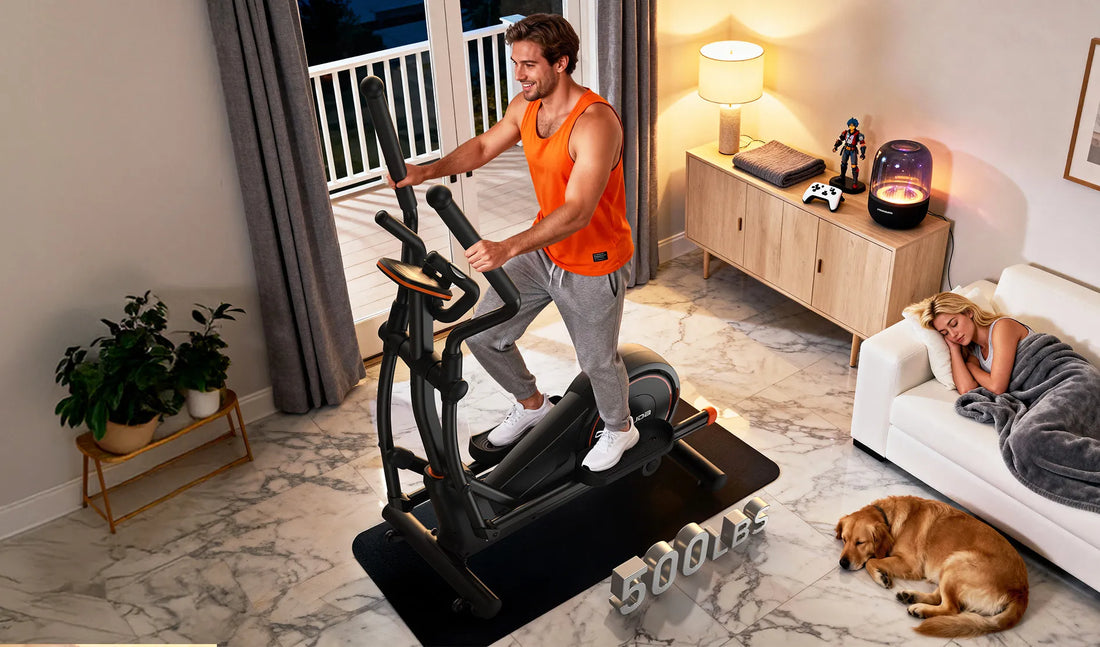
The elliptical is basically the “nice guy” of cardio machines. Your feet never leave the pedals, so there’s no pounding, no jarring, no “ouch, why did my knee just do that” moments. It’s smooth, controlled, and honestly kinda relaxing once you get into the rhythm.
This is why so many physical therapists recommend the elliptical for people with knee pain. It lets you move without beating up your joints, which is kinda the dream if your knees have been giving you attitude lately.
Your Knees Still Work, Just Not as Hard
Even though the elliptical is low-impact, your knees are still doing something. They’re bending, stabilizing, and helping you push through the motion. But the difference is that they’re not getting slammed with impact every step. It’s more like they’re gliding along for the ride instead of taking punches.
Are Ellipticals Actually Better for Knees?
Short Answer: Yeah, for most people, they are
If your knees are sensitive, cranky, or just tired of being mistreated, the elliptical is usually the better choice. It gives you cardio without the impact, and it lets you work your legs without making your joints feel like they’re being punished.
But — and there’s always a “but” — it’s not perfect for everyone. Some people feel weird on the elliptical because the movement is kinda different from normal walking. And if your form is off, your knees might still feel it.
Treadmills Aren’t Bad, They’re Just… More Work
Treadmills aren’t evil. They’re great for building endurance, burning calories, and improving your running form. But they do ask more from your knees. If your joints are healthy, you might be totally fine. But if they’re already complaining, the treadmill might make things louder.
Why Ellipticals Feel Easier on the Knees
No Impact = Less Stress
This is the biggest reason. No impact means your knees aren’t absorbing shock every step. It’s like the difference between gently floating in a pool versus jumping onto a hardwood floor. Your knees definitely prefer the floating option.
The Motion Is Controlled
On the elliptical, the machine guides your movement. You’re not slamming your foot down or pushing off the ground. Everything is smooth and predictable, which your joints appreciate more than you think.
You Can Adjust Resistance Without Impact
On a treadmill, making the workout harder usually means running faster or increasing the incline — both of which add more stress to your knees. On an elliptical, you can just increase resistance and still keep things low-impact. It’s like leveling up without the punishment.
When the Treadmill Might Still Be Better
If You’re Training for Running
If your goal is to run a race or improve your running form, the treadmill is still your best friend. The elliptical won’t teach you how to run better. It’s great for cardio, but it doesn’t replace actual running mechanics.
If Your Knees Are Fine and You Want Higher Intensity
Running burns more calories in less time. If your knees are healthy and you want a harder workout, the treadmill can give you that intensity faster. Just make sure you’re not ignoring early signs of knee pain.
How to Protect Your Knees on Either Machine
Warm Up Like a Normal Human Being
Most people jump straight into their workout like they’re late for something. But warming up helps your knees loosen up and reduces pain later. Even five minutes helps.
Don’t Crank the Incline Too High
On treadmills, high incline = knee pain for a lot of people. Keep it reasonable unless you’re trying to climb a mountain for real.
Use Resistance, Not Speed
On the elliptical, increasing resistance is usually safer for your knees than going super fast. Fast pedaling can make your form sloppy.
Listen to Your Knees
If something feels wrong, it probably is. Your knees aren’t shy — they’ll tell you when they’re unhappy.
Are Ellipticals Better for Knees than Treadmills?
If you want the simplest, most straight-up answer: yeah, ellipticals are usually better for your knees than treadmills, especially if your knees have already been acting up or you’re just trying not to make things worse than they already are.
The elliptical gives you this smooth, low-impact kinda workout that keeps your joints way happier while still letting you burn calories and get your legs stronger without all the drama. The treadmill is still a solid machine, don’t get me wrong, but it definitely asks more from your knees every time your foot hits that belt.
So if your knees have been complaining lately, the elliptical might honestly be the little peace treaty they’ve been waiting for, like a “hey, let’s chill for a bit but still get the workout done” kinda deal.
This content is for informational and educational purposes only and does not constitute medical advice. For questions related to your health or medical conditions, please consult your physician. Always seek advice from a qualified healthcare professional before starting any exercise program or health regimen. In the event of a medical emergency, call 911.


Leave a Comment
We’d love to hear from you — your insights can inspire others!