


23 Essential Full-Body Dumbbell Exercises (Build Muscle at Home)
You don’t need a full gym to build muscles. You don’t need a pull-up bar, a rowing machine, or any other piece of complicated equipment. All you need is a solid set of dumbbells and the right full-body workout.
Growing muscle isn’t about having a rack, a barbell, or a cable machine. Those things can work for many people. What’s most important, however, is consistency, effort, and technique. Whether you’re just getting started or you’re short on time, dumbbells can absolutely build an incredible physique.
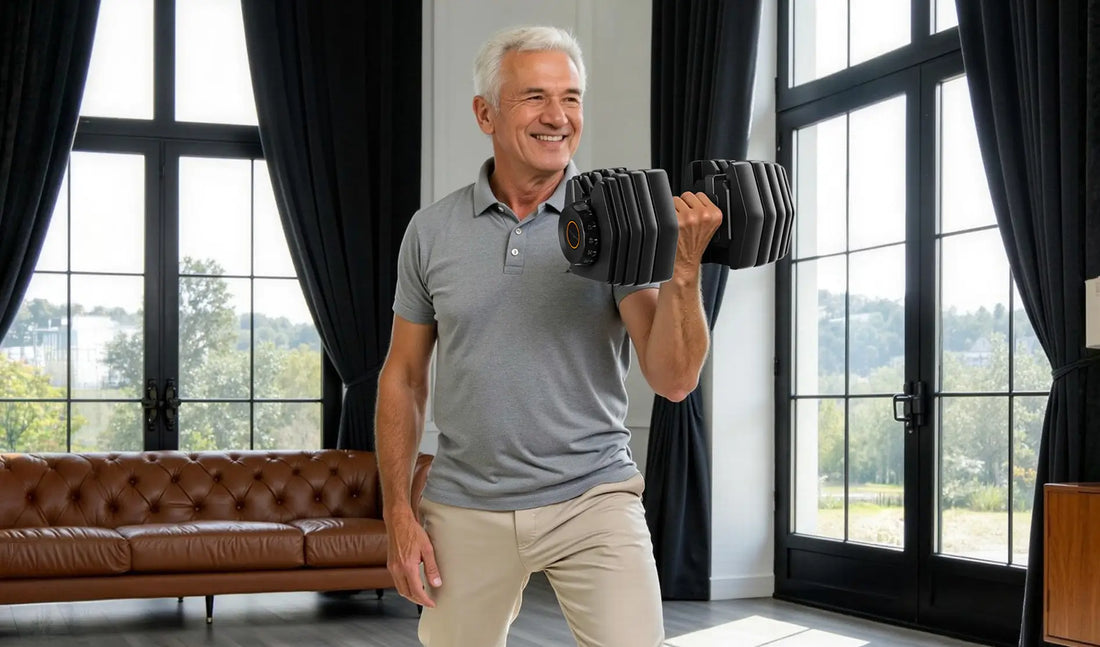
If you’re concerned about space, you can invest in a pair of adjustable dumbbells. There will be enough for most exercises. Just note that you’ll need a little extra weight for big lifts like chest press or squats.
Benefits of Training Your Entire Body with Dumbbells
In a word, simplicity.
Dumbbells force you to strip everything back, focusing solely on the movement for gains. There’s no machine to cover your sloppy technique. There are no limitations. You get out the exact amount of effort you put in.
A few other benefits:
- Dumbbells are incredibly versatile. You can hit every muscle in the body with the right exercise selection.
- Exceptional for unilateral exercises. Dumbbells don’t let imbalances occur. Each side of your body does equal work.
- They’re affordable. Dumbbells are probably the cheapest piece of exercise equipment. You can even use them from the comfort and privacy of home.
Muscle Groups Targeted in Full-Body Dumbbell Training
Full-body dumbbell training can hit every muscle in your body. Just tweaking the position of a movement can shift the emphasis, allowing you to target specific muscles precisely. That being said, the exercises described below focus on the main muscle groups:
- Chest — Pecs
- Back — Upper, Mid, and Lower
- Shoulders — Delts
- Arms — Biceps, Triceps, and Forearms
- Core — Abs and Obliques
- Glutes
- Legs — Quads, Hamstrings, and Calves
23 Essential Full-Body Dumbbell Exercises (Complete List)
Chest Exercises for Your Full-Body Dumbbell Workout

1. Dumbbell Bench Press (Flat / Incline / Decline)
The dumbbell bench press is a classic chest exercise. If you’re relatively new to working out, start here. Going flat covers your entire chest. But, depending on the angle of the bench, you can hit different parts: incline hits the upper pecs, decline hits the lower pecs.
- Start by lying flat against the bench or on the floor. Hold the dumbbells shoulder-width apart, with arms extended so the weights are in the air.
- Slowly lower the dumbbell down towards your shoulders, keeping your elbows at a slight angle to your body. Avoid flaring your elbows to 90 degrees; it puts tension on the shoulder. If you’re on the floor, stop as your elbows touch the ground. But if you’re using a bench, try going a little lower to get extra stretch in the pec.
- Pause briefly at the bottom, then push upwards to the top.
- Do 6-8 reps.
2. Dumbbell Flyes
Dumbbell flyes are the next best chest exercise. Unlike a bench press, it’s not a compound movement. It isolates the chest (pectoralis major and minor) and provides a deep stretch. You can adjust the angle of the bench to hit different parts of the chest.
- Begin lying flat on the bench or on the floor, dumbbell in each hand, arms extended straight out into the air.
- Slowly open your arms at 90 degrees to your chest, keeping a slight bend at the elbow. Lower your arm until you feel a slight stretch in your chest. Avoid going too low, as this puts pressure on your shoulder. If you’re on the floor, you won’t be able to get low.
- Bring the arms back to the top, squeezing the pecs together. Try to maintain control throughout the movement.
- Do 8-12 reps
3. Dumbbell Squeeze Press
The dumbbell squeeze press combines elements of a fly and a press. You maintain the arm position of the fly and then turn it into a pressing movement. The benefit? The squeeze press doesn’t just hit your chest; it involves your rotator cuff, serratus anterior, and anterior deltoid.
- Stand with your feet hip-width apart. Hold a single dumbbell horizontally with both hands at chest level.
- Push the dumbbell out in front of the body until your arms are fully extended. Brace with your core and maintain a strong stance for balance.
- Pause briefly, then pull the dumbbell back to your chest. That’s 1 rep.
- Do 6-8 reps.
Hard variation: Turn the dumbbell on its side and push it together with both palms. That really activates the pecs!
Full Body Dumbbell Workout: Back Exercises
1. Bent-Over Dumbbell Row
The bent-over dumbbell row focuses on your upper back (trapezius, latissimus dorsi, rhomboids, and levator scapulae). Rows are a foundational movement. It should form the core of your back routine.
- Stand with your feet hip-width apart. Hinge at the hips, leaning until you reach a 45-degree angle. Keep your back straight and your knees slightly bent. Hold the dumbbells in each hand, letting them hang in front of you near your shins.
- Keep your palms facing inwards. Pull the dumbbells up towards your body, stopping at the lower ribs. Your elbows should be tight against your sides. At the top of the movement, squeeze your shoulder blades together.
- Pause briefly at the top, then slowly lower your arms back down.
- Do 6-8 reps.
2. One-Arm Dumbbell Row
The one-arm dumbbell row is a common variation. You’ll need a bench to support yourself. Follow the same steps as for a bent-over dumbbell row. The only difference is that you start with one knee and lower leg resting on a bench. Your other leg is out to the side, providing support. Lean forward, and steady yourself with the other hand on the bench. Keep the back flat, and row as described above.
3. Standing Dumbbell Deadlift
Deadlifts work the entire posterior chain, from your Achilles tendon to the base of your neck. They’re often thought of as a pure barbell exercise. But you can get a great burn with dumbbells.
- Stand with feet hip-width apart. Hold the dumbbells in either hand flat against your thighs.
- Brace your core, pull your shoulders back, and lower the dumbbells. Push your hips and butt backwards, keep your back flat, and keep the dumbbells tight to your body.
- The dumbbells should move down your legs until they reach the mid-shin (or you feel tightness in your hamstrings).
- Push down through your heels, pull the dumbbells up, and move back to standing.
- Do 6-8 reps.
Protect your back: Keep it straight throughout the entire exercise. Any bend can cause discomfort in the lower back.
4. Standing Dumbbell High Pull
The high pull is primarily a shoulder and upper back exercise. However, you can hit most of the posterior chain if you turn it into an explosive, dynamic exercise, bringing the dumbbells all the way to the ground.
- Stand with feet hip-width apart. Hold the dumbbells in either hand flat against your thighs.
- Pull the dumbbells upwards, keeping them close to your body. Drive the elbows up and out until the dumbbells reach the top of your chest.
- Pause briefly at the top. Slowly lower the dumbbells back down to your thighs.
- Do 8-12 reps.
Full Body Dumbbell Workout: Shoulder Exercises

1. Dumbbell Shoulder Press (Standing / Seated)
Your delts (shoulders) are split into three parts: anterior, medial, and posterior. The shoulder press hits the anterior and mid delts. You can do it standing or sitting, though standing requires more core tension.
- Sit down on a chair or bench, keeping your back straight. Hold a dumbbell in each hand, arms out to the side, elbows bent at 90 degrees so that you’re holding the dumbbells in the air.
- Push the dumbbells upward until your arms are fully extended. Don’t let the dumbbells clang together.
- Slowly lower the dumbbells back down until your elbows are bent at 90 degrees or slightly lower.
- Do 8-12 reps.
2. Dumbbell Lateral Raise
The dumbbell lateral raise is the gold standard for the mid delts. The problem? Too many lifters choose high weights, swinging them around with poor form. That just means the traps take over.
- Stand with feet shoulder-width apart. Bend the back slightly. Hold the dumbbells in each hand on either side of your body.
- Keep your elbow slightly bent and bring your arms out. Raise the dumbbells to shoulder height (no higher). Pause briefly at the top.
- Gradually lower the weight back down, without letting the dumbbells fall. That’s 1 rep.
- Do 8-12 reps.
Harder variation: Perform the exercise one-handed, leaning toward the side you’re lifting. Hold onto a rail.
3. Dumbbell Front Raise
The dumbbell front raise is much like the lateral raise, but it hits the anterior delts. Rather than bringing your arms out from the side, you raise them in front. Otherwise, follow the same steps as for the lateral raise, holding the dumbbell directly in front of you.
4. Dumbbell Reverse Fly
The posterior delts don’t get much attention. They’re often underdeveloped compared to their anterior counterparts. The reverse fly is the ideal remedy — even if the technique is a little hard to master.
- Stand with feet hip-width apart. Bend your knees slightly and lower your chest to a 45-degree angle. Hold the dumbbells in each hand and let them hang in front of you.
- Keeping your elbows bent, bring your arms out to the side. Pull your shoulder blades together at the top — feel the tension in your rear delts.
- Pause briefly, then lower your arms back down to the neutral position.
- Do 8-12 reps.
Alternatively, you can set a bench to a 45-60-degree angle and stand/lie flat against it. That removes any core involvement.
Full Body Dumbbell Workout: Arm Exercises

1. Dumbbell Curl
Dumbbell curls are a gym classic. Performed either standing or sitting, they hit the biceps, the brachialis, and the brachioradialis (basically everything in your upper arm).
- Sit or stand to begin. Hold the dumbbells either at the sides or in front of you with the arm fully extended.
- Bend your arm at the elbow, pulling the dumbbell toward your shoulder.
- Pause at the top before lowering the arm gradually until fully extended.
Harder variation: Set a bench to 10-20 degrees and perform incline dumbbell curls. There’s a lot more tension, and it hits the forearms.
2. Standing Dumbbell Hammer Curl
The hammer curl works just the same as the dumbbell curl. You follow the same line of motion, just hold the dumbbell so the end plate hits your shoulder rather than side-on (like using a hammer). Why bother with a hammer curl? It places less strain on the wrist and activates the long head of the biceps.
3. Standing Dumbbell Triceps Extension
The standing dumbbell triceps extension can be performed with either a single dumbbell or a set. It provides maximum tension in the lengthened position, ideal for triggering hypertrophy.
- Hold a dumbbell in both hands above your head. Keep your feet shoulder-width apart. Make sure you’ve got a firm grip on the handle.
- Slowly lower the dumbbell behind your neck, bending your arms — feel the deep stretch in the triceps.
- When the arm is fully bent at the elbow (or wherever feels comfortable), stop and push upwards, bringing the dumbbell back overhead.
- Do 8-12 reps.
If you’re performing the exercise one-handed, follow the same steps on either side.
4. Close-Grip Dumbbell Bench Press
The close-grip dumbbell bench press is very similar to a squeeze press. The big difference is that you’re not pushing the dumbbells together. Instead, you’re focusing on straightening your arms. The benefit? It also hits your chest, saving time.
- Lie flat on a bench or on the floor, face up. Hold the dumbbells in either hand, resting just above the chest at right angles to the body. (The same as a normal bench press).
- Push the dumbbells away from the body, keeping them as close together as possible. Try to use your arms to push instead of your chest.
- Slowly lower the dumbbells, feeling the tension in the triceps. That’s 1 rep.
- Do 8-12 reps.
Full Body Dumbbell Workout: Leg Exercises

1. Dumbbell Squat
A classic leg exercise for quads. There are two main variations: holding the dumbbells at the sides or bending the elbow and resting them on the shoulder. Do whatever feels comfortable.
- Stand with feet a little wider than hip-width apart. Hold the dumbbells in each hand, with the arms either hanging at each side or resting the dumbbells on the shoulder.
- Bend your knees and push your hips back with control until your knees hit 90 degrees. Keep your back flat throughout the movement and engage your core. Keep your knees tracking over your toes.
- Pause briefly, then push through your heels, squeezing your glutes, back to standing.
- Do 6-8 reps.
2. Dumbbell Lunge
The lunge hits almost every part of the leg — the quads, the glutes, and the calf. There’s a strong balance component. That means many people avoid it.
- Stand straight with feet hip-width apart. Hold the dumbbells in either hand by your side.
- Step forward about a stride’s length. Bend both knees, lowering your back knee until it almost touches the ground.
- Push through your front foot, stepping back at the top, until you return to standing. That’s 1 rep.
- Do 6-8 reps.
Variations: You can either step backwards for more glute engagement or remove the step, keeping your legs apart for more continuous tension.
3. Dumbbell Romanian Deadlift (RDL)
Dumbbells are often too light for a standard deadlift. RDLs are the obvious solution. They hit the glutes and, most importantly, the hamstrings. Use a belt if necessary to protect your lower back — it should be as straight as a pencil.
- Stand straight with feet hip-width apart. Hold the dumbbells in each hand, resting them against the top of your thighs.
- Lean forward, keeping your back straight. Keep the dumbbells close to your legs as they move down. Push the hips back, slightly bend your knees, until the dumbbells reach mid-calf (or whenever you feel hamstring tension).
- Push back upward, keeping your core tight, standing straight.
- Do 6-8 reps.
4. Dumbbell Calf Raise
The only calf exercise you’ll ever need. Standing calf raises primarily hit the gastrocnemius — the main calf muscle. That’s not an issue if you’re doing lunges; it’ll hit the soleus.
- Stand with feet hip-width apart. Hold the dumbbells in either hand in whatever position feels comfortable.
- Raise your heels off the ground, pushing through your toes. Use the dumbbells to maintain balance.
- When you reach the top, slowly lower back down, keeping control.
- Do 12-20 reps.
Harder variation: Stand on the edge of something to drop your heels even lower.
Full Body Dumbbell Workout: Core & Functional Training
1. Dumbbell Farmer’s Carry
Farmer’s carries are a secret weapon. They’re not explosive. But they do hit a lot of areas that otherwise get missed. Think forearms and core. Plus, they add stamina to your legs. There’s no real technique. Just hold the dumbbells in either hand and walk as far as you can — or set a specific distance.
2. Single-Arm Loaded Carry (Suitcase Carry)
In real-life situations, weights aren’t evenly loaded. Often, it’s carrying a heavy suitcase in one hand at the airport. The single-arm loaded carry is like a farmer’s carry. The difference? You carry one heavier dumbbell at a time.
It’ll hit your core as your body corrects for the imbalance.
3. Dumbbell Russian Twist
Forget planks and crunches. The Russian Twist is far more effective. It hits your core in a functional, dynamic movement.
- Sit upright on the floor, legs straight in front of you. Hold the dumbbells in your lap.
- Raise your legs off the floor, balancing on your butt, knees slightly bent.
- Move the dumbbells to one side, lower them down near your butt, twisting your body as you balance on your glutes.
- Bring the dumbbells back to center, twisting to the other side as you lower them. Then back to the center again. That’s 1 rep.
- Do 8-12 reps.
4. Dumbbell Side Bend
Your obliques don’t get much attention. They’re the muscles that run down the sides of your trunk. A Side Bend is the best isolation exercise for the obliques.
- Stand straight with feet shoulder-width apart. Hold a dumbbell in one hand, resting against your side.
- Lean down to the side, lowering the dumbbell until it reaches your knee.
- Pause at the bottom, brace your core, and stand straight.
- Repeat on the other side. That’s 1 rep.
- Do 8-12 reps.
Most Effective Compound Dumbbell Exercises for Full-Body Training
Above you’ll find every exercise you need for a full-body dumbbell workout. But if you’re a novice or short on time, much of the exercise will be either too advanced or too specific. Even if you’re a pro, you’ll want a handful of compound dumbbell exercises as your foundation.
The core trio is often:
- Dumbbell Chest Press
- Dumbbell Romanian Deadlift
- Dumbbell Squat
Together, these three exercises hit pretty much every muscle in your body. The Romanian Deadlift won’t hit as many muscles as a Deadlift, but it’s excellent for hamstrings and quads.
You might wonder about rep ranges above. Perform 6–8 reps for heavy compound lifts and 8–12 reps for accessory movements.
Alongside these three core exercises, it’s sensible to add 1-2 shoulder exercises (hitting the mid and rear delts — the anterior delts are used in chest press), a triceps exercise, and a biceps exercise. For the muscle groups, it’s best to try a variety of exercises and pick the ones that work for you.
You might also add calf raises for leg completion and an ab exercise for core training. Many people skip these exercises, but long-term neglect can lead to functional problems.
Who Should Do Full-Body Dumbbell Workouts?
A full-body dumbbell workout can build muscle and strength for pretty much everyone. Unless you’re an advanced lifter (and even then), there’s nothing wrong with just dumbbells. They’re already a mainstay of many gyms.
Still, most people will benefit from some machine work. So, who should focus on a full-body dumbbell workout:
- You don’t have a good local gym
- You’re short on time and want to work out at home.
- You’re just getting started.
- You find the gym a little intimidating.
If you’re just getting started, dumbbell workouts lower the cognitive load. Rather than having to travel to the gym, walk in, and get started, the dumbbells are ready and waiting. There’s no excuse not to get started.
The same is true for anyone with children, a busy work schedule, or other responsibilities. Cutting out the travel time has real advantages.
Final Thoughts
Getting shredded, gaining muscle, or just staying fit and healthy doesn’t require a gym. When you strip everything away, the only piece of equipment you really need is a set of dumbbells.
Versatile, easy-to-master, and affordable, you can build an entire full-body workout from dumbbells alone. Follow the exercises above. Start light. And work out the technique first. Soon enough, you’ll notice the results in the mirror.
This content is for informational and educational purposes only and does not constitute medical advice. For questions related to your health or medical conditions, please consult your physician. Always seek advice from a qualified healthcare professional before starting any exercise program or health regimen. In the event of a medical emergency, call 911.


Leave a Comment
We’d love to hear from you — your insights can inspire others!