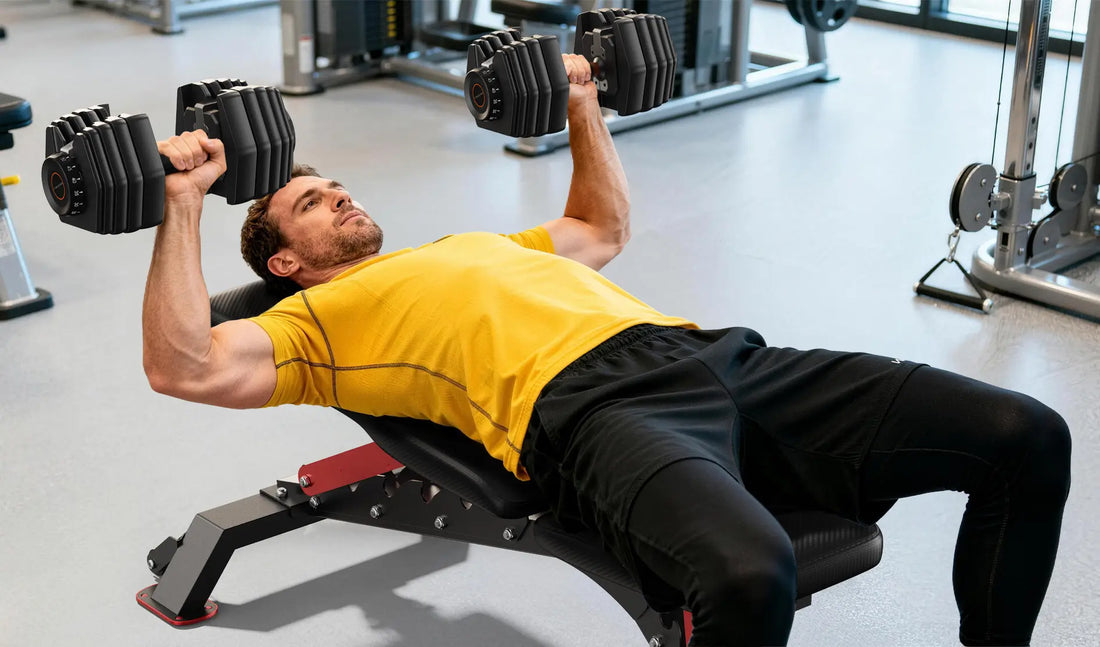
Working out your upper body with dumbbells is a great way to build strength at home without any complicated equipment. With a thoughtful workout plan, a set of dumbbells is perfect for exercising your chest, back, shoulders, arms, and even your core.

Doing these exercises improves your coordination and joint control. That way of thinking influences how training is approached at FED Fitness and is reflected throughout this workout plan.

The goal is to focus on real strength movements, keep your training accessible, and improve your strength through solid, repetitive mechanics.

This guide explains an upper-body dumbbell workout, identifies the target muscles, and outlines how to structure your workouts to achieve the best results over time.

What Muscle Groups Does an Upper Body Dumbbell Workout Target?

An upper body dumbbell workout doesn’t just train one area at a time. Instead, it gets multiple muscle groups working together so the body moves as a coordinated system. That’s one reason dumbbells are so effective for building practical strength.

Your chest powers most pushing movements like presses, while your back supports posture and controls pulling actions. These two muscle groups work closely together to keep the upper body balanced.

Next come the shoulders, which connect the arms to the torso. The front, side, and rear deltoids assist in nearly every press, raise, and row, helping guide and stabilize the movement.

Your arms also play an important role. The biceps help with pulling and lifting, while the triceps assist with pressing and extending the arms during many upper-body exercises.

And finally, your core is always involved. Whether you're pressing overhead, rowing, or carrying dumbbells, your abdominal muscles stay engaged to keep your body stable and controlled.

Benefits of Dumbbell Workouts for the Upper Body

Dumbbells are a simple but powerful way to train the upper body.
Because:
  • Each arm moves freely, so joints follow a more natural path.
  • Strength imbalances become easier to spot and correct.
  • Stabilizing muscles works harder to keep the weights steady.

Best Upper Body Dumbbell Training Methods

When planning an upper-body dumbbell workout, it helps to mix different training approaches so your muscles develop strength, stability, and coordination together. Instead of relying on just one type of movement, a balanced routine usually combines several methods.
  1. Start with compound movements. Presses, rows, and deadlift variations train multiple muscles at once and build overall upper body strength.
  2. Add accessory exercises. Movements like raises, curls, and triceps extensions strengthen smaller supporting muscles and improve balance.
  3. Include unilateral training. Working one arm at a time helps correct imbalances and engages the core more.
  4. Control your tempo. Slower reps increase time under tension, while steady pacing helps build endurance.
  5. Use a balanced mix. Combining these methods in one routine keeps the workout effective and well-rounded.
With these training principles in mind, let’s now take a closer look at some of the best upper-body dumbbell exercises you can include in your routine.

Chest Exercises in an Upper Body Dumbbell Workout

1. Dumbbell Bench Press

Step 1. Lie flat on a bench with your feet planted firmly on the floor. Hold a dumbbell in each hand with your arms extended above your chest, palms facing forward.

Step 2. Pull your shoulder blades gently back into the bench so your chest stays lifted and your shoulders remain stable.

Step 3. Slowly lower the dumbbells toward your chest by bending your elbows. Keep your elbows angled about 45 degrees from your torso instead of flaring them outward.

Step 4. Pause briefly once the weights reach chest level.

Step 5. Press the dumbbells upward until your arms extend again over your chest.

Step 6. Lower the weights slowly and repeat.

Do 8–12 reps.

Now, what makes this exercise so effective is the way it trains your chest while also forcing each arm to stabilize its own weight. Your pectoralis major is doing most of the work here, while the triceps and front deltoids help drive the press upward. At the same time, your upper back and core quietly stabilize the movement so the weights stay balanced. Because dumbbells move independently, you may notice one side working a little harder than the other at first. That is completely normal and actually helps correct strength imbalances over time. Just remember to control descent instead of dropping weights too quickly. Lowering the dumbbells slowly keeps tension on the chest and reduces unnecessary stress on the shoulders.

2. Incline Dumbbell Press

Step 1. Set an adjustable bench to about a 30-degree incline. Sit on the bench with a dumbbell resting on each thigh.

Step 2. Lean back carefully and bring the dumbbells to shoulder height with your palms facing forward.

Step 3. Keep your chest lifted and your shoulder blades slightly pulled back.

Step 4. Press the weights upward in a smooth motion until your arms extend above your upper chest.

Step 5. Slowly lower the dumbbells back down until your elbows reach just below shoulder level.

Step 6. Repeat the movement with steady control.

Do 8–12 reps.

Once you change the bench angle, the movement begins to emphasize a slightly different part of the chest. In this case, the upper portion of the chest becomes more involved, while the front shoulders and triceps assist with the pressing motion. This variation is especially useful if your upper chest strength needs extra attention. Over time, it helps create more balanced chest development. Still, the key is not to rush through the reps. Instead, focus on pressing smoothly and lowering weights with control. Also, avoid setting the bench too steeply. If the incline is too high, exercise can start to feel more like a shoulder press than chest movement.

3. Incline Dumbbell Squeeze Press

Step 1. Set a bench to a slight incline and lie back while holding two dumbbells together at chest height, palms facing each other.

Step 2. Press the dumbbells firmly together so they stay in contact throughout the movement.

Step 3. Push the weights upward as one unit while maintaining that inward squeeze.

Step 4. Pause briefly once your arms extend overhead.

Step 5. Slowly lower the dumbbells back down to chest height while still pressing them together.

Step 6. Continue with controlled repetitions.

Do 10–12 reps.

At first glance, this exercise may look similar to the incline press. However, the inward pressure between the dumbbells completely changes how the chest engages. By squeezing the weights together, you create constant tension across the chest muscles, especially through the inner portion. Your triceps and shoulders still assist, but the chest remains active throughout the entire movement. What many people notice right away is that even lighter weights suddenly feel more demanding. That is exactly the goal. Instead of increasing weight, you are increasing muscular engagement. Just make sure the dumbbells stay pressed together the entire time. If they separate, the tension on the chest drops quickly.

4. Dumbbell Fly

Step 1. Lie flat on a bench holding a dumbbell in each hand above your chest, palms facing each other.

Step 2. Keep a slight bend in your elbows and maintain that bend throughout the movement.

Step 3. Slowly lower your arms outward in a wide arc.

Step 4. Lower the weights until you feel a comfortable stretch across the chest.

Step 5. Bring the dumbbells back together above your chest using the same arc motion.

Step 6. Repeat with slow, controlled movement.

Do 10–12 reps.

Unlike pressing exercises, the dumbbell fly focuses more on the stretch and contraction of the chest fibers. The movement opens the chest and allows the muscles to lengthen before pulling the weights back together. Because of that longer arc, the pectorals do most of the work, while the shoulders help stabilize the arms. For that reason, lighter weights are usually the better choice here. The real benefit comes from controlled motion rather than heavy loading. So instead of rushing through the reps, think about opening the chest slowly and squeezing it back together at the top. That controlled rhythm keeps the tension exactly where it should be.

5. Dumbbell Floor Press

Step 1. Lie on the floor with your knees bent and feet planted. Hold the dumbbells at chest level with your elbows resting lightly on the ground.

Step 2. Press the weights upward until your arms are extended above your chest.

Step 3. Pause briefly at the top of the movement.

Step 4. Slowly lower the dumbbells until your elbows touch the floor again.

Step 5. Continue with steady, controlled repetitions.

Do 8–12 reps.

The floor press is often overlooked, yet it can be surprisingly effective, especially for home workouts. Because your elbows stop when they reach the floor, the range of motion is slightly shorter. That actually reduces strain on the shoulders while still allowing the chest and triceps to work hard during the press. For beginners, these moves feel more stable and easier to control. Even experienced lifters sometimes use it to focus on the top portion of the pressing motion. The only thing to watch out for is bouncing your elbows off the floor. Instead, let them touch lightly before pressing again, so the movement stays smooth and controlled.

Back Exercises in an Upper Body Dumbbell Workout

1. Single Arm Dumbbell Row

Step 1. Place one knee and one hand on a bench or sturdy surface while holding a dumbbell in the opposite hand. Your back should stay flat and nearly parallel to the floor.

Step 2. Let the dumbbell hang straight down from your shoulder with your arm fully extended.

Step 3. Engage your core and pull your shoulder blades slightly back before starting the lift.

Step 4. Drive your elbow upward toward your hip while pulling the dumbbell toward your torso.

Step 5. Pause briefly at the top and squeeze your shoulder blades together.

Step 6. Lower the weight slowly until your arm extends again.

Do 8–12 reps per side.

This movement is one of the most reliable ways to build strength through the lats and upper back. As you pull the weight toward your body, the latissimus dorsi does most of the work while the rhomboids, traps, and biceps assist in the pulling motion. At the same time, your core muscles help stabilize your torso, so you stay balanced on the bench. What makes the single-arm row especially useful is that it allows you to focus on one side at a time. That often reveals small strength differences between sides and helps correct them gradually. Just remember not to jerk the weight upward. Instead, pull smoothly and control the lowering phase so the back muscles stay engaged throughout the movement.

2. Bent Over Dumbbell Row

Step 1. Stand with your feet about hip-width apart while holding a dumbbell in each hand.

Step 2. Hinge forward at the hips while keeping your back flat and your knees slightly bent. Your torso should lean forward but remain stable.

Step 3. Let the dumbbells hang below your shoulders with your arms extended.

Step 4. Pull the weights toward your lower ribs by driving your elbows back.

Step 5. Pause briefly at the top and squeeze your shoulder blades together.

Step 6. Lower the dumbbells slowly back to the starting position.

Do 8–12 reps.

The bent-over dumbbell row trains the entire back as a unit. The lats, rhomboids, and middle traps perform most of the pulling, while the rear shoulders and biceps assist during the lift. Meanwhile, the core and lower back stay active to maintain your hinge position. Because both arms move together, this variation allows you to use slightly heavier weights than the single-arm row. However, posture becomes even more important here. Try to keep your spine neutral and avoid rounding your back. If your torso begins to rise too much during the set, the weight may be too heavy.

3. Dumbbell Deadlift

Step 1. Stand upright with a dumbbell in each hand at your sides. Your feet should be about hip-width apart.

Step 2. Brace your core and keep your chest lifted as you begin to hinge at the hips.

Step 3. Push your hips back while lowering the dumbbells along the front of your legs.

Step 4. Continue lowering the weights until you feel a stretch in your hamstrings.

Step 5. Drive through your heels and push your hips forward to return to standing.

Step 6. Reset your posture before starting the next repetition.

Do 8–10 reps.

Although many people think of the deadlift as a lower body exercise, it plays a major role in strengthening the posterior chain, including the lower back, lats, and upper back stabilizers. The glutes and hamstrings generate most of the lifting power, but the back muscles work continuously to keep the spine stable. One of the biggest benefits of the dumbbell deadlift is that it teaches proper hip hinge mechanics, which are essential for many other strength movements. Just be careful not to round your back as you lower the weights. Keeping your chest lifted and your core engaged will help protect your spine throughout the lift.

4. Dumbbell Pullover

Step 1. Lie on a bench or flat surface holding a single dumbbell with both hands. Your arms should extend above your chest.

Step 2. Keep a slight bend in your elbows and maintain that bend throughout the movement.

Step 3. Slowly lower the dumbbell behind your head in a controlled arc.

Step 4. Continue lowering until you feel a stretch through your legs and chest.

Step 5. Pull the weight back over your chest using your back muscles.

Step 6. Pause briefly before starting the next repetition.

Do 10–12 reps.

The dumbbell pullover is a unique exercise because it connects back and chest training in a single movement. As the weight travels behind your head, your latissimus dorsi stretches and then contracts to bring the weight back overhead. The chest and triceps assist during the movement, while your core stabilizes your torso on the bench. Many lifters include this exercise because it improves shoulder mobility and encourages stronger engagement through the lats. Still, control is important here. Lower the weight only as far as your shoulders feel comfortable, and avoid using momentum to swing the dumbbell back up.

Shoulder Exercises in an Upper Body Dumbbell Workout

1. Dumbbell Shoulder Press

Step 1. Sit or stand with a dumbbell in each hand at shoulder height. Your palms should face forward or slightly inward.

Step 2. Keep your chest lifted and engage your core to stabilize your torso.

Step 3. Press the dumbbells upward until your arms extend overhead.

Step 4. Pause briefly at the top while keeping your shoulders stable.

Step 5. Slowly lower the weights back down to shoulder height.

Step 6. Repeat with steady, controlled movement.

Do 8–12 reps.

The dumbbell shoulder press is one of the most effective ways to build strength in the deltoids, particularly the front and middle portions of the shoulders. As you press the weights overhead, your triceps assist with elbow extension while your upper back and core stabilize the movement. Because each arm moves independently, this exercise also helps improve balance and coordination between sides. However, try not to arch your lower back as the weights move overhead. Keeping your core engaged will help maintain proper alignment and reduce unnecessary strain on the spine.

2. Dumbbell Lateral Raise

Step 1. Stand tall with a dumbbell in each hand resting at your sides.

Step 2. Keep a slight bend in your elbows and maintain that bend throughout the movement.

Step 3. Raise the dumbbells outward to the sides until they reach shoulder height.

Step 4. Pause briefly at the top while keeping your shoulders relaxed.

Step 5. Slowly lower the weights back down to your sides.

Step 6. Repeat with controlled movement.

Do 10–12 reps.

The lateral raise focuses primarily on the side deltoids, which play a major role in creating shoulder width and overall upper-body balance. Unlike pressing exercises, this movement isolates the shoulders more directly. Because the side deltoids are relatively small muscles, lighter weights usually work best. The goal here is not to swing the dumbbells upward but to lift them with control. If you feel your neck or traps doing most of the work, reduce the weight slightly and concentrate on leading the movement with your elbows.

3. Dumbbell Front Raise

Step 1. Stand with your feet about hip-width apart while holding a dumbbell in each hand in front of your thighs.

Step 2. Keep your arms mostly straight with a slight bend in your elbows.

Step 3. Lift the dumbbells forward until they reach shoulder height.

Step 4. Pause briefly while keeping your torso stable.

Step 5. Slowly lower the weights back down to the starting position.

Step 6. Repeat the movement with smooth, controlled motion.

Do 10–12 reps.

The front raise targets the anterior deltoids, which are heavily involved in pressing movements. Strengthening this area can improve overall shoulder stability and pressing power. You may also notice your upper chest and core assisting during the lift. That said, this movement works best with moderate weights and strict form. Avoid leaning backward to lift the dumbbells, as that shifts the load away from the shoulders and can strain the lower back.

4. Rear Delt Fly

Step 1. Hold a dumbbell in each hand and hinge forward at the hips until your torso is nearly parallel to the floor.

Step 2. Let the weights hang below your shoulders with your palms facing each other.

Step 3. Keeping a slight bend in your elbows, raise the dumbbells outward to the sides.

Step 4. Squeeze your shoulder blades together at the top of the movement.

Step 5. Slowly lower the weights back to the starting position.

Step 6. Repeat with controlled repetitions.

Do 10–12 reps.

The rear delt fly focuses on the rear deltoids and upper back muscles, areas that are often overlooked in many workouts. Strengthening the back of the shoulders helps improve posture and balance out pressing movements that heavily involve the front deltoids. The rhomboids and middle traps also assist by stabilizing the shoulder blades. For best results, use lighter weights and concentrate on slow, controlled motion rather than speed.

Arm Exercises in an Upper Body Dumbbell Workout

1. Dumbbell Biceps Curl

Step 1. Stand upright with a dumbbell in each hand at your sides and palms facing forward.

Step 2. Keep your elbows close to your torso throughout the movement.

Step 3. Curl the dumbbells upward toward your shoulders by bending your elbows.

Step 4. Pause briefly at the top of the movement.

Step 5. Slowly lower the weights back to the starting position.

Step 6. Repeat with controlled motion.

Do 10–12 reps.

The dumbbell biceps curl directly targets the biceps brachii, the muscle responsible for bending the elbow. The forearms assist with grip and stabilization during the lift. Because this exercise isolates the arms, it is best performed with smooth, controlled repetitions rather than heavy weights. Many beginners benefit from focusing on the lowering phase as well, since that portion of the movement helps strengthen the muscle just as much as the lift itself.

2. Dumbbell Hammer Curl

Step 1. Stand tall holding a dumbbell in each hand with your palms facing your body.

Step 2. Keep your elbows close to your sides.

Step 3. Curl the weights upward while maintaining the neutral grip.

Step 4. Pause briefly when the dumbbells reach shoulder height.

Step 5. Lower the weights slowly back down.

Step 6. Repeat with steady control.

Do 10–12 reps.

The hammer curl works the biceps while also emphasizing the brachialis and forearm muscles. This makes it particularly useful for building overall arm thickness and improving grip strength. Because the wrists remain neutral, many people also find this variation easier on the elbows compared to traditional curls. Just remember to avoid swinging weights. Controlled movement will keep the tension where it belongs.

3. Overhead Triceps Extension

Step 1. Hold a single dumbbell with both hands and raise it overhead.

Step 2. Keep your elbows pointing forward and close to your head.

Step 3. Slowly lower the dumbbell behind your head by bending your elbows.

Step 4. Stop when you feel a comfortable stretch through the triceps.

Step 5. Press the weight back upward until your arms extend again.

Step 6. Repeat with steady, controlled movement.

Do 10–12 reps.

This exercise targets the triceps, particularly the long head, which runs along the back of the upper arm. Because the arms are positioned overhead, the muscle experiences a deeper stretch before extension. Over time, this can improve overall arm strength and pressing power. However, it is important to keep your elbows stable and avoid arching your lower back as the weight moves overhead.

4. Dumbbell Triceps Kickback

Step 1. Hold a dumbbell in each hand and hinge forward at the hips.

Step 2. Bend your elbows so your upper arms remain close to your sides.

Step 3. Extend your arms backward until they are fully straight.

Step 4. Pause briefly at the top to squeeze the triceps.

Step 5. Slowly return to the starting position.

Step 6. Repeat with controlled repetitions.

Do 10–12 reps.

The triceps kickback isolates the triceps muscles, especially during the final extension of the arm. Because the movement relies on strict positioning, lighter weights are usually more effective. The benefit of this exercise is that it allows you to focus entirely on triceps contraction. Just be careful not to swing your arms. Keeping your elbows steady ensures the triceps stay fully engaged.

Upper Body Dumbbell Workout: Core and Functional Training

1. Dumbbell Farmer’s Carry

Step 1. Stand upright, holding a dumbbell in each hand at your sides.

Step 2. Keep your shoulders pulled slightly back and your chest lifted.

Step 3. Engage your core and begin walking forward with steady steps.

Step 4. Maintain an upright posture while carrying weights.

Step 5. Continue walking for the desired distance or time.

Carry for 30–45 seconds.

The farmer’s carry is simple but extremely effective. As you walk with the weights, your core, shoulders, upper back, and forearms all work together to maintain stability. This movement builds real-world strength because it mimics everyday activities like carrying heavy objects. One important detail is posture. Try to avoid leaning forward or letting the weights swing as you walk.

2. Dumbbell Russian Twist

Step 1. Sit on the floor with your knees bent and your feet planted.

Step 2. Hold a dumbbell with both hands in front of your chest.

Step 3. Lean your torso slightly backward while keeping your spine neutral.

Step 4. Rotate your torso to one side, bringing the dumbbell toward your hip.

Step 5. Rotate back through the center and twist to the opposite side.

Step 6. Continue alternating sides with controlled motion.

Do 12–16 twists.

The Russian twist primarily targets the obliques, which help control rotational movement in the core. As you twist from side to side, your abdominal muscles and deep stabilizers work together to maintain balance. This movement improves rotational strength and core stability, which can benefit both athletic performance and daily activities. Just remember to rotate through your torso rather than swinging your arms.

3. Single Arm Loaded Training

Step 1. Hold a dumbbell in one hand while standing upright.

Step 2. Keep your shoulders level and your torso upright.

Step 3. Perform a movement such as a press, carry, or hold with a single weight.

Step 4. Focus on keeping your body balanced without leaning to one side.

Step 5. Switch sides after completing the desired reps or time.

Do 8–10 reps per side.

Single-arm loading creates intentional imbalance, which forces your core and stabilizing muscles to work harder. Exercises performed with one dumbbell often activate the obliques, shoulders, and upper back more strongly than traditional two-arm movements. Over time, this approach helps improve coordination and body control. The key is to maintain posture and avoid shifting your weight to compensate for the uneven load.

Conclusion

An upper-body dumbbell workout is one of the most effective ways to build strength, balance, and control at home.
By training the chest, back, shoulders, arms, and core with purposeful exercises, you create a routine that supports long-term progress and everyday movement.
At FED Fitness, we value training that works in real life, and dumbbells remain one of the most reliable tools for achieving that goal.


This content is for informational and educational purposes only and does not constitute medical advice. For questions related to your health or medical conditions, please consult your physician. Always seek advice from a qualified healthcare professional before starting any exercise program or health regimen. In the event of a medical emergency, call 911.

Leave a Comment

We’d love to hear from you — your insights can inspire others!