


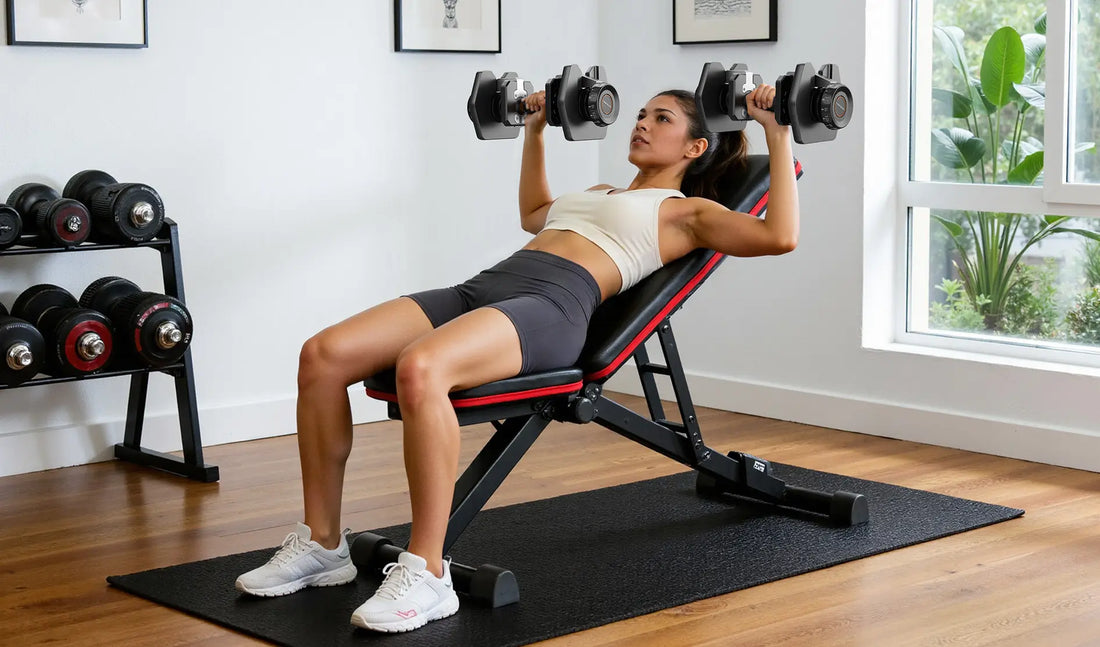
What Weight Dumbbells Should Beginners Use?
It happens all the time. You get up the courage to walk into a local gym and are faced with a giant rack of rows upon rows of dumbbells. Instead of getting in a solid workout that leaves you feeling successful and slightly exhausted, you’re stuck with decision paralysis and a little embarrassment.
The truth is, choosing what dumbbell weight to start with isn’t as complex as you might think. It has way less to do with your ego or being overly competitive with that person in the locker room who always looks too smug. You want to strike a balance that won’t put you at risk of injury or burning out. Start too light, and you won’t hit your gains. Too high and you’ll likely try something else.
Strength training contributes to a healthier body as you age, and using dumbbells is key to your routine. You want to train smart, build strength, gain confidence, and stay consistent without any unwanted setbacks. Here is some quick information from our professional crew at FED Fitness on the dumbbell weight range that makes the most sense for you.
Why Choosing the Right Weight Matters
Using dumbbells improves your strength through an idea called “progressive overload.” This is the core concept behind increasing the weight. You lift by 2% - 5% over time to increase your abilities.
If you’re wondering what dumbbell weight to start with, the “right” amount creates controlled stress through progressive overload and is light enough for your body to recover well.
The right amount of weight impacts your form, injury prevention, muscle activation, long-term progress, and your confidence. You don’t want to lug around a 50 lb. dumbbell on your first day trying to impress your neighbors. That’ll only limit results.
The sweet spot is controlled resistance where the first few reps feel easy, but the final few feel doable, only with proper form. That is smart training.
Recommended Starting Dumbbell Weights
If you’re still on the fence about what dumbbell weight to start with, the general rule of thumb is 5 to 10 lbs. for women and 10 to 20 lbs. for men. That is an extreme average and will not apply to everyone, but it will give you a good foundation. Let’s break that weight class down a bit based on your demographic.
Female Beginners (20-45 years old)
For your upper body exercises, stick to 5 to 10 lb dumbbells and then increase to 10 to 20 lbs. when you try lower body work. Women tend to underestimate their capabilities, so starting conservatively lets you nail down the technique and build confidence so you can quickly increase to a weight that feels right.
Male Beginners (20-45 years old)
Men are built with more muscle. That is an average statement. There are certainly exceptions to the rule, and no one should feel limited by their gender. A good starting weight for most men is 10 to 20 lbs. for upper body exercises and 20 to 35 lbs. for lower body exercises.
If you have some previous experience in weight training or sports, you can increase that amount by 5% to 10%. However, try to focus on control over load.
Kids & Teens (7-19 years old)
Young athletes can benefit from a strength-training program as early as 7 years old. It’s highly advisable to speak with a pediatrician or professional coach if you’re going to kick things off that early, but it can be done.
Most kids start weight training with dumbbells around 14 to 17 years old, when they join high school sports or want to change their body composition. Focus on 5 to 15 lbs. in the beginning and perfecting your form. You want technique and joint control more than high weight.
Adults Over 45
There is evidence that lifting weights, such as dumbbells, aids longevity and overall health as you age. At the very least, it helps you get out of bed, lift your travel suitcase, and not have to ask for help when opening a new bottle of ketchup.
You should be careful of joint damage at this age. While 45 might be the new 25, add a few years to that top number, and you’re entering riskier territory. Stick to 3 to 10 lbs. for the upper body and 8 to 20 lbs. for the lower. You can always increase your weight down the road, but you want to lift smart.
Quick Reference Table
|
Group
|
Upper Body
|
Lower Body
|
|
Female Beginners
|
5–10 lbs.
|
10–20 lbs.
|
|
Male Beginners
|
10–20 lbs.
|
20–35 lbs.
|
|
Kids & Teens
|
5–15 lbs.
|
10–25 lbs.
|
|
Adults 45+
|
3–10 lbs.
|
8–20 lbs.
|
Factors That Affect Your Dumbbell Weight Choice
The answer to What dumbbell weight should I start with is whatever works for your unique fitness goals, body type, and muscle tolerance. There is no one-size-fits-all solution other than owning a set of Adjustable Dumbbell Weights.
What impacts how much weight you should pick off the rack?
- Gender & Age: We’ve covered that above, and these are only averages, not boxes you’re stuck inside.
- Exercise Type/Muscle Group: Some exercises, like a basic bicep curl, can go heavier than others, such as a deadlift. The larger the muscle, the more weight you can use.
- General Ability: Some people, regardless of age or gender, are tanks. They were born with more natural strength and can start heavier, or have a smaller frame and may need to start lighter. Listen to your body.
- Training/Injury History: You may have been a soccer player in high school with incredibly strong calves, or suffered a car accident that makes your shoulders sore quickly. Again, listen to your body.
Finally, there are your fitness goals. The number of reps and sets of dumbbell exercises you do affects your muscle composition. If you’re looking for more strength, stick to 4-6 reps at a heavier weight. Muscle growth needs 8-12 reps at a moderate weight. Endurance would be 12-20 reps at a lighter weight.
Upper Body vs. Lower Body Weight Differences
Your lower body can handle more weight than your upper body. Human legs are stronger than our arms (on average). That means your lower-body workouts can handle much heavier weights.
Even if you feel nervous about everything around dumbbells, do not make the beginner’s mistake of using the same set for all your exercises. Stick to heavier for the lower half of your body and lighter for the upper half.
Should Beginners Choose Fixed or Adjustable Dumbbells?
The type of dumbbells you buy also plays a role. You want something durable, low-maintenance, and that doesn’t take up a lot of space in your commercial or home gym. Plenty of people get in fantastic shape with only a small area in the living room or bedroom.
Adjustable dumbbells are space-saving and tend to cost less than buying a complete set. They help you hit those gradual progression goals, especially if you’re a beginner. A small Adjustable Dumbbell Set is a good decision.
Fixed dumbbells also work, but it comes down to your comfort level, available space, and spending budget.
How to Tell If You’re Using the Right Weight
Your body will give you pretty clear feedback on what dumbbell weight I should start with. Listen to how it responds, and you’ll make natural adjustments.
Signs the Weight Is Too Heavy
- You start to lose form as you complete a set
- Your body is swaying or uses momentum to lift or use the dumbbell
- There is joint pain or muscle fatigue
- You have to shorten the exercise range of motion to finish
- Your breathing becomes erratic fast or early in the set
Signs the Weight Is Too Light
- You can breeze through the set without feeling any real effort
- You can easily double or triple the repetitions if you want
- Your muscle feels like no effort was put in
- Your heart rate isn’t moving faster
Any of these signs indicates it’s time for a change. Your body is a wonderful machine that will quickly inform you if something is up. Just don’t mistake fatigue for a quality workout. You should feel some effort, but the good kind of soreness, not the bad.
When Should You Increase the Weight?
If you can complete 2 to 3 sets of 12 to 15 repetitions without feeling any muscle fatigue, you need to practice progressive overload and increase your dumbbell weight by 2% to 5%.
For example, if you finish a 35-minute cycle and you’ve completed 12 reps for each exercise at your current weight when the workout only calls for 10 reps, it’s time to up the “ante.” Gradually increasing resistance over time is your key to muscle and strength growth.
Final Thoughts
Knowing what dumbbell weight to start with is a fantastic way to reduce the risk of injury while hitting all your fitness goals. For most beginners, start in the 5-15 lb. range. Pick up a pair so you have access to more workout forms or an adjustable set that will grow with you.
The most crucial components are to stay consistent, listen to your body, and master your technique. Strength is not about lifting massive weights on day one. It’s about building a foundation that supports your growth over time.
That is where our team at FED Fitness can help. We offer a range of dumbbells and weight products to help you hit your goals in the comfort of your own home. Explore our products today and get cranking on your sets.
FAQs About What Weight Dumbbells Beginners Should Use
Are 10 lbs. Dumbbells Enough?
For any beginner, regardless of age or gender, 10 lbs. is a solid weight. They might be too light for lower-body workouts, but they should give you enough resistance to develop quality form and get a feel for how your muscles and joints move before you increase your dumbbell weight.
How Many Times a Week Should Beginners Train?
There are a lot of arguments in the lifting world over what is too much or too little for days between sessions. Stick to 2-3 days a week so you can get enough rest in between. Consistency over quantity is your new golden rule.
What Are the Best Dumbbell Exercises for Beginners?
It depends on your fitness goals. A good “beginner’s set” would include:
Upper Body:
- Bicep Curl
- Front & Lateral Raise
- Overhead Press
- Triceps Kickback
- Reverse Fly
Lower Body:
- Split Squat
- Romanian Deadlift
- Hip Thrust
- Goblet Squat
Are Adjustable Dumbbells Worth It?
Adjustable dumbbells are 100% worth the investment, especially if you’re working on a budget or exercising in a smaller space. They store well, are low maintenance, and adjust as you increase your weight and fitness goals.
This content is for informational and educational purposes only and does not constitute medical advice. For questions related to your health or medical conditions, please consult your physician. Always seek advice from a qualified healthcare professional before starting any exercise program or health regimen. In the event of a medical emergency, call 911.


Leave a Comment
We’d love to hear from you — your insights can inspire others!