


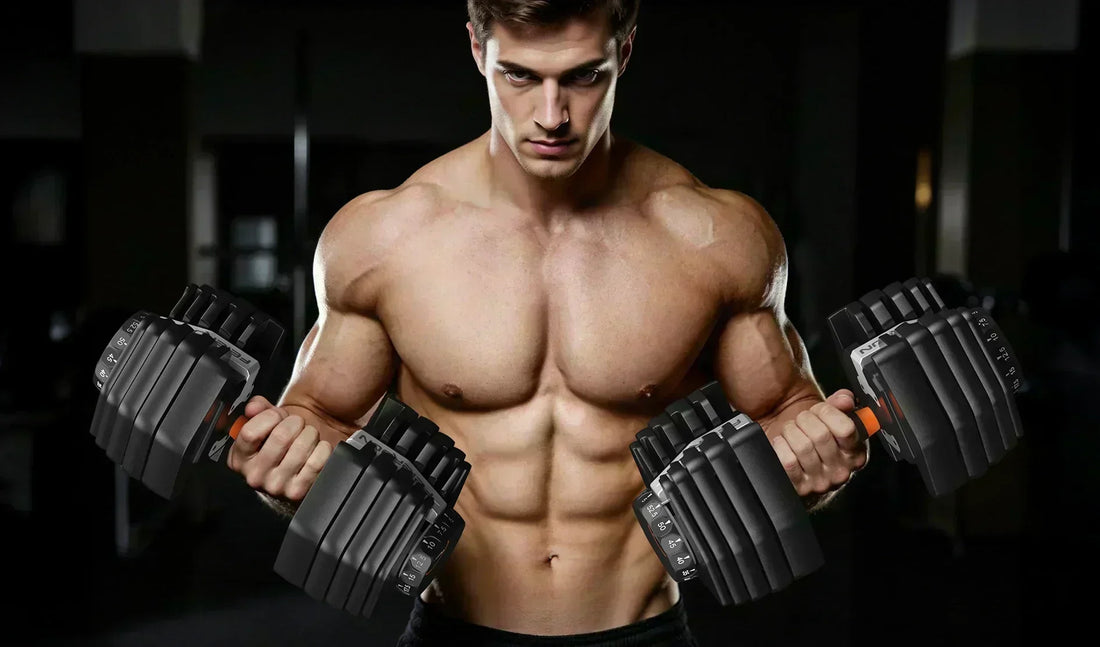
10 Effective Dumbbell Chest Exercises to Build a Strong, Defined Chest
Are you struggling to build a stronger and bigger chest? Strong pecs have both practical and aesthetic value. But how do we get a stronger and bigger chest, especially if we’ve limited equipment?
Many experts believe that bench presses are the best equipment for building muscle hypertrophy. However, if you don’t have barbells, you can still perform many exercises with just a pair of dumbbells to build your chest.
In this article, we’ll discuss how dumbbell chest exercises can improve chest size. We’ll also introduce the 10 best chest exercises with dumbbells to get a strong and bigger chest.
Which Parts of the Chest Do Dumbbells Target?

Dumbbells target the entire chest because they offer a wide range of motion and unilateral activation. Dumbbells also engage triceps and deltoids. If you want to train the whole chest, you can try different inclinations.
Upper Chest: Dumbbells target the upper chest with incline presses at a 15-30 degree angle. You can also try flat dumbbell presses with an underhand grip.
Middle Chest: Dumbbells can also specifically target the middle chest with flat presses, flyes, and natural grip presses.
Lower Chest: You can also train the lower chest with the decline dumbbell press, as it pushes from a lower to a higher position.
Why Dumbbells Are an Ideal Choice for Chest Training

Dumbbell chest exercises are more effective at building chest size because of the range of motion. Barbells limit how far you can lower the weight due to contact with the chest. But with dumbbells, you can move the weight beyond your chest level.
This wide range of motion offers extensive stretch and contraction, and this promotes muscle activation.
“Dumbbell exercises are more advanced as they require more stabilisation and activation of muscles that might not get used or missed in bilateral or barbell exercises,” explains MH fitness director Andrew Tracey.
Dumbbells place less stress on your joints than a barbell. Our body looks symmetrical, but in reality, our shoulder, hip, and wrist joints differ slightly from one side to another. Barbell offers perfect symmetry, and this puts more stress on one side. However, dumbbells offer a natural movement pattern, and this reduces the risk of shoulder injuries.
Beyond all the above-mentioned benefits, dumbbells are accessible. These reasons make dumbbells the most effective chest exercises.
Best Dumbbell Exercises for Chest Development
With dumbbells, you can target a specific chest area with isolation exercises, or you can also target the whole chest with compound exercises. Below, we’re suggesting the 10 best dumbbell chest exercises suggested by experts.
1. Dumbbell Bench Press
The dumbbell bench press is a classic chest exercise for building strength and muscle. Many beginners start with this movement because it trains the whole chest while also improving arm control.
This exercise mainly targets the chest muscles. The triceps and front shoulders also assist during the pressing movement.
Step 1. Lie flat on a workout bench with a dumbbell in each hand. Hold the dumbbells above your chest with your arms straight and palms facing forward.
Step 2. Slowly lower the dumbbells toward your chest. Keep your elbows slightly angled toward your body instead of flaring them wide.
Step 3. Pause briefly when the dumbbells reach chest level. Press the weights upward until your arms return to the starting position.
Precautions: Use a weight that allows smooth and controlled movement. Beginners should start with light dumbbells to learn proper technique and balance. If you want more targeted training results, you can work out on an adjustable weight bench. By performing decline, flat, and incline bench presses, you can more precisely strengthen different areas of your chest muscles.
2. Dumbbell Chest Fly
The dumbbell chest fly is an isolation exercise that targets the chest muscles by stretching and squeezing them. Many lifters use this movement to improve chest shape and muscle control.
The main muscle worked is the chest. The shoulders and arms help stabilize the movement, but do not produce most of the force.
Step 1. Lie flat on a bench while holding a dumbbell in each hand. Extend your arms above your chest with your palms facing each other.
Step 2. Slowly lower the dumbbells outward in a wide arc. Keep a slight bend in your elbows as you lower the weights to chest level.
Step 3. Pause briefly at the bottom position. Bring the dumbbells back together above your chest by squeezing your chest muscles.
Precautions: Move the weights slowly and stay in control during the entire motion. This helps protect the shoulders and improves chest activation.
3. Dumbbell Squeeze Press
The dumbbell squeeze press is a chest-focused exercise that increases tension in the chest muscles. The movement keeps the dumbbells pressed together, which creates constant inward pressure during the lift.
The chest muscles do most of the work in this exercise. The triceps and front shoulders assist during the pressing motion.
Step 1. Lie flat on a workout bench while holding a dumbbell in each hand. Bring the dumbbells together at chest level with your palms facing each other.
Step 2. Press the dumbbells firmly together and slowly push them upward. Keep the dumbbells touching so the chest muscles stay under constant tension.
Step 3. Lower the dumbbells back toward your chest in a controlled motion. Maintain the squeezing pressure between the weights during the entire movement.
Precautions: Use light to moderate dumbbells so you can keep steady pressure between the weights. Slow and controlled movement helps activate the chest muscles more effectively.
4. Dumbbell Floor Squeeze Press
The dumbbell floor press is a simple chest exercise performed on the floor. The floor limits how far the arms can move downward, which helps reduce stress on the shoulders.
This exercise mainly works the chest muscles. The triceps and shoulders also assist during the pressing phase.
Step 1. Lie on the floor with your knees bent and feet flat. Hold a dumbbell in each hand and press the dumbbells together above your chest.
Step 2. Lower the dumbbells slowly until your upper arms touch the floor. Keep your elbows close to your body during the descent.
Step 3. Press the dumbbells upward while squeezing them together. Extend your arms until the weights return to the starting position.
Precautions: Focus on steady control and keep the dumbbells pressed together during the entire movement. This helps maintain tension in the chest muscles.
5. Dumbbell Svend Press
The dumbbell Svend press is a simple chest exercise that focuses on constant squeezing tension. The movement keeps the dumbbells pressed together, which forces the chest muscles to stay active during the lift.
The main muscles worked are the chest muscles. The shoulders, triceps, and core help stabilize movement.
Step 1. Stand upright with your feet shoulder-width apart. Hold two light dumbbells together at chest height with your palms facing inward.
Step 2. Press the dumbbells firmly together and slowly extend your arms forward until they are fully extended in front of your chest.
Step 3. Pause briefly while maintaining the squeeze. Slowly bring the dumbbells back to chest height without losing the pressure between them.
Precautions: Keep the dumbbells pressed together throughout the movement. This constant pressure increases chest muscle activation and improves control.
6. Dumbbell Floor Press
The dumbbell floor press is a chest-pressing exercise performed on the floor. The floor limits how far the arms move downward, which helps protect the shoulders.
This exercise mainly works the chest muscles while placing extra load on the triceps. The shoulders also assist during the pressing motion.
Step 1. Lie on the floor with your knees bent and feet flat. Hold a dumbbell in each hand near your chest with your elbows resting on the floor.
Step 2. Press the dumbbells upward until your arms are fully extended above your chest.
Step 3. Lower the dumbbells slowly until your elbows gently touch the floor again. Pause briefly before starting the next repetition.
Precautions: Keep the movement slow and controlled. Avoid bouncing your elbows on the floor to maintain steady tension on the chest and triceps.
7. Alternating Decline Dumbbell Fly
The alternating decline dumbbell fly is an isolation exercise targeting the lower chest. The decline bench angle places more tension on the lower portion of the chest muscles.
This exercise mainly targets the lower chest muscles. The shoulders assist with control, while the arms help stabilize the movement.
Step 1. Lie on a decline bench while holding a dumbbell in each hand. Extend your arms above your chest with your palms facing each other.
Step 2. Slowly lower one arm outward in a wide arc. Keep a slight bend in your elbow while lowering the weight toward chest level.
Step 3. Bring the dumbbell back to the starting position by squeezing your chest muscles. Repeat the same movement with the other arm.
Precautions: Move slowly and stay in control during each repetition. Alternating arms improves muscle balance and helps maintain steady form.
8. Standing Dumbbell Chest Press
The standing dumbbell chest press is a simple exercise that trains the chest while also engaging the core. Performing movement while standing requires the body to stabilize the weight.
The chest muscles produce most of the force in this exercise. The triceps, front shoulders, and serratus muscles assist during the pressing movement.
Step 1. Stand upright with your feet shoulder-width apart. Hold one dumbbell close to your chest with both hands.
Step 2. Press the dumbbell forward until your arms are fully extended in front of your chest.
Step 3. Slowly bring the dumbbell back toward your chest while keeping your body stable and your core tight.
Precautions: Keep your chest upright and avoid leaning backward during the press. Controlled movement helps maintain tension on the chest muscles.
9. Chest Dips With Dumbbells
Chest dips with a dumbbell are a powerful compound exercise for building chest strength. Adding a dumbbell between the feet increases resistance and places more load on the chest muscles.
The chest muscles produce most of the force in this movement. The triceps and shoulders also assist during the lifting phase.
Step 1. Stand between a power tower and hold a dumbbell between your feet. Grip the bars firmly and lift your body until your arms are straight.
Step 2. Lean your torso slightly forward and slowly lower your body. Bend your elbows as your chest moves downward to create a deep stretch.
Step 3. Push through your hands and raise your body back to the starting position. Stop just before fully locking your elbows.
Precautions: Move slowly and stay in control during each repetition. A slight forward lean helps place more tension on the chest muscles.
10. Incline Dumbbell Push Ups
The incline dumbbell push-up is a bodyweight chest exercise that focuses on the upper chest. Holding dumbbells during the push-up improves grip and allows a deeper range of motion.
This exercise mainly targets the upper chest muscles. The shoulders, triceps, and core muscles help stabilize the body during the movement.
Step 1. Place two dumbbells on a sturdy bench or raised platform. Grip the dumbbells and extend your legs behind you so your body forms a straight line.
Step 2. Lower your chest toward the dumbbells by bending your elbows. Keep your body straight and your core tight during the descent.
Step 3. Push through your hands and press your body back to the starting position.
Precautions: Maintain a steady pace and controlled form throughout the movement. Keeping the body aligned helps activate the chest and core muscles.
Dumbbell Training vs. Barbell Training

Barbell and dumbbell training both have unique strengths. Dumbbell training offers a great range of motion, stability, and natural movement. On the other hand, barbells are a good fit for heavy lifts and progressive overloads.
Here is a quick review table to compare both exercises for chest development.
|
Factor
|
Dumbbell Training
|
Barbell Training
|
|
Range of motion
|
Wider and more flexible
|
Limited by the bar path
|
|
Muscle activation
|
Higher chest stretch and squeeze
|
Strong but more fixed
|
|
Muscle balance
|
Trains each side independently
|
The strong side can compensate
|
|
Joint comfort
|
More natural wrist and shoulder movement
|
Fixed grip may stress joints
|
|
Progressive overload
|
Slower weight jumps
|
Easy small weight increases
|
|
Chest hypertrophy
|
Excellent for chest growth
|
Strong but less stretch
|
|
Home gym use
|
Space-efficient and versatile
|
Needs bar, plates, and rack
|
Quick takeaway: Dumbbells provide better chest activation and balance. Barbells are suitable for lifting heavy loads. If your goal is building a strong chest only, then dumbbells are the smart choice.
How to Train the Upper Chest Using Only Dumbbells
To build the upper chest, lifters need specific angles and a full stretch. That’s why most of the lifters struggle to put more weight on their upper chest. You can build your upper chest with dumbbells because this exercise provides natural movement, better muscle control, and strong upper chest activation.
Consider these exercises with dumbbells to work on the upper chest;
- Incline dumbbell bench press
- Incline dumbbell fly
- Dumbbell squeeze press on incline
- Incline dumbbell pullover
- Upright dumbbell raise
- Kneeling high dumbbell fly
- Incline push-ups using a bench or platform
When you start your workout, do chest exercises early when you’ve highest strength. This way, you’ll be able to put more tension on your upper chest.
How to Train the Lower Chest Using Only Dumbbells
The lower chest actually makes the shape and thickness of your overall chest. You can build your lower chest with some targeted dumbbell chest exercises.
Consider these exercises to build your lower chest using dumbbells.
- Decline dumbbell bench press
- Decline dumbbell fly
- Alternating decline dumbbell fly
- Dumbbell pullover
- Incline dumbbell floor press
- Standing dumbbell fly upward
- Chest dips holding a dumbbell between the feet
To get effective results, put more focus on declining angles and controlled downward movement.
How to Train the Mid Chest Using Only Dumbbells
The middle part of the chest gives a full look from the front. If you want to train the mid chest using dumbbells, consider the following exercises for maximum results;
- Flat dumbbell bench press
- Neutral grip dumbbell press
- Dumbbell squeeze press
- Dumbbell floor press
- Flat dumbbell chest fly
- Dumbbell pullover
- Standard push-ups or deficit push-ups
To get the best results, you can combine flat pressing with fly variations. Vary rep ranges every time you apply these variations. This will give you a dense, well-balanced mid chest.
Conclusion
Dumbbell chest exercises are an effective and powerful way to build a strong and defined chest. You don’t need heavy equipment, as just a pair of dumbbells is enough for a workout at home.
You can use different variations of dumbbell chest exercises to individually target the upper, mid, and lower chest. This will give you balanced growth and muscle control.
So if you’re looking for an accessible way of building your chest while working at home, consider dumbbell chest exercises.
Frequently Asked Questions (FAQs)
For Chest Training, Is the Incline Dumbbell Bench Press Better Than the Flat Dumbbell Bench Press?
Both exercises target different areas of the chest and serve different purposes. Incline bench press works on the upper chest, while flat bench press works on the overall chest size. You can use both exercises to get balanced chest development.
Incline Dumbbell Fly vs. Flat Dumbbell Fly: What’s the Difference?
Incline flies work on the upper chest while flat flies target the mid chest. You can work on both exercises alternatively so that your chest builds evenly and in a balanced shape.
What Weight Dumbbells Should I Use for Chest Workouts?
Always choose a weight that you can easily control. By keeping at lifting the dumbbells, your strength will keep on increasing, and you can gradually increase the dumbbell weight. Generally, beginners use 10–20 lb dumbbells per hand, intermediate trainees use 20–50 lb per dumbbell, and advanced lifters use 60 lb per dumbbell.
Learn More: What Weight Dumbbells Should Beginners Use?
Are Dumbbells Suitable for Beginners Training Their Chest?
As a beginner, you can start with light dumbbells and do basic presses and flyes. With gradual progressions, your strength will keep on increasing and reduce injury risk.
This content is for informational and educational purposes only and does not constitute medical advice. For questions related to your health or medical conditions, please consult your physician. Always seek advice from a qualified healthcare professional before starting any exercise program or health regimen. In the event of a medical emergency, call 911.


Leave a Comment
We’d love to hear from you — your insights can inspire others!