


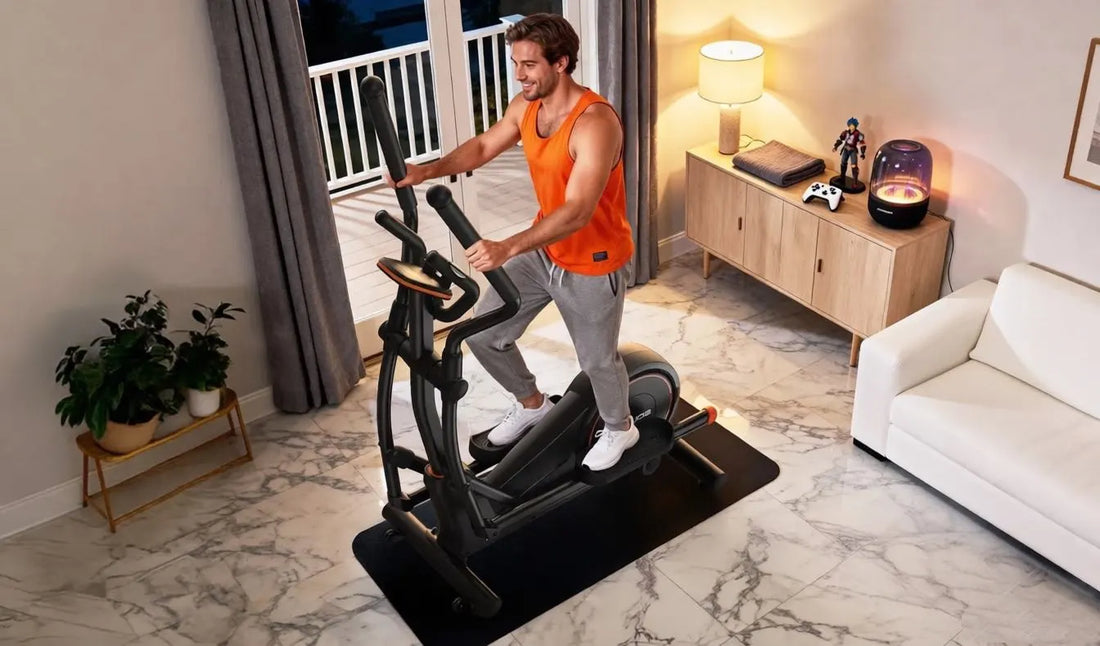
Is it Better to go Faster or Longer on an Elliptical?
Ellipticals have become a go-to workout for anyone seeking solid cardio without putting undue stress on their joints. But there’s one debate that never seems to die: Is it better to go faster or longer on an elliptical? This article breaks down the real science behind speed, duration, and intensity — without confusing jargon. We’ll examine how each approach impacts calorie burn, endurance, heart health, and overall fitness. Whether you’re trying to lose weight, build stamina, or just squeeze in a quick workout between meetings, this guide gives you a clear, non-technical answer from a practical, everyday American perspective.
If you’ve ever hopped on an elliptical — whether in your apartment, your building’s gym, or the corner of a crowded LA Fitness — you’ve probably wondered at some point whether you should crank up the speed or stay on longer. It’s one of those classic fitness questions that sounds simple but gets messy fast.
The good news is, you don’t need a PhD in exercise science to figure this out. You just need to understand what “faster” actually does to your body, what “longer” actually does, and how each one lines up with your goals. So let’s break it down the way Americans like it: direct, practical, and grounded in real-world experience.
What “Going Faster” Really Means
When people say they’re “going fast” on an elliptical, they usually mean they’re moving their legs quickly — lots of strides per minute, heart rate climbing, sweat flying. Sometimes they also mean they’re bumping up the resistance or incline, which technically isn’t speed but definitely increases intensity.
Speed is that quick, light, almost sprintlike motion. Intensity is the heavier, slower, more powerful grind. Both get your heart pumping, but they stress your body differently.
What “Going Longer” Really Means
Going longer is exactly what it sounds like: staying on the machine for longer. Most people fall into the 30 to 45-minute range, sometimes even an hour if they’re zoning out to Netflix.
Longer sessions usually mean a steady, moderate pace — not too fast, not too slow. It’s the kind of workout where you can still breathe comfortably, maybe even talk a little, and you’re not dying halfway through.
Which One Burns More Calories?
Here’s the straight truth: Going faster burns more calories per minute. Going longer burns more calories overall.
If you push hard for 20 minutes, you’ll torch calories quickly. But if you stay on for 45 minutes at a moderate pace, you’ll almost always end up burning more total calories by the time you step off.
So the real question becomes: Do you want maximum calories per minute, or maximum calories per workout?
How Your Goals Change the Answer
This is where things get interesting — because the “right” choice depends entirely on what you’re trying to accomplish.
If You Want to Lose Weight
Longer workouts usually win. Weight loss is about total calorie burn, and longer sessions simply give you more time to burn more energy. They’re also easier to stick with. Most people can’t sprint on an elliptical for 20 minutes straight, but they can cruise for 40 minutes without wanting to collapse.
The best approach to weight loss is a mix: steady long sessions with a few faster intervals sprinkled in.
If You Want Better Endurance
Longer is the clear winner. Endurance is literally your body’s ability to keep going. You can’t build that with short bursts. Longer sessions strengthen your heart, improve your breathing, and train your body to use energy more efficiently.
If you want to feel less winded walking up stairs or running errands, longer sessions are your friend.
If You Want Better Heart Health
Both faster and longer help — just in different ways.
Faster sessions improve your VO₂ max and your heart’s ability to handle high-intensity effort. Longer sessions improve your resting heart rate, circulation, and overall cardiovascular efficiency.
If heart health is your priority, the best plan is a combination of both styles throughout the week.
If You Want Muscle Toning
Speed doesn’t tone your muscles — resistance does. Going too fast can actually reduce muscle engagement because you start relying on momentum instead of strength.
If you want toned legs, glutes, and core, slow down a bit and increase the resistance. Controlled, powerful strides do way more for muscle definition than sprinting on low resistance.
The Science Behind It — Without the Boring Stuff
Your body uses two main energy systems during cardio.
The aerobic system powers longer workouts. It uses oxygen, burns fat, and is sustainable. This is your “I can do this all day” mode.
The anaerobic system powers faster workouts. It doesn’t use oxygen, burns glycogen, and only works in short bursts. This is your “I’m dying, but I’m doing it” mode.
Both systems matter. Both make you fitter. But they serve different purposes.
Heart Rate Zones: The Hidden Key
Longer workouts usually keep you in zone 2 — the sweet spot for fat burning and endurance. Faster workouts push you into zones 4 and 5 — the zones that build speed, power, and maximum calorie burn per minute.
If you want the best results, you want a mix of both zones throughout your week.
Interval Training: The Best of Both Worlds
If you’re torn between faster and longer, interval training is your golden ticket.
A simple interval session might look like this: Two minutes at a moderate pace, one minute fast. Repeat for 20 to 30 minutes.
This gives you the calorie burn of speed and the endurance benefits of longer sessions — all in a manageable timeframe.
What’s Best for Beginners?
If you’re new to the elliptical, longer and slower is the way to go. It’s safer, easier to maintain good form, and helps you build a solid foundation. Once you’re comfortable, you can start adding speed or resistance.
What’s Best for Busy People?
If you’re short on time — and let’s be honest, most Americans are — faster sessions are incredibly effective. A 15-minute high-intensity elliptical workout can give you a full sweat, a strong calorie burn, and a noticeable fitness boost.
It’s not better — just more efficient.
What’s Best for Joint Health?
Longer, moderate sessions are easier on your joints. Going too fast can lead to sloppy form and unnecessary strain. If you want your knees and hips to stay healthy, stick to a controlled pace with good posture.
So… Which One Should You Choose?
Here’s the American-style, no BS summary:
Go faster if you want intensity, efficiency, and a quick sweat. Go longer if you want endurance, fat burn, and a sustainable routine. Do both if you want the best overall fitness.
Most people get the best results when they mix both styles throughout the week.
A Simple Weekly Plan That Actually Works
Here’s a clean, balanced structure you can follow:
Monday: Long steady session
Tuesday: Fast intervals
Wednesday: Rest or light movement
Thursday: Resistance-focused session
Friday: Long steady session
Saturday: Short, fast workout
Sunday: Optional easy recovery session
This gives you endurance, intensity, strength, and recovery — all in one week.
Final Verdict: Faster vs. Longer
Neither one is universally better. They’re just different tools for different goals. Faster sessions give you intensity and efficiency. Longer sessions give you endurance and total calorie burn. The elliptical is one of the most versatile cardio machines out there, and you can use it however your body and schedule demand.
The real secret isn’t choosing faster or longer. The real secret is choosing the style that keeps you consistent.
Because at the end of the day, the best workout is the one you actually show up for.


Leave a Comment
We’d love to hear from you — your insights can inspire others!