


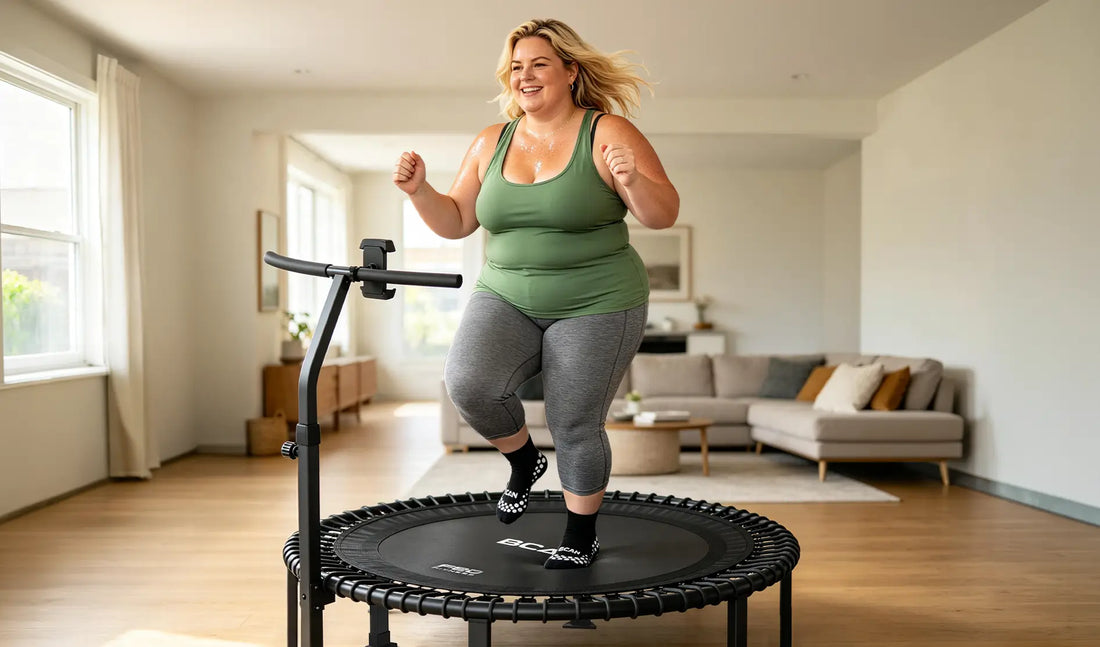
Rebounding for Larger Beginners: How to Start Safely and Build a Sustainable Workout Routine
When you carry extra weight, it can be extremely intimidating and often make your body sore when you start working out. Rebounding for overweight beginners is a better low-impact way to engage muscles and build endurance, especially when it’s been a while since you last exercised. Here are some tips on how to move, which product to buy, and how to safely support your body rather than end up feeling overly sore.
When you’ve spent years yo-yoing between fad diets and hard on the body workouts, it can be challenging to start a new weight loss journey. The last thing any beginner wants is to work hard for a few weeks only to be sore and discouraged, or worse, injured.
Rebounding for higher-weight beginners is a much safer, supportive alternative. It is an easy-to-practice exercise at home or in the office, and is low-impact enough to burn calories without harming the body.
At FED Fitness, we want to encourage your home workouts with the right equipment and information so you feel healthier and happier every time you use your body or look in the mirror. Here are some tips for starting a sustainable mini trampoline routine.
Why Traditional Cardio Can Feel Difficult for Higher-Weight Beginners
One reason so many beginners who carry extra weight quit working out is that the movements don’t feel good. When you are heavier, running puts a lot of pressure on joints, weight lifting feels impossible, and HIIT training at a gym can be intimidating.
Another big reason traditional cardio feels a bit too difficult for overweight beginners is energy. When you have more fat around the body, you have to use energy for metabolic systems and cellular health. When you’re lighter, you have energy for external activities like work, playing with kids, or going shopping with friends. Adding cardio to your day when you're overweight can feel like an impossible mountain to climb.
What tends to happen is a frustrating cycle of health. You start exercising, feel burned out and sore, skip a few days here and there, lose momentum, and have to start over again. You don’t need a harder workout. You need a more sustainable, frictionless experience.
Why Rebounding Can Be a Good Option for Beginners with Extra Weight
Rebounding for higher-weight beginners doesn’t force your body into stressful movements. The mini trampoline absorbs most of the impact, rather than transferring it to your ankles, legs, hips, and lower back. That is much better than slamming your feet against hard pavement when running.
Rebounding increases your heart rate. It works your major core muscles and the groups around the legs, back, and hips, plus those tiny stabilizers you want for better coordination. When you’re overweight, your balance is adapted. As you shed that weight, you almost have to re-learn how to move because you feel lighter. Giving your stabilizers a little extra TLC with a rebounder makes a lot of sense.
Picking up a lose weight mini trampoline routine is also great because it reduces friction. Instead of having to get ready for the gym every morning, you can go from bed to your rebounder. Having something at home and away from judgmental eyes really makes people dealing with excessive weight feel more comfortable.
Is Rebounding Safe for Higher-Weight Beginners?
When you are overweight, you have a 15% to 48% higher risk of injury. The body is moving around more weight, so you need to be careful. Using the right equipment and starting slowly is crucial to effective weight loss, especially in the beginning.
Rebounders are safe, but you need to start slow. Don’t try to aggressively hit each bounce so you’re flying 4 to 6 feet into the air. Stick to a rebounder that ensures a consistent workout with a strong frame, adequate weight capacity, and support systems.
Find a routine that is both effective for your weight goals and comfortable on your feet, so you remain consistent. A well-rounded routine can help you lose significant weight, but you want to be safe.
What Type of Rebounder Is Best for Larger Beginners?
The right rebounder for larger beginners is whatever encourages “repeatability.” That should mean a device with a sturdy frame so you don’t feel wobbles when you bounce, and a higher weight capacity for where you are in life when starting.
Look for something with a comfortable bounce feel like the BT4 Soft Land Pro Adult Bungee Trampoline from FED Fitness. This uses a series of bungees that are softer on the body as you bounce instead of metal springs. It has a larger jumping area in 40” and 48” form factors that easily fit into most home settings.

As a bonus, the BT4 mini trampoline includes an adjustable handlebar. When you’re just starting with weight loss, you want that added support so you can continue soft bouncing even when sweating hard.
With a 500-pound capacity and a free 360-degree phone holder so you can stream all your favorite shows as you work out, this is a beginner-friendly device sure to help you feel healthier as you burn calories and shed pounds.
Best Larger Beginner Rebounding Movements to Start With
Stability Stand
Being of a higher weight can take a toll on your self-confidence. Start small by simply standing on the rebounder for 10-15 minutes. Let your body feel the mat as your weight shifts from one side to the other. Use the handlebars. That will help you build confidence to move on to more advanced movements.
Health Bounce
A more beginner-friendly weight loss mini trampoline action is the health bounce. This is a basic movement that balances caloric burn with stability. Do this by:
- Standing in the center of the rebounder
- Keep your feet about hip-width apart
- Slightly bend your knees and maintain an upright posture
- Gently bounce up and down, allowing the mini trampoline to move naturally beneath your feet
Not only does the health bounce help with weight loss, but it also improves circulation. That can be a massive change for someone who's been higher-weight for a long period.
March in Place
Instead of jogging on your mini trampoline, go for a light march. The up-and-down movement of your knees really helps the hip flexors and core while working your stabilizers for better coordination as you move off the trampoline. Do this by:
- Standing in the center of the rebounder
- Gentle bouncing off the surface while keeping the body upright
- Lift one knee, parallel to your hips
- Lower the knee down and switch legs into a marching rhythm
- Try maintaining a controlled bounce
- Swinging your arms to mimic the foot movement
Pay close attention to your heart rate as you move. The marching with arm movement will make you sweat and feel short of breath. You want to get a high heart rate, but at a level you can maintain, not by overexerting yourself.
Gentle Side Steps
When you’re ready, try some side steps. These will confuse your body, forcing muscles to adapt and helping you increase your cardio endurance without putting undue strain on the joints. Do this by:
- Standing in the center of the mini-trampoline
- Keeping the body upright and knees slightly bent
- Step side to side across the rebounder in controlled movements
- Add a slight bounce as you move to activate the glutes as well
Use your handlebars in this movement. When you’ve carried a lot of weight, side-to-side movements can feel extremely disorienting. Go gently and listen to your body.
Rebounder Squats
The goal is not only to lose weight, but to develop endurance and muscle growth that helps you move freely. Squats are a fantastic addition to your beginner workout. Do this by:
- Standing in the middle of the rebounder
- Put your feet about hip width apart
- Lower your hips toward the rebounder, not allowing your knees past your ankles
- Pause and hold for about 3-5 seconds
- Push back up through your feet to a standing position
You want to start with about 10-15 squats. You may feel some shaking in your legs and feet as you balance, but that is a good thing.
How Long Should Larger Beginners Rebound?
When you’re just starting a lose weight mini trampoline workout, 10-15 minutes a day is more than enough. Shoot for 3 workouts a week until you begin to feel confident, and your breath hits a good rhythm.

As you feel more comfortable with movements and improve your endurance, set your goal to 20-30 minutes per session, about 4-5 times per week. You can also look for full workout routines on YouTube to follow along with, but be sure they are gentle on the body and not aggressive.
You must take your time. Rapid weight loss isn’t the goal. It’s sustainable movements that are gentle on the body as you lose weight. You want to build habits, not bounce so high you hit the ceiling. Maintain good posture and incorporate healthy nutrition and sleep habits into your new lifestyle for the best results.
What Results Can Beginners Realistically Expect?
It’s hard to nail down a specific weight loss when using a rebounder. Every person is different. Some people may drop weight quickly. Others may see more benefits in balance and endurance. A good rule of thumb is to hope for losing 1-2 pounds per week, but it’s more important to feel healthy than stick to the scale.
Moving the body in any way helps improve energy levels and reduces breathlessness. Some exercises, including those on a rebounder, also give you more confidence because you’ll have better stability over time, but it takes consistent effort. You may have a goal to get fit before bikini season, where a next-door neighbor is hoping to finally climb a set of stairs without feeling like they’ve just run a marathon.
As you progress, keep a log of how you feel. Seeing any changes on paper or in a mobile app will help keep you motivated as you try advanced techniques and maybe integrate a more active lifestyle with friends and family.
Final Thoughts
Whenever you carry too much weight, it’s tough getting back into the habit of working out. Embarrassment, intimidation, and too much soreness all make it a hard battle to win. Rebounding for overweight beginners offers a smooth, accessible solution that can be performed at home with minimal time commitment. It’s a great way to look and feel better without losing motivation to a big gym or a hard-on-the-body running goal.
Start by picking up the BT4 from FED Fitness and experience how a low-impact, beneficial exercise can transform your life.
FAQs
Is Rebounding Safe for Larger Beginners?
Yes, even when you have a lot of extra weight, rebounding is low-impact on the joints and helps you move without stressing your body too much.
What Weight Limit Should a Rebounder Have?
Look for a mini trampoline that has a total weight capacity of at least 50 to 100 pounds more than your current weight.
How Long Should Larger Beginners Rebound?
When you’re starting, a good 10-15 minutes is fantastic. After a few weeks, try to get up to 20-30 minutes at least 3 times per week.
What Size Rebounder is Best for Beginners?
It depends on where you’ll place the rebounder in your home. The 40” to 48” range offers enough jumping surface and proper home placement on a flat surface.
Can You Lose Weight Rebounding if You're Larger?
Yes. Rebounding for higher-weight beginners burns calories and helps you shed extra pounds. The best results come from combining quality nutrition, hydration, and plenty of sleep with your mini trampoline routine.
References:
- Wlodek D, Gonzales M. Decreased energy levels can cause and sustain obesity. J Theor Biol. 2003 Nov 7;225(1):33-44.
- Finkelstein EA, Chen H, Prabhu M, Trogdon JG, Corso PS. The relationship between obesity and injuries among U.S. adults. Am J Health Promot. 2007 May-Jun;21(5):460-8.
- Porcari JP, et al. ACE-Sponsored Research: Putting Mini-Trampolines to the Test. ACE ProSource, 2016 Oct.
This content is for informational purposes only and does not constitute medical advice. For questions related to your health or medical conditions, please consult your physician. Always seek advice from a qualified healthcare professional before starting any exercise program or health regimen. In the event of a medical emergency, call 911.


Leave a Comment
We’d love to hear from you — your insights can inspire others!