


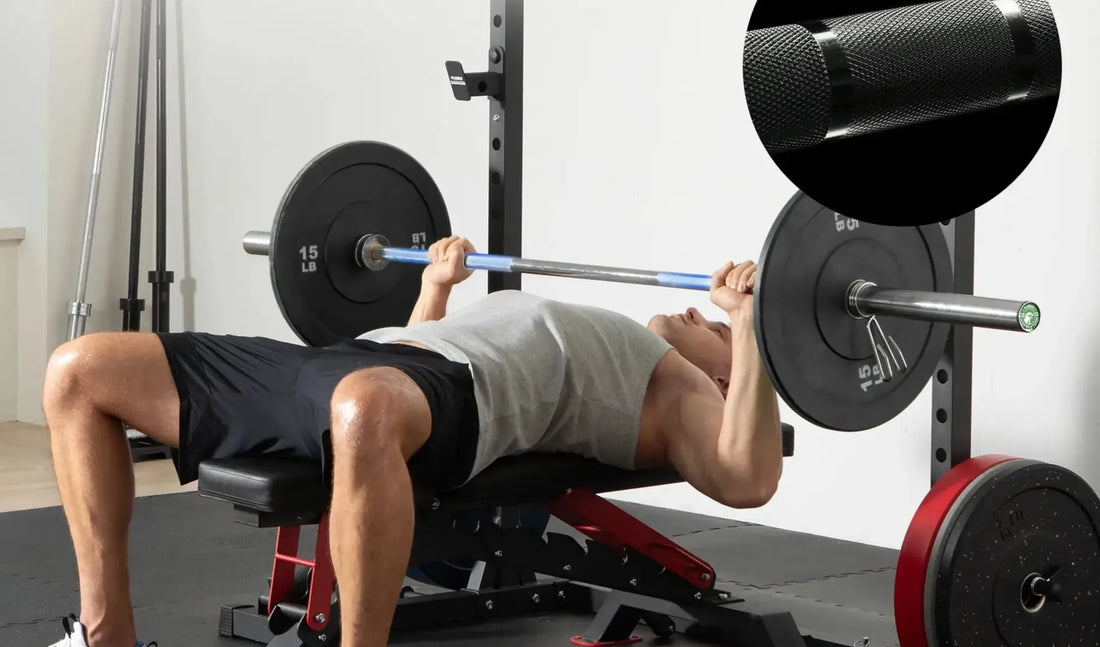
Average Bench Press by Age, Sex & Experience: What Is a Good Bench Press Weight?
Wondering how your bench press stacks up against everyone else? This guide lays out the average bench press by sex, training experience, age, and bodyweight, then shows you exactly how to judge whether your own number is good. You'll get clear benchmarks, honest context on where the data comes from, and a simple five-step way to compare yourself fairly.
One thing to settle first: there's no single "average" that applies to everyone. A 135-pound bench is untrained for a 220-pound man and elite for a 114-pound woman, so the number only means something once you've factored in bodyweight, sex, age, and how long someone's trained.
Let's put yours in context.
What Is the Average Bench Press?
The average bench press depends entirely on who you're measuring. There isn't one flat number that fits everyone, so strength standards are built from bodyweight ratios instead, because a lifter's size changes what counts as average.
Most strength databases, like Strength Level and ExRx, group lifters into five tiers: beginner, novice, intermediate, advanced, and elite. Each tier is expressed as a multiple of your bodyweight, which travels much better across different body sizes than raw pounds do.
A quick note on the numbers here: they're from large strength databases, some self-reported, so read them as useful benchmarks, not exact science. Different sources land on slightly different figures, but the pattern doesn't change. And the smartest way to read it is always relative to your own bodyweight.
Average Bench Press by Sex and Training Experience
Men and women follow the same five-tier system, but they're held to different bodyweight ratios. Training experience is the single biggest driver where you land.The figures below come from Strength Level, which ranks one-rep-max lifts by percentile across 48.7 million logged sessions through March 2026.
Beginner means stronger than 5% of lifters, novice 20%, intermediate 50%, advanced 80%, and elite 95%. As a side note on the data itself, it's self-reported by people using a strength-tracking app, so it skews stronger than the general population. Treat it as a map of where committed lifters sit, not a survey of everyone.
How Much Can the Average Man Bench Press?
| Level |
Bench |
Example: 190 lb man |
| Beginner | ~0.70× | ~136 lb |
| Novice | ~0.95× | ~179 lb |
| Intermediate | ~1.20× | ~231 lb |
| Advanced | ~1.50× | ~290 lb |
| Elite | ~1.85× | ~353 lb |
A 190-pound man starting out lands around 136 pounds, which is roughly the empty bar plus a 45 on each side. Reaching the median for all logged lifters means pressing about 231 pounds, or a little over 1.2 times bodyweight. And pressing your own bodyweight for a single rep sits between novice and intermediate on this scale. It's the milestone most lifters remember hitting, largely because it's a clean number rather than because anything changes at that point.
How Much Can the Average Woman Bench Press?
| Level |
Bench |
Example: 150 lb woman |
| Beginner | ~0.30× | ~48 lb |
| Novice | ~0.50× | ~77 lb |
| Intermediate | ~0.75× | ~114 lb |
| Advanced | ~1.05× | ~159 lb |
| Elite | ~1.40× | ~209 lb |
A 150-pound woman beginning barbell work sits around 48 pounds, which is close to an empty 45-pound bar. That's why a lighter training bar is often the better starting point — it lets you learn the movement at a weight you can control rather than one that's already near your limit.
Pressing half your bodyweight puts you at novice, and the median for logged female lifters is around three-quarters of bodyweight. Benching your full bodyweight is genuinely advanced territory and takes dedicated training to reach.
One thing to know about any strength chart: the numbers assume a strict rep. ExRx's standards spell this out — the bar has to touch the chest above the bottom of the sternum, pause, and be pressed to full lockout. A bounced or half-range rep isn't the same lift, and comparing one against these figures will only flatter you.
What to Focus On at Each Level
The number on the bar matters less than what you're working on to move it, and that changes as you progress. As a beginner, your job is the movement itself. Learn the setup, groove a consistent bar path, and build the habit of turning up twice a week.
Control beats load here, and the strength gains arrive as a by-product of practice — you'll add weight quickly at first not because you're getting stronger that fast, but because you're getting more efficient.At intermediate level, progress stops being automatic.
This is where progressive overload becomes something you plan rather than something that happens: smaller jumps, more attention to which sessions you push and which you back off, and recovery treated as part of the program rather than the gap between sessions. Sleep and food start showing up visibly in your numbers.
Advanced lifters are managing fatigue as much as building strength. Training gets more specific — variations picked to fix a particular sticking point, volume cycled so you're not permanently buried, and progress measured over months rather than sessions. Strength Level puts the advanced tier at five years or more of consistent progress, which tells you something about the timescale.
Average Bench Press by Age
Bench press strength peaks between 25 and 40, holds almost flat across that whole stretch, then declines gradually. The drop is real, but it's slower than most people expect, and it's the same shape for men and women.
Here's how the median lifter's bench tracks across the decades. These are intermediate-level figures from Strength Level, meaning stronger than half of all logged lifters at that age:
| Age | Men (intermediate) | Women (intermediate) |
| 20 | ~207 lb | ~109 lb |
| 25–40 | ~212 lb (peak) | ~112 lb (peak) |
| 45 | ~201 lb | ~106 lb |
| 50 | ~188 lb | ~99 lb |
| 55 | ~173 lb | ~91 lb |
| 60 | ~158 lb | ~83 lb |
| 65 | ~143 lb | ~75 lb |
| 70 | ~129 lb | ~68 lb |
Two main takeaways from this. The plateau is long — a 40-year-old is pressing the same as a 25-year-old, which isn't what most people assume. And the decline afterwards runs at roughly 11% per decade through your forties, steepening to around 16 to 18% per decade past 55. The percentages are nearly identical for men and women. Women's absolute numbers sit lower, but the curve they follow is the same, so the training implications don't change by sex.
And the encouraging part is what the table shows when you read across tiers rather than down one. A 55-year-old at intermediate level presses about 173 pounds. A 25-year-old beginner presses about 107. Someone who keeps training into their sixties holds roughly three-quarters of their peak. Age lowers the ceiling slowly. Inactivity lowers it fast.
How Body Weight Affects Your Bench Press
Bodyweight shapes your bench press in two ways, and once you separate them, you'll see why comparisons get confusing. Heavier lifters usually press more total weight, while lighter lifters usually press more per pound of bodyweight.
Understanding both kinds of strength is what lets you judge yourself fairly.
Absolute Strength
Absolute strength is just the total weight on the bar. A 250-pound lifter will typically out-bench a 150-pound lifter in raw pounds, simply because there's more muscle mass driving the movement. So if your only goal's moving the heaviest possible weight, bodyweight works in your favor.
Relative Strength
Relative strength is your bench divided by your bodyweight, and it's the fairer way to compare across body sizes. Lighter lifters tend to post higher ratios, because strength scales with muscle cross-sectional area rather than total body mass.
A 150-pound person benching 150 pounds is pressing 1.0 times bodyweight, a more impressive feat pound-for-pound than a 220-pound person doing the same. So when you're comparing your bench to the averages, relative strength gives you the most honest read.
What Is a Good Bench Press Weight?
A good bench press weight is best measured against your bodyweight, sex, and experience, not a universal target. Benching your own bodyweight is the milestone most men aim for, while half bodyweight is a strong marker for women.
Below is what "good" looks like at each stage.
Good Bench Press for Beginners
For a beginning man, pressing roughly half your bodyweight is a solid early goal, and simply benching the empty 45-pound bar with clean form is a completely legitimate starting point.
For a beginning woman, around 0.3 times bodyweight is the equivalent mark. Nobody starts strong, and the first few months bring the fastest gains you'll ever make. So don't sweat the starting number.
Good Bench Press for Intermediate Lifters
An intermediate man typically benches 1.0 to 1.25 times his bodyweight, so a 180-pound lifter pressing 180 to 225 pounds is right on track.
For an intermediate woman, roughly 0.75 times bodyweight fits the bill. And reaching a bodyweight bench press is the moment most lifters feel they've become genuinely strong. It's a real turning point.
What Counts as a Strong Bench Press?
A strong, advanced bench press for men sits around 1.5 times bodyweight and above, with 2.0 times marking elite territory that few reach without years of serious training. For women, pressing bodyweight (1.0 times) is advanced, and about 1.45 times is elite. These numbers are rare for a reason. Hitting them means you've trained consistently and smartly for a long, long stretch.
How to Compare Your Bench Press to the Average
Comparing yourself accurately takes five quick steps. Skip any of them and the comparison loses meaning, since every standard depends on the full context.
Step 1: Know Your Body Weight
Every standard is built on bodyweight, so weigh yourself first. This is the anchor for everything that follows.
Step 2: Know Your Bench Press 1RM
Find your one-rep max, or estimate it from a heavier set using a one-rep-max calculator. For example, a weight you can press for five clean reps sits at roughly 87 percent of your max. That's an easy way to get the number without maxing out.
Step 3: Identify Your Training Experience
Be honest about how long you've trained the bench press consistently. Months of steady lifting, not years of occasional sessions, is what places you in a tier.
Step 4: Compare With the Appropriate Age and Sex Group
Look up a reputable standards table and find your bodyweight, sex, and age. Comparing yourself to the right group is what makes the number fair.
Step 5: Look at Relative Strength
Divide your bench by your bodyweight for the truest comparison. That ratio tells you far more than raw pounds ever could, especially if your size differs from the average.
Why Your Bench Press May Be Below or Above Average
Plenty of factors move your bench up or down the table, and most of them are within your control. Training age, technique, leverages, bodyweight, and recovery all play a part.
A below-average bench usually reflects a newer training age, less pressing practice, or a program that lacks progressive overload, rather than any lack of potential. Longer arms mean a longer bar path, which naturally makes the lift harder, and poor sleep or nutrition quietly caps your progress.
But none of these are permanent. An above-average bench typically reflects years of consistent training, favorable leverages, or higher muscle mass, and often all three. The good news is that steady training moves anyone up the standards. Pressing with a full range of loads is what builds a bigger bench, which is where a versatile home setup earns its keep.
A pair of adjustable dumbbells lets you drive chest and triceps progress with small, steady weight jumps, and pairing them with an adjustable weight bench opens up flat and incline pressing at home. And consistency with the right tools beats natural talent over any meaningful stretch of time. It's the one thing that reliably works.
Final Takeaway
Your bench press only makes sense in context. Bodyweight, sex, age, and training experience together decide what "average" and "good" mean for you, and relative strength is the fairest yardstick of all.Use the standards here as a map, not a verdict. They're a starting line, not a ceiling.
Find your tier, set the next milestone, whether that's the empty bar, half bodyweight, or a full bodyweight press, and train toward it consistently. The number on the bar climbs for anyone willing to keep showing up.
Average Bench Press FAQs
What Is the Average Bench Press for Men?
It depends on bodyweight, but a common reference point is pressing roughly your own bodyweight, which marks a solid, well-trained level. An untrained man of average size benches around 135 pounds, a novice around 175, and an intermediate lifter about 215. It's more accurate to judge by bodyweight ratio than by any single figure.
How Much Can the Average Woman Bench Press?
A beginner woman typically benches around 40 to 50 pounds, and an intermediate lifter closer to 100 pounds. The clearest way to gauge it is by bodyweight: about half your bodyweight is a strong intermediate mark, and a full bodyweight bench is an advanced feat.
Does Age Affect Bench Press Strength?
Yes. Strength peaks in your mid-twenties to mid-thirties, stays high through your forties, then declines around 10 percent per decade, faster after 50. Consistent training slows that curve significantly, and a trained older lifter easily out-presses most untrained younger ones. You're never too old to build a bigger bench.
Is Benching Your Body Weight Considered Good?
For men, benching your bodyweight is a genuinely good, respected milestone that marks the move into solid intermediate strength. For women, pressing full bodyweight is even more impressive, landing at an advanced level. Either way, it's a goal worth training toward.
What Is a Good Bench Press for a Beginner?
For a beginner man, about half your bodyweight is a reasonable early target, though pressing the empty bar cleanly is a perfectly good place to start. For a beginner woman, roughly a third of bodyweight is the equivalent. Focus on steady progress, and don't fixate on the starting number.
References
- Strength Level. "Bench Press Standards for Men and Women (lb)." Strength Level.
- ExRx.net. "Bench Press Strength Standards." ExRx.net.
- StrengthLog. "Bench Press Strength Standards for Men and Women." StrengthLog.
- Fitness Volt. "Average Bench Press by Age: Standards Tables." Fitness Volt.
- BarBend. "Bench Press Standards." BarBend.
This content is for informational purposes only and does not constitute medical advice. If you have questions about your health or a medical condition, please consult your physician. Always seek guidance from a qualified healthcare professional before starting any exercise program or fitness routine. FED Fitness assumes no responsibility for any consequences resulting from the use of this information.


Leave a Comment
We’d love to hear from you — your insights can inspire others!