


Best Workout Bench and Weights for a Home Gym: What to Buy
Building a home gym doesn't mean filling a garage with steel. A good bench and the right weights will cover the vast majority of a real strength program, and this guide walks you through exactly what to buy.
We'll compare bench types, weigh adjustable dumbbells against fixed sets, help you figure out how much weight you actually need, and map out complete setups for every budget and space.
If you've been searching for a workout bench and weights for sale and feeling overwhelmed by the options, you're in the right place.
Here's the honest truth up front: most people massively overthink this. You don't need a fully kitted commercial gym to get strong at home. You need a sturdy bench, a versatile set of weights, and a plan. Let's build it.
What Do You Actually Need for a Home Gym?
At its core, an effective home gym is a quality adjustable bench plus a pair of adjustable dumbbells. That combination alone unlocks presses, rows, squats, lunges, curls, and shoulder work, which is the backbone of nearly any strength routine.
Everything beyond that is a nice-to-have, not a must-have. The trick is starting with versatile, space-efficient gear and adding to it as your training grows. So before you buy a single plate, let's separate the essentials from the extras.
The Essential Setup
If you buy nothing else, buy these two things: an adjustable bench and a pair of adjustable dumbbells. That's it.
A bench turns a handful of floor exercises into a full-body toolkit.
Add adjustable dumbbells, and you can train every major muscle group through a full range of resistance, swapping weights in seconds instead of buying a dozen separate pairs.
For most people, this pairing handles 80 to 90 percent of everything they'll ever want to do. And it tucks into a corner when you're done.
When Should You Add a Barbell and Weight Plates?
A barbell is your next upgrade once your heaviest pair of dumbbells stops being heavy.
The practical test: if you can squat or press your top set for more than about 12 clean reps and still have something left, you've outgrown them.
That point usually arrives on the lower body first — legs get strong faster than the dumbbells you can afford to keep buying — so it's squats and lunges that tell you before pressing does.
Squats, deadlifts, and heavy bench presses are where a barbell shines, because you can load far more weight than a pair of dumbbells will hold, and add small jumps as you progress.
But there's no rush.
You can train productively on dumbbells and a bench for a year or more — long enough to add weight to every lift month after month and run out of dumbbells before you run out of progress.
When your legs and back start outpacing what your dumbbells can deliver, that's the signal to add a barbell, plates, and eventually a rack. Until then, keep it simple.
How to Choose the Right Workout Bench for Your Home Gym
Your bench is the foundation of a home gym, so it's worth choosing well. The three main types, flat, adjustable, and foldable, each suit a different combination of budget, space, and ambition.
Whichever you pick, prioritize a stable frame, a firm pad around 11 to 12 inches wide, and a weight capacity that comfortably clears your bodyweight plus whatever you plan to lift. Now let's break down the three types.
Flat Bench
A flat bench is the simplest, most stable, and most affordable option. It does one thing: hold you steady while you press or row, and it does it superbly. There's no wobble from moving parts, and it stores easily.
The trade-off is that it stays flat, so you can't hit incline or decline angles. If your budget is tight or your space is tiny, though, it's a rock-solid starting point.
The FED Fitness Foldable Flat Weight Bench is a great example, giving you a sturdy pressing base that folds away when you're finished.
Adjustable Weight Bench
This is the upgrade most home lifters should make.
An adjustable bench does everything a flat bench does, then tilts to incline for upper-chest and shoulder work or declines for lower-chest movements. One bench effectively replaces several gym stations.
The FED Fitness Adjustable Weight Bench is a strong pick here, with a full flat-incline-decline range from -30 to 90 degrees, an 800-pound ASTM-certified capacity, and a foldable frame.
That capacity means it comfortably handles heavy pressing, and the wide angle range keeps your workouts varied for years. And because it folds, you're not sacrificing your whole room to own it.
Foldable Weight Bench
Foldable benches are built for people who need their space back after every session. They collapse flat for storage under a bed or against a wall, then set up in seconds.
Don't assume foldable means flimsy, either.
The FED Fitness Adjustable Utility Weight Bench folds down to a compact footprint yet still offers flat, incline, decline, and upright positions with a 660-pound capacity.
For apartments and shared spaces, a foldable adjustable bench is often the smartest buy of all, giving you versatility without the permanent footprint.

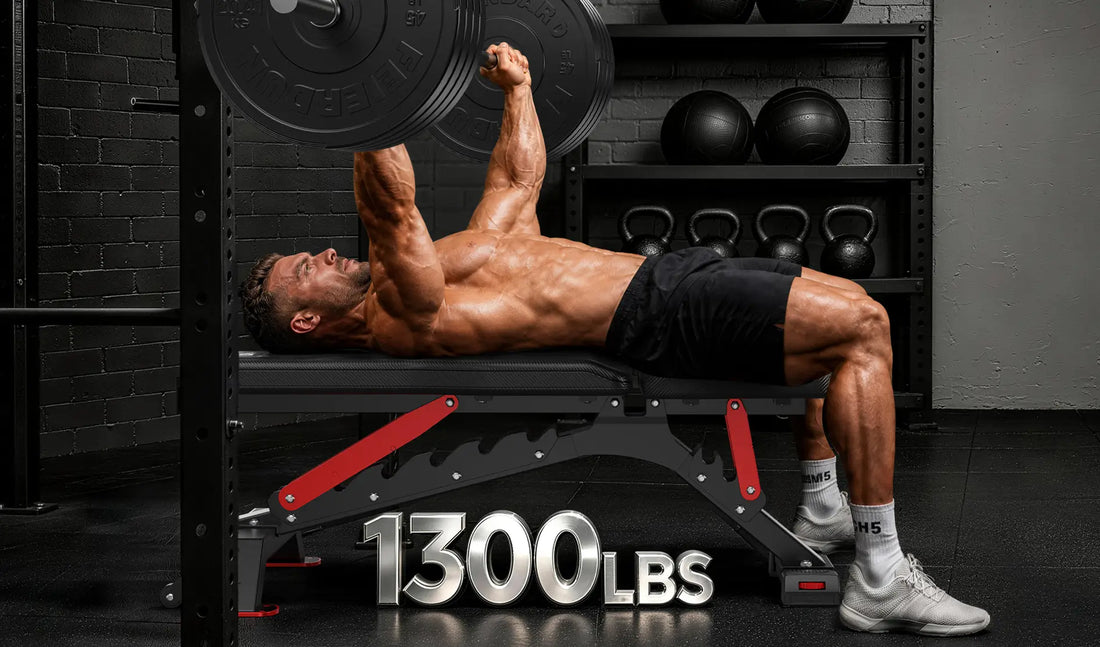
FED Fitness Flybird Series WB7 Adjustable Utility Weight Bench
- 1,300 lbs Maximum Weight Capacity
- 9 Adjustable Positions
- Heavy-Duty Steel Frame
How to Choose the Right Weights for Your Home Gym
The weights you pick shape your whole training experience. Your main options are adjustable dumbbells, fixed dumbbells, a barbell with plates, and convertible sets, and each fits a different priority.
For most home gyms, adjustable dumbbells are the clear winner on value and space. But let's look at all four so you can decide with confidence.
Adjustable Dumbbells
Adjustable dumbbells are the single best weight purchase for the average home gym. One pair replaces an entire rack, letting you dial the weight up or down in seconds without cluttering your floor with a dozen dumbbells.
The FED Fitness 52.5 lb Quick Adjustable Dumbbells are a perfect illustration, spanning 5 to 52.5 pounds with dual 2.5 and 5-pound increments and secure-locking hex plates.
That range covers light shoulder work through heavy rows and lunges, so a total beginner and a seasoned lifter can share the same pair. They cost far less than a comparable set of fixed dumbbells, and they take up a fraction of the room.

FED Fitness Feierdun Series DB1 Quick Adjustable Dumbbell 52.5LBS
- 5–52.5 lbs Adjustable Weight Range
- 15 Weight Selections
- 1-Second Dual-Dial Adjustment
Fixed Dumbbells
Fixed dumbbells are the classic gym staple: solid, indestructible, and instant to grab. With no moving parts, there's nothing to wear out, and you never pause to change a setting between sets.
The catch is space and money.
To match the range of a single adjustable pair, you'd need many fixed pairs, a rack to hold them, and a chunk of floor to put it all on. For a commercial gym or a lifter with room and budget to spare, they're fantastic. For most home setups, they're overkill.
Barbell and Weight Plates
When you're ready to load heavy, a barbell and plates become invaluable. Nothing beats a barbell for progressively overloading squats, deadlifts, and bench presses, since you can add small increments and lift far more than dumbbells allow.
Just know that a barbell asks for more from your space.
You'll want a rack or stands, a bit of room to move safely, and ideally safety arms or a spotter for heavy pressing. It's a brilliant addition once your strength demands it, but it's rarely the first thing a beginner needs.
3-in-1 Adjustable Dumbbell Set
If you want maximum versatility from one purchase, a convertible set is hard to beat. The FED Fitness 5-in-1 Adjustable Eco-Friendly Dumbbell Set transforms between dumbbells, a barbell, and a kettlebell using a connector, so you get several training tools in a single compact package.
For beginners building a first setup, this is a genuinely clever way to spend your money. You cover dumbbell movements, barbell-style lifts, and kettlebell swings without buying three separate pieces of equipment.
And it all stores in the space a single dumbbell set would take.
How Much Weight Do You Need in a Home Gym?
The right amount of weight is enough to challenge you today with room to grow tomorrow. That number depends mostly on your experience level and which muscles you're training.
A quick rule: smaller muscles like your shoulders need lighter loads, while your legs and back can handle much more. That's how it shakes out by experience.
Beginners
If you're just starting, you need less than you'd think.
Beginner women often work with roughly 3 to 15 pounds per hand depending on the exercise, while beginner men typically land around 5 to 25 pounds, going heavier for lower-body moves.
This is exactly why an adjustable pair spanning 5 to 52.5 pounds is such a smart first buy. You'll use the lighter end for shoulder raises and the heavier end for squats and rows, all from one set, with plenty of headroom as you get stronger.
Intermediate Lifters
Once you've trained consistently for several months, your strength climbs quickly. Many intermediate lifters want up to 50 or more pounds per hand for presses and rows, and they start eyeing a barbell for the big compound lifts.
At this stage, a dumbbell pair that tops out around 52.5 pounds still covers most work, and adding a barbell with plates fills in the heavy squats and deadlifts. It's the natural moment to expand your setup.
Full-Body Training
To train your whole body well, you want a spread of loads rather than a single weight. Light for isolation moves, moderate for pressing and rows, and heavy for legs and back.
Adjustable dumbbells shine here because that entire spread lives in one pair. Pair them with a versatile bench, add a barbell when you're ready, and you can train every muscle group through the right resistance for each, without a wall of equipment.
Best Bench and Weight Setups for Different Home Gyms
There's no universal "best" setup, only the best one for your space, goals, and experience. Here are four proven combinations to model yours on.
Best Setup for Beginners
Keep it simple and versatile.
A foldable adjustable bench plus one pair of adjustable dumbbells in the 5 to 52.5-pound range covers essentially every beginner movement. If you'd like barbell and kettlebell options too, a convertible dumbbell set adds them without extra clutter.
This setup is affordable, compact, and genuinely everything you need to start.
Best Setup for Small Spaces
When floor space is precious, go foldable and adjustable across the board. A foldable flat or utility bench paired with a single adjustable dumbbell set gives you a full-body gym that stores against a wall or under the bed.
Nothing here permanently claims your room, which is exactly what apartment training calls for.
Best Setup for Full-Body Strength Training
For serious, well-rounded strength, build around a full flat-incline-decline bench like the FED Fitness Adjustable Weight Bench, a solid pair of adjustable dumbbells, and a barbell with plates for heavy compounds.
This trio lets you press at every angle, load your squats and deadlifts heavy, and progress for years without hitting a ceiling.
Best Setup for Advanced Lifters
Advanced lifters need capacity and load. Start with a high-capacity FID bench such as the 800-pound WB5, then add heavier dumbbells or a second adjustable pair, a full barbell and plate collection, and a rack with safeties.
At this level, you're buying for longevity and heavy training, so prioritize sturdy, high-rated equipment that won't flinch under a big lift.
What to Look for Before Buying a Workout Bench and Weights
A few key specs separate gear you'll love from gear you'll regret. Check these before you spend a cent.
- For a bench, weight capacity comes first: pick a rating that comfortably exceeds your bodyweight plus your heaviest planned load, with 700 pounds or more being a safe target for serious lifting.
- Then look at pad width (around 11 to 12 inches is ideal), padding firmness, frame stability, and a secure, easy locking mechanism for the angle adjustments.
- Non-slip feet matter more than people expect.
- For weights, focus on the range and increments.
- You want a span that challenges you now and later, with small enough jumps to progress smoothly.
- On adjustable dumbbells, check that the locking mechanism feels secure and the handle is comfortable, and confirm the plates won't rattle loose mid-set.
And whatever you buy, favor reputable construction over the cheapest option, because this is gear you'll trust with heavy weight over your body.
Adjustable Dumbbells vs. a Full Set of Fixed Dumbbells
For the vast majority of home gyms, adjustable dumbbells win on space, cost, and convenience. Fixed sets only pull ahead for lifters with plenty of room, a bigger budget, and a need for instant weight changes.
Think about what actually matters at home.
A single pair of adjustable dumbbells replaces a whole rack, saving both money and a significant chunk of floor. The trade-off is a couple of seconds to change the weight and a few more moving parts to look after.
A full fixed set, by contrast, is faster to grab and nearly indestructible, but it costs considerably more and demands real space to store.
So the decision usually comes down to your room and your priorities. If you're working with a spare corner and a sensible budget, adjustable dumbbells are the obvious call. If you've got a dedicated gym and want that grab-and-go feel, fixed dumbbells earn their footprint.
For everyone in between, adjustable is the smarter buy.
How to Choose Based on Your Budget and Space
Match your gear to the room you have and the money you want to spend. These three tiers make the decision simple.
Limited Space
Go all-in on foldable and adjustable. A foldable flat or utility bench plus a single pair of adjustable dumbbells delivers a complete strength setup that disappears when you're done. It's the most training you can buy per square foot.
Moderate Space
With a bit more room, step up to a full FID adjustable bench and a good pair of adjustable dumbbells, and consider a convertible set to add kettlebell and barbell movements. You get real versatility without turning a whole room over to equipment.
Dedicated Home Gym
If you have a room or garage to spare, build the full picture: an FID bench, adjustable dumbbells, a barbell with a plate collection, and a rack. You can layer in fixed dumbbells later for convenience. Here, your only real limit is what your training goals demand.
Final Takeaway
You don't need a warehouse of equipment to build strength at home. A versatile bench and a smart set of weights will take you further than most people realize, and they'll do it without swallowing your space or your savings.
Start with an adjustable bench and a pair of adjustable dumbbells, add a convertible set or a barbell as your training grows, and match the whole thing to your room and budget.
Get those basics right, and you've got a home gym you'll actually use for years. Now pick your setup and start lifting.
FAQs
What Weight Should I Buy With a Workout Bench?
Start with a pair of adjustable dumbbells, which cover the widest range of exercises for the least space and money.
A set spanning roughly 5 to 52.5 pounds suits beginners through intermediates. When your big lifts outgrow that, add a barbell and plates for heavy squats, deadlifts, and presses.
Is an Adjustable Bench Better Than a Flat Bench?
For versatility, yes. An adjustable bench does everything a flat bench does and adds incline and decline angles, so one bench replaces several.
A flat bench is cheaper and slightly more stable for pure pressing, so it's a fine budget choice, but most people get more long-term value from an adjustable model.
Are Adjustable Dumbbells Worth It for a Home Gym?
For most people, absolutely. They replace a full rack of dumbbells in a fraction of the space and cost, which is exactly what home training needs.
The only minor trade-offs are a couple of seconds to change weights and a bit more care than a solid fixed dumbbell requires. For the space and money saved, it's an easy yes.
How Much Weight Capacity Should a Workout Bench Have?
Choose a capacity that comfortably clears your bodyweight plus the heaviest load you'll lift. For general training, 700 pounds or more is a safe target, and heavier lifters should look for 800 pounds or above.
FedFitness benches, for reference, run from 660 up to an 800-pound ASTM-certified rating.
Can I Build a Home Gym With Just a Bench and Dumbbells?
Yes, and it's exactly what most people should do first.
A quality adjustable bench and a pair of adjustable dumbbells cover the large majority of a complete strength program, from presses and rows to squats, lunges, and curls. You can always add a barbell later, but you don't need one to get genuinely strong.
References
- RitFit. "How to Choose a Workout Bench: Flat vs Adjustable vs FID."
- Garage Gym Reviews. "Adjustable Dumbbells vs Fixed: A Classic Home Gym Debate."
- Rep Fitness. "How Much Weight Do You Need to Buy for Your Home Gym?"
- BarBend. "The Best Weight Benches (Tested)."
- Set For Set. "What Weight Dumbbells Should I Buy?"
This content is for informational purposes only and does not constitute medical advice. If you have questions about your health or a medical condition, please consult your physician. Always seek guidance from a qualified healthcare professional before starting any exercise program or fitness routine. FED Fitness assumes no responsibility for any consequences resulting from the use of this information.


Leave a Comment
We’d love to hear from you — your insights can inspire others!