


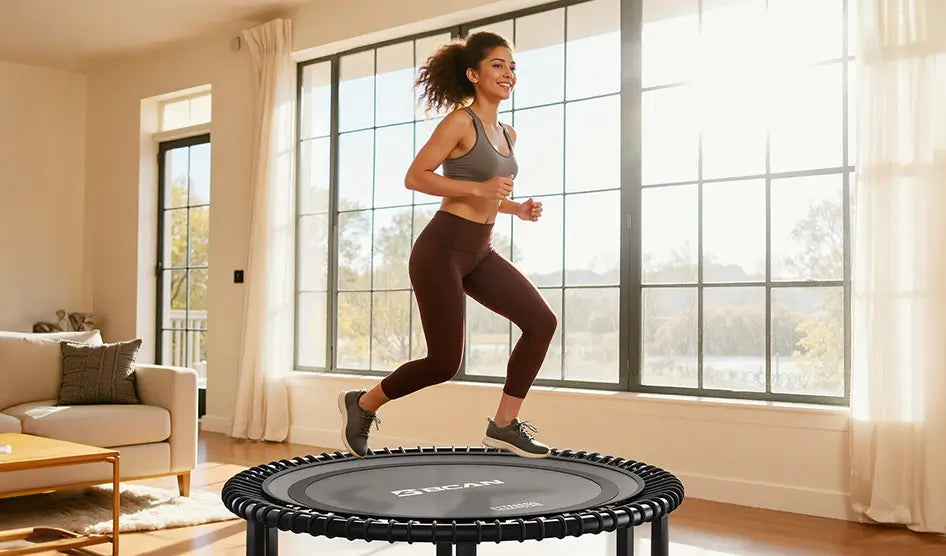
Best Rebounder for Weight Loss: How to Choose the Right Mini Trampoline for Your Fitness Goals
The best rebounder for weight loss is more about keeping a consistent schedule than simply dropping by a used sporting goods store and hoping for a decent product. As long as you can stick to a simple routine, you’re in a great place.
That said, you want a device with the weight capacity, safety features, and durable structure to workout. That is often something most people overlook when choosing a trampoline. That is why we at FED Fitness offer a range of products perfect for your home use. Whether you’re focusing on mini trampoline HIIT workouts or simply want some balanced conditioning, we’ve got you covered.
Here’s a quick overview of how to choose the right rebounder for your goals, so when it’s time to hop on and burn some energy, you’ve got the best tool for the job ready to go.
Why Rebounding Is Effective for Weight Loss
Rebounding for weight loss is so effective because it is a full-body workout. You’re engaging a large number of muscles to maintain your balance and lift your body into the air with each new jump. That forces muscles to respond by absorbing, stabilizing, and maintaining overall balance.
Two studies have directly measured the number of calories burned on a mini trampoline, and they reported very different results. One study found that participants burned 6.9 calories per minute, while another reported 12.4 calories per minute. Both findings suggest that rebounding can be an effective tool for weight loss. However, the amount of weight you lose will depend on factors such as your body weight, workout frequency, intensity level, and overall eating habits.
Rebounding is also gentler on your joints than many traditional forms of cardio, making it an excellent option for beginners. As your fitness level improves, you can gradually add more dynamic movements and progress to more challenging rebounder workouts.
Plus, a rebounder is fun. You’re not staring at a screen on a home treadmill. You're engaging your core, matching the rhythm to your favorite song, and driving your dog up the wall as you move up and down, and they can only watch.
All that movement burns energy, which means more calories. That helps you drop extra weight and tighten up your skin elasticity by improving oxygen and blood circulation. You could be recovering from an accident or wanting to get into your summer bikini, and a rebounder is the right workout answer.
What Type of Rebounder Is Better for Weight Loss?
There is no “one size fits all” rebounder. The best rebounder for weight loss depends on you and your goals. However, there are some elements you’ll want to consider while you’re shopping around.
Bounce Type
The bounce system is the primary difference between different brands and models of rebounders. Most will use either springs or bungee cords. When you have a spring-based rebounder, you get a firmer, more aggressive bounce. These devices are a little less expensive and are great if you only have 5-10 minutes in your day, but they can be slightly harder on your joints.
For beginners, stick to bungee rebounders. These will give you a smoother and quieter bounce that absorbs impact better. That helps you enjoy a low-impact cardio workout for longer, so you can burn more calories and sustain your body with reduced overall fatigue.
Stability
Next is the stability factor. That matters way more than you may realize at first. You want to feel safe and secure as you bounce into the air, especially when you start dynamic workouts for weight loss like jogging in place, jumping jacks, or twisting in the air on the rebounder.
To ensure you get as much stability as possible, look for a strong frame construction in your rebounder. It should have wide-leg support, non-slip feet, and durable attachments so they don’t fall as you bounce.
Size
When you use the best rebounder for weight loss, it needs to fit your natural body size. Too small, and you’ll feel like you’re squished as you jump. Too big, and you might get overconfident and try something dangerous.
Shoot for between 40” and 48” so you have more than enough room for HIIT movements. A medium to large rebounder is often the way to go.
Impact Level
As you jump, you will be placing stress on your joints. The trick to reducing that stress is a rebounder with a bungee system. Plenty of beginners need a low-impact solution due to lower back issues, knee discomfort, and ankle sensitivity.
Look for bungee systems specially meant for comfort. That will also help you feel more willing to stick to a consistent training schedule because your body doesn’t need as much time to recover after each session.
Noise
A factor you may not have considered is noise. Many people who are looking for the best rebounder for weight loss live with partners, families, pets, or neighbors. You don’t want to be loud and disrupt the rest of the household.
Spring rebounders tend to squeak or create metallic sounds as they degrade. Bungee rebounders are much quieter, especially when you’re working out in the early morning or late at night, and other people are still sleeping.
Weight Capacity
Your last factor to look at when deciding which rebounder is right for your needs is the weight capacity. Go big! Shoot for a good 50-100 pounds over your total body weight. If you can, go double your body weight.
Something with 400-550 pounds of weight capacity is more than enough for most adults and ensures you won’t have to worry when your kids double up to try out the device while you’re still at work.
Common Mistakes People Make When Choosing a Rebounder
As a beginner, you may fall victim to many of the common traps made when first stepping onto a rebounder. Here are some mistakes to avoid:
- Don’t just buy on price. You want something quality-made that will last
- Look for a blend of durability, bounce, support, and comfort
- Ask the brand if they have stability accessories, like a crossbar for added balance support
- Start small with low-impact workouts and work your way up from there
- Use tennis or running shoes to avoid slipping or tripping as you work out
These simple tricks go a long way to ensuring you have a rewarding and fun workout on your rebounder. The more fun it is, the more consistently you’ll be burning extra calories for weight loss.
Best Types of Rebounders for Different Weight Loss Goals
Best for Beginners
Start your hunt for the best rebounder for weight loss with the beginner-friendly BT4 Soft Land Pro Adult Bungee Trampoline. It is available in both 40” and 48” sizes and has a maximum weight capacity of 500 pounds.
You get a 60% faster setup time because all the bungees are pre-assembled. There’s a dual cord system with 6 resistance levels and an adjustable T-handlebar for added safety. This is a solid way to start your bouncing journey, and it fits well in most homes and apartments.

Best for Low-Impact Cardio
For those with weak knees or worried about adding more stress to joints, go with the BT2 Foldable Bungee Trampoline for Adults. This provides 40” or 48” of surface area in a wide array of colors, so you don’t have to fear your knees will give out.
More importantly, you get a thick, alloy frame with 16-strand stitching for stability. The 32mm legs and 10-thread reinforcement ensure it won’t wobble as you work out. There are 9mm bungees with a 350-strand latex core for a smooth, low-impact bounce.

Best for HIIT Workouts
HIIT rebounding is more about speed and accuracy as you work out. You still want the durability of design, but can sacrifice some features to ensure you have enough room. That is why the BT3 Octagonal Trampoline from FED Fitness is a good choice.
With this option, you get 51” of jumping space. That helps you enjoy more dynamic movement across the surface of the rebounder. That includes the adjustable T-bar as well for added jumping support.

Best for Small Spaces
For smaller spaces, FED Fitness offers a wide range of full- and foldable rebounders for weight loss worth exploring. Each one is sized to fit into most homes and shared space living situations. It’s more a matter of dealer choice when comparing current deals and specific weight capacities than any one model for smaller spaces.
Best All-in-One Mini Trampoline
If you're feeling overwhelmed by too many choices, or you're looking to make mini trampoline workouts a long-term part of your fitness routine, you'll want a reliable rebounder you can count on. In that case, the BCAN BT4 Soft Land is an excellent choice. That will give you a durable, long-term solution with a reliable bounce system and the highest-rated stability among all our trampolines at FED Fitness. It’s the best choice for almost everyone looking to get active and drop a few pounds.
Quick FED Fitness Mini Trampoline Comparison:
|
Model
|
Size
|
Types of Rebounder Suspension Systems
|
Resistance
|
Dynamic Weight Capacity
|
Static Weight Capacity
|
Assembly Time
|
Assembly Required
|
Handlebar
|
Handlebar Shape
|
Price
|
| BT4 Soft Land Pro Adult Bungee Trampoline |
40" or 48"
|
Enhanced bungee system
|
6-level adjustable
|
400lbs
|
500 lbs
|
8-15 min
|
Legs and handlebar only
|
Included, 5-level adjustable
|
T-shape
|
$299.99-$399.99
|
| BT3 Octagonal Foldable Bungee Trampoline |
51"
|
Durable bungee system
|
Fixed resistance
|
360 lbs
|
450lbs
|
15-30 min
|
Bungees, legs, and handlebars
|
Included, 3-level adjustable
|
T-shape
|
$199.99
|
| BT2 Foldable Adult Mini Bungee Trampoline |
40" or 48"
|
Durable bungee system
|
Fixed resistance
|
360 lbs
|
450lbs
|
15-30 min
|
Bungees, legs, and handlebars
|
Optional, 3-level adjustable
|
U-shape
|
$116.99-$140.39
|
| SP3 Foldable Adult Mini Spring Trampoline |
40" or 48"
|
Durable bungee system
|
Fixed resistance
|
225lbs
|
330 lbs
|
10-20 min
|
Springs, legs, and handlebar
|
Included, 3-level adjustable
|
U-shape, T-shape
|
$107.99-$125.99
|
| SP2 Foldable Mini Spring Trampoline |
40" or 48"
|
Durable bungee system
|
Fixed resistance
|
225lbs
|
330 lbs
|
10-20 min
|
Springs, legs, and handlebar
|
Included, 3-level adjustable
|
U-shape
|
$116.99-$125.99
|
Note: Assembly time may vary depending on factors such as the user's level of experience and familiarity with the assembly process.
Rebounding vs Other Cardio Equipment for Weight Loss
The best rebounder for weight loss is likely easier on your joints and more fun to use than a traditional treadmill, stationary bike, or elliptical. You get a blend of cardiovascular engagement, multi-muscle definition, and conditioning you wouldn’t get otherwise.
The right rebounder for you will be low impact, stable, engage your core, and help you gain balance while burning calories. Not to mention, you don’t need to worry if there is rain in the forecast with a rebounder.
Having a versatile device that fits into your home helps you avoid the loud noises and weird stares of the typical gym. It provides your body with a much-needed way to move, helping you feel better and live a happier, healthier lifestyle.
Take your time exploring the different rebounder models at FED Fitness. Whether you’re losing a little weight or improving your stability, we've got you covered.
FAQs
What Type of Rebounder is Best for Weight Loss?
The best rebounder for weight loss is one that provides all the support and comfort you need to stay consistent, while also being versatile enough to add dynamic movement and accessories down the road.
Are Bungee Rebounders Better for Weight Loss?
They can be because they’re easier on your joints and quieter. That makes bungee rebounders more approachable when you want to work out consistently.
What Size Rebounder is Best for Home Workouts?
Medium to large is a good range. That could be anywhere from 40” to 51” or so. If you have a smaller space, look for a foldable device for added storage options.
References
- Porcari JP, et al. ACE-Sponsored Research: Putting Mini-Trampolines to the Test. ACE ProSource, 2016 Oct.
- Cugusi L, et al. Exercise intensity and energy expenditure during a mini-trampoline rebounding exercise session in overweight women. Science & Sports, 2017 Feb: 32(1):e23–e28.
- Rathi M A, Joshi R, Munot P, et al. Rebound Exercises in Rehabilitation: A Scoping Review. Cureus. 2024 Jul 2:16(7): e63711.
This content is for informational purposes only and does not constitute medical advice. For questions related to your health or medical conditions, please consult your physician. Always seek advice from a qualified healthcare professional before starting any exercise program or health regimen. In the event of a medical emergency, call 911.


Leave a Comment
We’d love to hear from you — your insights can inspire others!