


How to Start Rebounding for Beginners: Your First Mini Trampoline Workout
Using a mini trampoline unlocks an easy workout for beginners who may be intimidated by loud, overcrowded gyms. Rebounders are gentle on the joints and offer simple, fun workouts that engage many core, leg, and stabilizing muscles. They fit into your home and can be used without disrupting a busy schedule.
When you first walk into a local gym, it’s pretty understandable to get overwhelmed by the sounds, crowds, and intimidating machines. Sometimes, getting started on your health journey begins with something at home where you can maintain a consistent routine.
A rebounder offers a fun, approachable way to get your body moving without any complex steps or hard-to-understand procedures. Learning how to use a mini trampoline correctly doesn’t take a two-hour tour or a personal trainer.
At FED Fitness, we’re all about ensuring you have all the tools you need right at home. That way, you can get in a quick workout while watching a show, before sitting down to catch up on work, or in between appointments. A rebounder fits well into your home and your schedule. Here’s a quick rundown of how to begin.
What Is Rebounding?
You’ve likely seen social media videos about rebounding before. It’s a type of exercise using a small fitness trampoline called a “rebounder.” Unlike those giant backyard trampolines you may have used as a kid, these rebounders absorb much more of the impact, allowing your muscles to work to stabilize your body while being gentler on the joints.
You’re hearing more about rebounding because it's popular. Having an efficient way to get low-impact cardio sessions during the day or as a warm-up for strength training is very useful for most schedules. The goal is to use small, deliberate motions to get the body moving, not giant leaps or extreme aerial acrobatics.
Why Rebounding Feels Easier Than Traditional Cardio
Traditional cardio usually means running, jogging, or jumping rope. Sometimes you’ll hear about a fitness enthusiast sticking to swimming or another sport for their cardio. All of those are great if you’re already set up to complete those motions.
The difference with a rebounder is that there’s less to prepare or plan. Take running, for example. It has to be a nice day outside, and you typically need a long block of time, like 30 to 60 minutes, for a full workout. You also may not have the safest spaces around your home due to traffic, construction, or busy walkways. With a rebounder, you simply hop on and get started, right from the convenience of your home.
The same applies to having a pool accessible for swimming or trying to jump rope when your ceilings are too low. Rebounders have been studied as a workout method to help jumpstart a healthier lifestyle because they work many different muscle groups and are easier to fit into your busy lifestyle.
What You Need Before Your First Rebounder Workout
The best part about getting started with a rebounder is that you only need a little space in your home, work area, or family room. Start by:
- Location: Find a flat, level surface that feels stable when you set your mini trampoline down. Make sure you have head clearance as you jump and that nothing is along the sides when you swing your arms.
- Stability: Double-check that your rebounder’s frame and legs are properly set. The mat should be centered and have no wobble from the handlebars or legs as you step onto the rebounder.
- Clothing: Try to wear comfortable clothing that won’t make you feel restricted. Even though you’re making small jumps, you are bending your legs, moving your arms, and having fun. Freedom of movement is key.
- Footwear: Yes, you can use a rebounder barefoot, but as a beginner, you may want the added cushioning of athletic shoes or the traction of wearing non-slip socks. Such non-slip Socks are often best, as they can provide better traction and stability, plus the FED Fitness BT4 mini fitness trampoline comes with a complimentary pair, helping users feel more confident and secure while exercising.
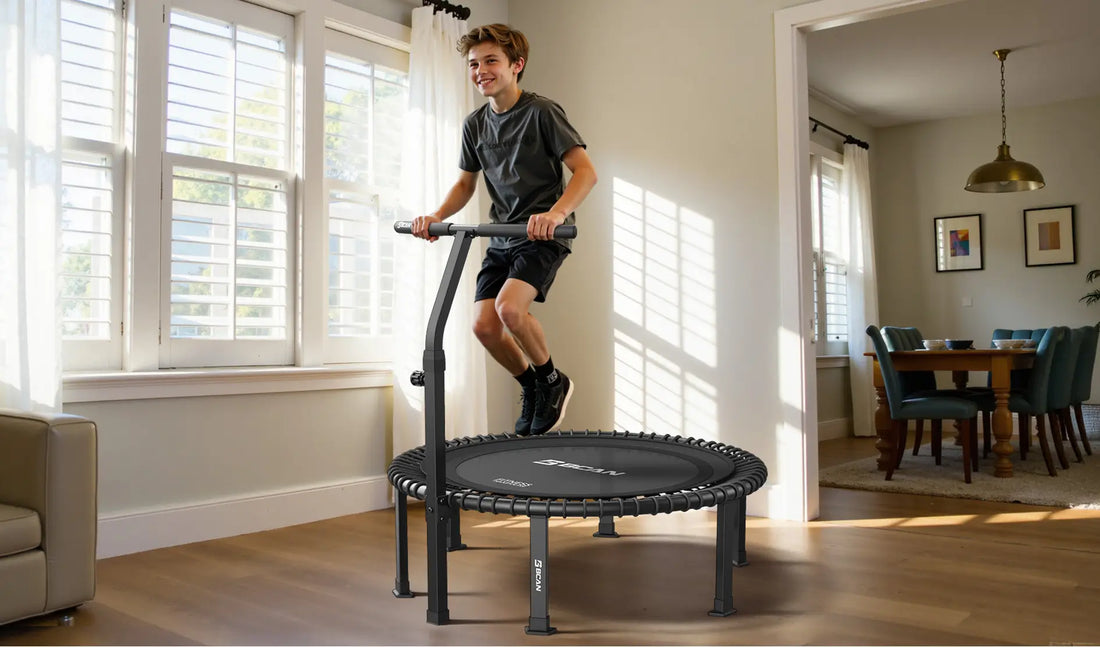
The final beginner note on how to use a mini trampoline is to use the handlebars. A model like the BT4 Soft Land Pro Adult Bungee Trampoline from FED Fitness includes an adjustable handlebar and a convenient phone holder so you can watch YouTube instructional videos as you scale your workouts.
How to Get on a Mini Trampoline Safely
Take your time when you first get on your new rebounder. Step onto the center of the mat, one foot at a time, and try to keep your feet about hip-width apart. As a beginner, you may want to do minor hops that don’t remove your feet from the mat quite yet. Getting used to the feel of the rebounder so you maintain your balance is a small achievement in itself.
Try to keep your knees slightly bent. Locking the legs may contribute to lightheadedness if you have underlying stress or health conditions. It’s always better to err on the side of caution. It’s also important to breathe. You’re trying something new, and that is fantastic, but a calming breath helps you focus on the feel of the device.

Best Beginner Rebounding Movements to Start With
It’s perfectly acceptable to feel a little intimidated the first time you learn how to use a mini trampoline. You’re not trying to be a gymnast headed to the Olympics. Start slowly and listen to your body. Here are some basic first bounces.
Health Bounce
Health bounce is a beginner-friendly movement that keeps you safe, works your stabilizer muscles, and gives you more confidence to try additional jumps down the road.
- Stand in the center of the rebounder with feet hip-width apart
- Keep your knees slightly bent and maintain an upright posture
- Allow the mat to move beneath you with gentle, controlled bounces
- Keep your bounce small so the balls of your feet never leave contact
Do this for about 5-10 minutes as you begin. Over time, you’ll start to feel better by slightly lifting your feet from the mat.
Gentle Marching
Once you feel ready to move on, give a gentle march a try. You’re adding more movement without jumping higher or feeling off balance from complex motions.
- Stand in the center of the mat with feet hip-width apart
- Slowly lift one knee a few inches off the mat
- Return the foot to the mat and lift the opposite knee
- Continue alternating legs while naturally swinging your arms for balance
You don’t need to rush your movement. The goal is balance, coordination, and conditioning. Let your body do the work in response to the rebounder, rather than forcing it into a complex position.
Light Jogging Bounce
After a few sessions of gentle marching, you’ll begin experimenting with something slightly more intense. With light jogging bouncing, you’re increasing your heart rate while keeping things low-impact.
- Stand in the center of the mat with feet hip-width apart
- Alternate lifting your feet in a jogging rhythm, but keep the bounce low so you stay centered
- Swing your arms naturally to maintain balance
You can speed it up or slow it down to fit your personal needs. The feet don’t come off the mat as high as the march, but enough to get a rhythm going.
Simple Arm Movements
Another wonderful aspect of the mini trampoline is that you don’t actually need to bounce to work out. Many beginners focus on keeping balance and moving their arms to sweat a little.
For example, you can stand in the center of the mat, then gradually introduce forward and overhead reaches, side arm raises, or small arm circles. As long as you’re moving your arms slowly and deliberately while the shoulders stay relaxed, you can engage many new muscle groups.
How Long Should Beginners Rebound?
There is no “bare minimum” workout for your unique situation. It’s best to start with 10-15 minute sessions when you’re just starting, then gradually work up to 20-25 minute sessions.
Shoot for 3 sessions per week at first. By week 4, you should be good to go with 4 or more sessions. Listen to your body and maintain your posture. You’ll build confidence as you explore how to use your mini trampoline over time.
The Mayo Clinic recommends 150 minutes of moderate exercise a week. That may or may not work for you, but 3 sessions of 20 minutes each is a great goal and gets you almost halfway there.
Common Beginner Mistakes to Avoid
You’re new to a rebounder. Just like riding a bike or fishing for the first time, you need to avoid some common mistakes. Don’t try to jump really high. Keep small, controlled bounces with your knees bent and not locked.
Keep your eyes up, not looking down at your feet, especially when attempting more complex movements. Looking down messes with your posture and balance. You don’t want to lean too far forward, round your shoulders, or stand hunched over. Stay proud and tall as you bounce.
You may also wish to avoid overly focusing on how many calories you burn or complex workouts that drain your energy fast on day one. Slow and steady with consistent movement over time is the best formula for a health journey.
Your goal isn’t perfection. It’s utilizing a mini trampoline like the BT4 Soft Land Pro Adult Bungee Trampoline from FED Fitness in a way that fits into your lifestyle. As that device fits well into most homes with both a 40” and 48” model that can hold up to 500 pounds and comes with a handlebar, you should feel safe and empowered to begin your rebounding routine.
Final Thoughts
Don’t let another trip to an overcrowded, crazy-loud gym ruin your goal of feeling healthier. Learn how to use a mini trampoline at home and begin to improve your balance, stability, and confidence as you move.
Success will come as you master simple movements and let your body tell you when it's time to progress. As far as beginner-friendly equipment, a rebounder is a solid first step to getting more active all year round, right in the convenience of your living room.
FAQs
Is Rebounding Good for Beginners?
Absolutely, a beginner-friendly rebounder is gentle on the joints, easy to fit into a busy schedule, and takes up very little room in a home.
Do You Need Shoes for Rebounding?
Not necessarily, but as a beginner, you may want supportive athletic shoes for traction and added support until your stabilizer muscles get conditioned.
Why Do Beginners Lose Balance on a Rebounder?
It’s often because they’re not used to the motion. Start slow and use the handlebars, and you’ll avoid many of the early mistakes beginners make when first starting out with how to use a mini trampoline.
What Is the Easiest Rebounder Exercise to Start With?
The health bounce is hands down the simplest workout that is easy on the joints and helps you build confidence over time. Even when you’re more advanced, it’s a solid warm-up.
References:
- Rathi MA, Joshi R, Munot P, Pandit S, Kulkarni CA. Rebound Exercises in Rehabilitation: A Scoping Review. Cureus. 2024 Jul 2;16(7):e63711.
- Vanderbilt University Medical Center. Vanderbilt Autonomic Dysfunction Center. Health and Wellness Blog. 2026.
- Mayo Clinic Staff. Fitness basics. Healthy Lifestyle – Mayo Clinic. 29 March 2024.
This content is for informational purposes only and does not constitute medical advice. For questions related to your health or medical conditions, please consult your physician. Always seek advice from a qualified healthcare professional before starting any exercise program or health regimen. In the event of a medical emergency, call 911.


Leave a Comment
We’d love to hear from you — your insights can inspire others!