


Hip Abductor vs. Adductor Machine: What's the Difference and Which One Do You Need?
Among the endless rows of machines at your local gym, you’ll likely find a machine where people are sitting down. They open their legs outward and then flip a few switches to force their legs closed. While the exercises may look the same, they actually train very different groups of muscles.
When you learn the difference between abductor and adductor muscles, you start to understand how to build a more balanced lower body exercise routine. Instead of focusing on your glutes (butt) or getting leaner, more toned legs, you learn how to help support hip strength, stability, and mobility.
The good news is you don’t have to go to the gym to work these muscles. You can use an at-home device. Here’s a quick overview of what hip abductor and adductor machines do and how you can check out a FED Fitness alternative for your home workout.
Quick Machine Comparison Before You Buy
| Feature |
Hip Abductor Machine
|
Hip Adductor Machine
|
|
Main Movement
|
Pushes the legs away from the body's midline
|
Pulls the legs toward the body's midline
|
|
Primary Muscles
|
Gluteus medius, gluteus minimus, tensor fasciae latae
|
Adductor longus, adductor magnus, adductor brevis, gracilis
|
|
Primary Goal
|
Hip stability and glute strength
|
Inner thigh strength and hip control
|
|
Common Benefits
|
Balance, lateral stability, glute development
|
Inner thigh strength, movement control, athletic support
|
|
Beginner Friendly
|
Yes
|
Yes
|
|
Common Uses
|
General fitness, strength training, sports, older adults
|
General fitness, sports, lower-body accessory work
|
What Is the Difference Between Hip Abduction and Hip Adduction?
A good trick for remembering the difference between the abductor and adductor muscles is to think about which direction your legs move. For hip abduction (Alaia, 2026), it means your legs move away from the center (sometimes called midline) of your body. When you hop onto an abductor machine, you start with your legs together, then push your knees against the pads to open them, often pretty wide.
Hip adduction is the opposite movement. You begin with your legs outward. Don’t worry, it is adjustable. You’re not starting in a split or anything. Then you push your knees against pads to bring your legs back together.
There is some nuance to the movement based on where you feel resistance and if you want to increase or lower the difficulty of the exercise, but that is the gist. While the movements appear simple at first, with regular training, you can see the difference when you walk across a large parking lot or climb a bunch of stairs.
Muscles Worked: Which Muscle Groups Do They Target?
| Hip Abductor Machine |
Hip Adductor Machine
|
|
Gluteus medius
|
Adductor magnus
|
|
Gluteus minimus
|
Adductor longus
|
|
Tensor fasciae latae (TFL)
|
Adductor brevis
|
|
Upper fibers of gluteus maximus
|
Gracilis
|
|
Deep hip stabilizers
|
Pectineus
|
There is a lot of information about which abductor and adductor muscles are worked during these machine-supported movements. You can look up the details in most anatomy books, but here is the quick version.
For the hip abductor muscles, you work:
- Gluteus medius: moves your legs outward while keeping your pelvis level whenever you walk or stand on one leg.
- Gluteus minimus: helps control smooth hip movement and assists the gluteus medius during the day.
- Tensor fasciae latae (TFL): what supports outward leg movement and stabilizes the outside of the hip.
- Upper gluteus maximus (butt): crucial to supporting larger lower body movement like running, walking, or just getting out of a chair.
- Deep hip stabilizers: those tinier muscles that surround the hip joint and control movement and stability.
For the hip adductor muscles, you’re pulling the knees in, so you work:
- Adductor magnus: the largest muscle in the inner thigh, producing the majority of the squeezing force.
- Adductor longus: what pulls the thigh toward the body’s center and assists with walking and other everyday mobility.
- Adductor brevis: a complementary muscle that controls inward leg movement alongside other adductors.
- Gracilis: crosses both the hip and the knee while coordinating movement between the upper and lower leg.
- Pectineus: stabilizes the upper thigh whenever you change directions and assists with overall hip movement.
It’s really important to remember that none of these abductor and adductor muscles work independently. It’s more of a controlled symphony of movement where different muscles from both regions engage based on whether you’re running a marathon, riding a bike, or simply shifting your weight while waiting for a bagel to pop from the toaster. That’s why research supports working multiple sets of muscles for improving lower body stability and mobility. (Flack, 2012)
Benefits Compared: Hip Abductor vs Adductor Machines
As you can imagine, different people will focus on different machines. Certain sports or wellness goals may make someone lean toward the abductor or adductor muscles.
Better Hip Stability
For a lot of people, especially those a little older, stability is the big goal. Elderly patients are 3x as likely (Boynton, 2010) as other adults to pass away or get seriously injured from even a ground-level fall. That’s pretty serious.
Abductor machines may be more important in this situation, especially for beginners. Both the gluteus medius and minimus help keep the pelvis level whenever you shift your weight back and forth, like taking steps or balancing.
Building Stronger Glutes
The “glutes” are the most powerful group in your body. They support the spine, protect the knees, and improve daily movements. That’s why a lot of people working out in a gym do squats and deadlifts to improve the gluteus maximus.
Hip abduction machines are good for the glutes because they work the gluteus medius and minimus, which are the muscles that create more strength around the outside of the hips. They also contribute to overall hip shape if toning is your goal.
Strengthening Inner Thighs
Having stronger inner thighs may help reduce strains and lower back pain. It may also improve your sports performance because the adductors anchor your pelvis so you can run, walk, and climb without losing your general center of gravity.
What many people forget is that working on the adductors doesn’t mean losing fat in those muscle groups. Spot reduction isn’t the goal. But you can get stronger muscles that could help overall body composition, especially when combined with nutrition and consistent training.
Improving Balance
Balance is a whole-body effort. For this benefit, you want to use both the abductor and adductor muscles in a blended or dual machine setup. That’s because the abductors stabilize the pelvis from the outside while the adductors control movement toward the body’s center. Training both supports a more balanced lower body.
If you think of both machines as accessories to use as part of a balanced workout routine, you can see more benefits than using just one. Even when you include lunges, squats, and deadlifts in your regular exercise, complementing with abductor and adductor machines helps provide a more comprehensive lower body workout.
Which Machine Should You Choose?
Deciding between the hip abductor or hip adductor machines really comes down to what you want in terms of wellness goals. If you prefer stronger glutes with improved hip stability, balance, and strength outside of the hips, go with the hip abductor machine. If you prefer stronger inner thighs and more variety in lower-body training with improved leg strength, try the hip adductor machine.
You can also focus on a complete lower body development goal. That is best achieved with a machine that allows you to do both hip abduction and hip adduction, instead of waiting in line for someone to finish their workout and wipe down the device.
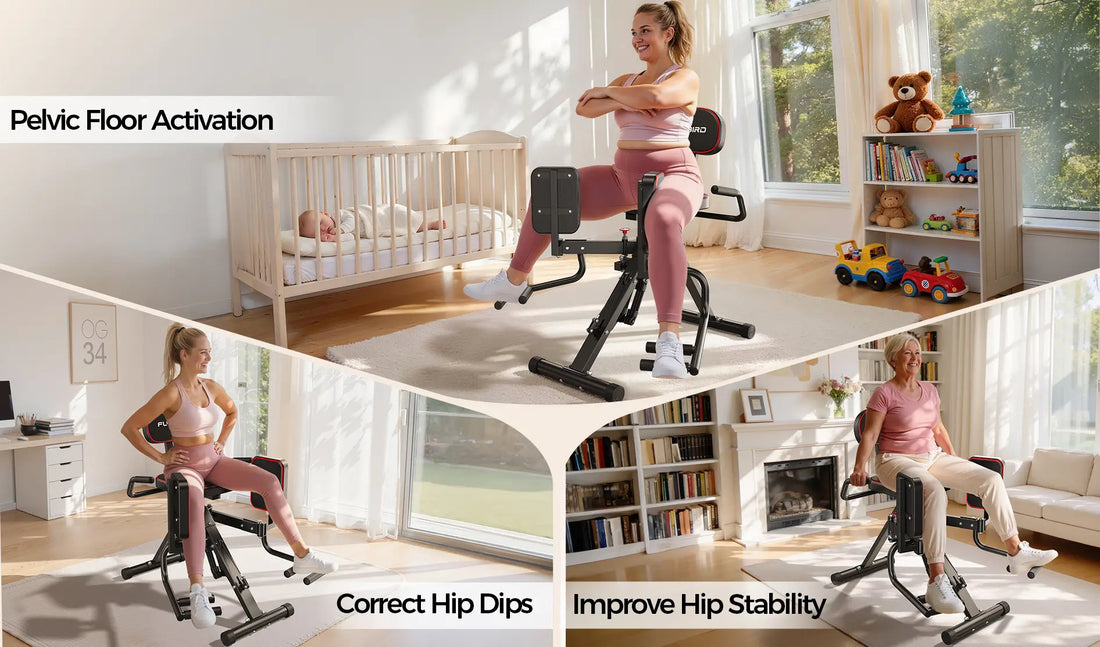
That is why FED Fitness offers the Flybird Series HA1. This combines both movements to work your hip abductor and adductor muscles, all in a single, comfortable device. With a 2-in-1 design and adjustable resistance, you can target specific muscles and enjoy a more stable workout. It supports a total weight capacity of 600 lbs. and has resistance intensities ranging from 36 to 108 lbs.

FED Fitness Flybird Series HA1 2-in-1 Hip Abductor and Adductor Machine
2-in-1 Hip Abductor & Adductor Machine, Easy, Smooth & Quiet Operation
$259.99
The Flybird Series HA1 is a practical, easy-to-use device perfect for beginners, seniors, hobbyists, and bodybuilders looking to get a more comprehensive solution for the muscles around the hip.
Can One Hip-Focused Machine Replace the Other?
As far as the abductor and adductor muscles are concerned, one machine cannot replace the other. You’re performing fundamentally different movements in each machine. Unless you have a 2-in-1 device like our Flybird Series HA1, you’ll have to get up, adjust the seat, and move to another device.
Conclusion
Whenever you’re comparing the abductor and adductor muscles, take the time to consider the benefits and what your personal fitness goals may be. You can find machines at a local gym that will work either, but rarely one that will work both. Even when you do, it tends to be occupied by someone else trying to strengthen the hip muscles.
A better solution is to have a ready-to-go machine right at home. With the FED Fitness Flybird Series HA1, you can work both the hip abductor and adductor muscles in the comfort of your living room, hybrid workspace, or garage. That way, you get as many wellness benefits as possible.
FAQs
Hip Abductor vs. Adductor Machine: Which Is Better for Beginners?
Both can be beginner-friendly because the seated position provides more stability, but always look for adjustable resistance for even more control.
Hip Abductor vs. Adductor Machine: Which Burns More Calories?
Neither hip abductor nor adductor machines are meant for high caloric burn. That will depend more on your workout duration, resistance level, and the rest of your training program.
Hip Abductor vs. Adductor Machine: Which Is Better for Glute Training?
The hip abductor machine focuses more on the gluteus medius, gluteus minimus, and areas around the gluteus maximus. If your goal is the “butt,” you’re likely looking for the hip abductor machine.
Does the Adductor Machine Slim Inner Thighs?
The science is still out on “spot reduction” for any fat on the body. However, the hip adductor machine will help strengthen your inner thigh muscles. Your specific body composition depends on many other factors like nutrition, sleep, and genetics.
Should Men Use Both Machines?
Absolutely. Hip strength and overall stability have nothing to do with gender. It is a good idea to work out any muscles that improve mobility and balance.
How Often Should I Train Abductors and Adductors?
For most healthy adults, training each movement one to two times per week (as part of a balanced lower-body program) is enough to see benefits.
References:
- Alaia, Michael J. (July 2026). Hip Conditioning Program. OrthoInfo.
- Flack NA, Nicholson HD, Woodley SJ. (September 2012). A review of the anatomy of the hip abductor muscles, gluteus medius, gluteus minimus, and tensor fascia latae. Clin Anat. 25(6):697-708.
- Boynton, E. (1 November 2010). For Elderly, Even Short Falls Can Be Deadly. University of Rochester.
This content is for informational purposes only and does not constitute medical advice. For questions related to your health or medical conditions, please consult your physician. Always seek advice from a qualified healthcare professional before starting any exercise program or health regimen. In the event of a medical emergency, call 911.


Leave a Comment
We’d love to hear from you — your insights can inspire others!