


What Does a Hip Adductor Machine Do? Benefits, Muscles Worked & Why Strong Inner Thighs Matter
The hip adductor machine is one of the most misunderstood pieces in the gym, dismissed as a "toning" station when it's actually a smart way to build a muscle group your squats and lunges tend to neglect.
This guide breaks down exactly what the machine does, which muscles it works, the real benefits, and the honest truth about whether it can slim your inner thighs. You'll leave knowing precisely how to use it and why it deserves a spot in your leg routine.
What Is a Hip Adductor Machine?
A hip adductor machine is a seated resistance machine that trains the inner-thigh muscles by having you press your legs from an open position back toward the midline against a set weight. It isolates a muscle group that most compound leg exercises only work indirectly.
You sit with your legs apart and pads resting against the inside of your knees or thighs, then squeeze your legs together against resistance.
That squeezing motion is called adduction, and it's the machine's whole purpose.
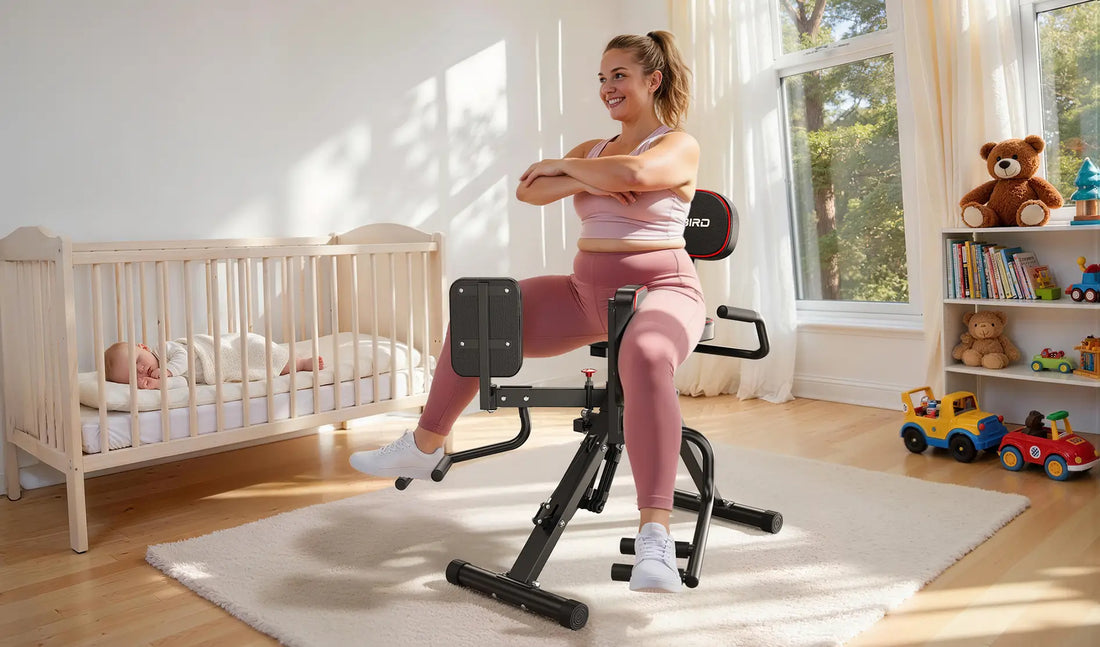
Many modern machines, including the FED Fitness 2-in-1 Hip Abductor & Adductor Machine, handle both directions from a single seat.

FED Fitness Flybird Series HA1 2-in-1 Hip Abductor and Adductor Machine
2-in-1 Hip Abductor & Adductor Machine, Easy, Smooth & Quiet Operation
$259.99
Flip a pin, and the same station trains the outer thighs too. That versatility matters, and we'll come back to why balancing both sides is the smart approach.
What Does a Hip Adductor Machine Actually Do?
It strengthens the muscles that pull your legs toward the center of your body, contributes to hip and pelvic stability, and balances out the outer-hip work you get elsewhere. In short, it targets a group that quietly supports nearly every lower-body movement.
Three things are happening when you use it. Let's take them one at a time.
Strengthens the Muscles That Bring Your Legs Toward the Midline
Every rep loads your adductors through their main job: pulling the thigh inward. Because squats, lunges, and leg presses drive the legs mostly up and down, the inner thighs rarely get direct, focused work from them.
The adductor machine changes that, letting you overload the group specifically and through a full range of motion.
Helps Stabilize the Hip and Pelvis
Your adductors aren't just movers. They help steady the pelvis while you walk, run, and stand, working in what's called closed-chain activation during the stance phase of your stride.
Research also notes that switching on the adductors increases activation of core muscles like the transversus abdominis.
Stronger adductors contribute to a more stable base from the hips up.
One honest caveat, since it's easy to oversell this: the hip abductors are generally considered the primary pelvic stabilizers when you're balanced on one leg. The adductors are partners in that job, not the lead. Which brings us neatly to the next point.
Works Together With Your Hip Abductors
Inner and outer thigh muscles are a matched pair. The adductors pull the legs in, the abductors take them out, and the two constantly balance each other to keep your pelvis level and your stride efficient.
Training one and ignoring the other invites imbalance, and that's exactly why a machine that does both, like the FED Fitness combo, is such a practical option for home training.
What Muscles Does a Hip Adductor Machine Work?
The machine targets the five muscles of the inner-thigh adductor group. Each contributes to pulling the leg inward, with several helping out on hip flexion, stability, and rotation.
| Muscle |
Primary function
|
Why it matters
|
|
Adductor magnus
|
The strongest adductor; its rear portion also assists hip extension
|
The workhorse of the group, and a contributor to hip power
|
|
Adductor longus
|
Adduction, with assistance in hip flexion and stability
|
Large and fan-shaped; the one athletes most often strain
|
|
Adductor brevis
|
Adduction and some hip flexion
|
A short, deep muscle that adds stabilizing strength
|
|
Gracilis
|
Adduction, plus help with knee flexion and rotation
|
The only adductor crossing the knee, so it links hip and knee
|
|
Pectineus
|
Assists adduction and hip flexion
|
Sits high on the inner thigh and rounds out the group
|
So what does that table mean in practice?
The adductor magnus does most of the heavy lifting, and because part of it assists hip extension, a strong magnus supports movements like standing up and driving out of a squat.
The adductor longus is the one you'll most often hear about in the context of "groin strains," which makes keeping it strong worthwhile for active people.
The gracilis is unique because it crosses both the hip and the knee, so it plays a small role in knee movement as well.
And the pectineus, while not a headline muscle, quietly contributes to both adduction and hip flexion.
Together, they're mostly controlled by the obturator nerve and work as a coordinated team every time you bring your legs together.
What are the Benefits of Using a Hip Adductor Machine?
Beyond stronger inner thighs, adductor training supports pelvic stability, better lower-body control, and athletic movements that depend on side-to-side strength. It's an accessory that punches above its reputation.

Build Stronger Inner Thighs
This is the obvious one. The machine lets you load the adductors directly, which most compound lifts don't. A typical approach is 3 to 4 sets of 10 to 15 controlled reps through a full range of motion.
Support Hip Stability
Stronger adductors contribute to a steadier pelvis and hips as part of a balanced muscular system. Paired with abductor and glute work, they help you feel more controlled on your feet, whether you're climbing stairs or holding a single-leg position.
Improve Lower-Body Control
Because the adductors help manage how your legs track and where your weight sits, strengthening them can improve your coordination and control in everyday movement and in the gym. Think smoother lunges and more stable landings.
Support Athletic Performance
This is where adductors earn real respect. Hip adductor and abductor strength are among the strongest predictors of change-of-direction and sprint performance.
One modeling study found that a 10% increase in overall hip strength raised maximum sprinting speed by around 2.6%, a far bigger effect than the same change at the knee or ankle.
And for anyone who cuts, pivots, or sprints, inner-thigh strength is not optional.
Complement a Balanced Leg Workout
Most leg routines lean heavily on the quads, glutes, and hamstrings. Adding focused adductor work rounds out the picture and helps correct the front-to-back, side-to-side imbalances that build up over time.
A 2-in-1 machine makes hitting both the inner and outer thighs simple.
Support Injury-Resilient Movement
Among athletes, lower adductor strength is associated with a higher rate of groin injuries, and eccentric strengthening programs have been shown to build meaningful adductor strength.
It's worth noting this research was done in male athletes, so the numbers don't automatically transfer to everyone.
And to be clear, this is about conditioning and general resilience, not a medical treatment.
If you have pain, see a professional.
Who Can Benefit Most from a Hip Adductor Machine?
Almost anyone building balanced lower-body strength, from athletes to beginners to older adults staying steady on their feet. The machine is guided and low-skill, so it suits people who want results without a learning curve.
- A few groups get particular value.
- Athletes in sports that demand cutting and sprinting benefit from the change-of-direction link.
- Lifters chasing balanced legs use it to shore up an underworked group.
- Beginners appreciate that the machine guides the movement, so there's little to get wrong.
- Individuals looking to enhance glute definition and achieve a more sculpted lower body
- And older adults working on lower-body strength and stability can use it as one part of a balanced program, since steady hips support confident movement.
If you're recovering from an injury, loop in a professional before you start.
Can a Hip Adductor Machine Slim Your Inner Thighs?
Not directly, and any article promising otherwise is overselling it. You cannot spot-reduce fat from a specific area by training the muscle underneath it. What the machine does is build and firm the muscle, which looks great once overall body fat comes down.
The idea that working a muscle "melts" the fat sitting on top of it is one of fitness's most stubborn myths.
A 2021 meta-analysis of 13 studies with more than 1,100 participants found that training a specific muscle had no effect on the fat sitting over it.
Classic studies where people trained just one leg found no extra fat loss in the trained leg compared with the untrained one.
So what should you expect?
The machine strengthens and tones the adductor muscles.
Whether those toned muscles become visible depends on your overall body-fat level, which comes down to total activity, nutrition, sleep, and consistency, not any single exercise.
Build the muscle with the machine, reduce body fat through a whole-body approach, and the shape you're after shows up. But skip the fat-loss side, and you may simply add firm muscle beneath the same layer.
That's not a knock on the machine; it's just how bodies work.
Hip Adductor Machine vs Hip Abductor Machine
The adductor machine trains the inner thighs by pulling your legs together; the abductor machine trains the outer hips and glutes by pushing your legs apart. They're opposites that work best as a pair.
Adduction draws the legs toward the midline and targets the inner-thigh group. Abduction moves the legs outward and targets the gluteus medius and minimus on the outer hip.
Both muscle groups help stabilize the pelvis, and because they're antagonists, training only one can leave you unbalanced.
That's the case for a 2-in-1 machine that covers both from a single seat.
We'll dig into the full comparison in a dedicated article, but the short version is simple: for balanced hips, you want both.
The Wrap-up
The hip adductor machine isn't a gimmick or a "ladies only" station. It's a straightforward, effective way to strengthen a muscle group that most leg routines undertrain, with real payoffs for stability, control, and athletic movement.
Use it for 3 to 4 sets of controlled reps, pair it with outer-hip and glute work for balance, and keep your expectations honest about what strength training can and can't do for how your thighs look.
Do that, and this humble machine becomes a genuinely useful part of a complete lower-body plan. Strong, balanced hips are worth building, one squeeze at a time.
Frequently Asked Questions
Is the Hip Adductor Machine Only for Inner Thighs?
The inner thighs are its main target, but the benefits reach further. By strengthening the adductor group, you also support pelvic stability, lower-body control, and the side-to-side strength that athletic movements rely on.
So while it looks like an inner-thigh station, its value spreads across your whole lower body.
Should Beginners Use a Hip Adductor Machine?
Yes, it's one of the more beginner-friendly machines around. The seat and pads guide your movement, so there's very little technique to master, and you can start light and build up.
Begin with a manageable weight, focus on a smooth full range of motion, and add resistance as it starts to feel easy.
How Often Should You Train Hip Adductors?
For most people, once or twice a week is plenty. A common approach is 3 to 4 sets of 10 to 15 reps, or fitting one focused adductor movement into each lower-body session. As with any muscle group, give it a day or so to recover between hard sessions.
Can Seniors Benefit From Hip Adductor Exercises?
Many older adults use adductor work as part of a balanced strength routine, since inner-thigh strength contributes to steady, confident lower-body movement. The machine's guided motion and adjustable resistance make it approachable.
As always, anyone with a health condition or recent injury should check with a doctor or physical therapist before starting something new.
Does the Hip Adductor Machine Help With Hip Stability?
It contributes. The adductors help stabilize the pelvis alongside the outer-hip abductors, so strengthening them adds to a stable base, especially when you train both muscle groups together.
Just remember the abductors are the primary stabilizers on one leg, so balanced training of both sides gives you the best result.
References:
- Kenhub. "Hip Adductors: Anatomy, Innervation, Supply, Function." Kenhub.
Physiopedia. "Hip Adductors." Physiopedia. - Ishøi, L., et al. "The Neuromuscular Effects of the Copenhagen Adductor Exercise: A Systematic Review." International Journal of Sports Physical Therapy.
- "Running Speed Is Maximized by Strengthening the Hip Flexors and Hip Adductors." Annals of Biomedical Engineering, 2026.
- "Abductor and Adductor Strength Relation to Sprint Performance." Baltic Journal of Health and Physical Activity.
- University of Sydney. "Spot Reduction: Why Targeting Weight Loss to a Specific Area Is a Myth." 2023.
- Healthline. "Adductor Exercises: Build Hip Strength and Prevent Injury." Healthline.
This content is for informational purposes only and does not constitute medical advice. For questions related to your health or medical conditions, please consult your physician. Always seek advice from a qualified healthcare professional before starting any exercise program or health regimen. In the event of a medical emergency, call 911.


Leave a Comment
We’d love to hear from you — your insights can inspire others!