


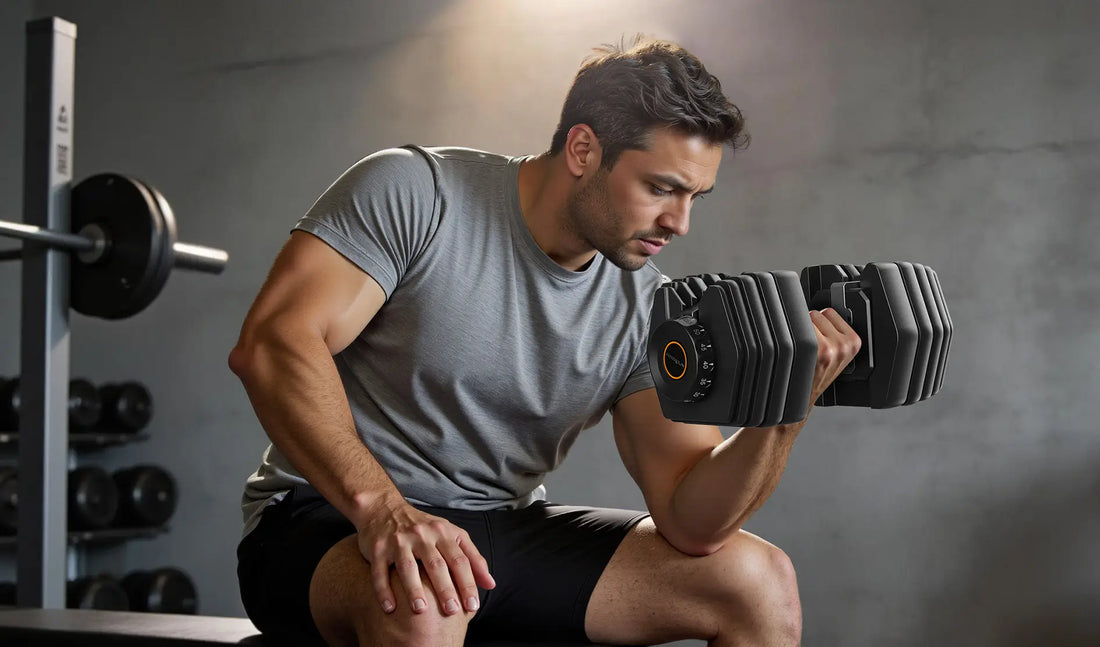
Beginner’s Guide to At-Home Dumbbell Workouts
Are you looking to improve your health and fitness? A well-designed home dumbbell workout can transform your strength, confidence, and overall health without costly subscriptions or the intimidation of a gym. In this latest guide, we explore the best dumbbell workouts for beginners, how to choose the right weights, and how to progress safely.
Why Dumbbells Are Perfect for Beginners
When people first decide to start strength training, they often feel overwhelmed by complex machines, crowded gym floors, or advanced lifting techniques. Dumbbells remove that intimidation factor thanks to being a simple, versatile, and incredibly effective solution that can be used easily at home.
Unlike large gym machines that lock you into fixed movement patterns, dumbbells allow your body to move more naturally. This is particularly useful for beginners looking to develop coordination, balance, and joint stability at the start of their fitness journey. Because you will be using each arm independently, muscular imbalances become easier to spot and correct, a foundation that will pay off later if you choose to progress to more advanced training.
Adjustable dumbbells also fit seamlessly into a home environment, and a single pair can provide dozens of exercises that train your entire body. For anyone thinking about starting an adjustable dumbbell workout for beginners at home, the convenience factor of being able to fit around your busy lifestyle will often encourage long-term consistency. When your equipment is always within easy reach, those typical excuses for skipping the gym fade, and positive habits start to form.
From a practical standpoint, adjustable dumbbells also support progressive overload, which is the principle of gradually increasing resistance to stimulate muscle growth. You can start light and master your technique before increasing the weight as your strength improves. This approach not only helps to reduce the risk of injury, but it also helps to build your confidence.
What Weight Dumbbells Should Beginners Start With?
One of the most common questions beginners ask when looking to purchase their first set of adjustable dumbbells is, “How heavy should I go?” There is no one-size-fits-all answer to this question, as it depends on your current strength level, body weight, and training history, but there are helpful guidelines.
For most women who are new to resistance training, you should look to start with dumbbells around 5-10lb, while men can usually begin at around 10-20lb. These weights work well with a wide range of upper-body exercises, as well as supporting many lower-body movements such as squats and lunges, ensuring a complete at-home workout.
Of course, the only way to determine if you have the right weight is by its performance. You want a weight that allows you to complete 8 to 12 repetitions with good form while feeling challenged in the final two reps. You should not be straining or losing control of the movement, but you also should not feel like you could perform 20 more repetitions easily.
If you are a complete novice, it is better to start slightly lighter than you might think, as this will allow you to fully focus on perfect technique. Strength builds quickly in beginners, especially in the first eight to twelve weeks, and as long as you increase weight gradually when the exercises feel easier, progress will follow.
If your budget allows, adjustable dumbbells are a smart investment for a dumbbell workout for beginners at home. They help to save space and make progression simple, without you needing multiple pairs scattered around your room, or having to purchase a new set when you progress.
Can You Build Muscle at Home with Dumbbells?
A very common concern among beginners is whether training at home with dumbbells is actually enough to build muscle and improve fitness. The answer is yes, you absolutely can build muscle at home using dumbbells, as long as you train consistently, use proper technique, and gradually increase the challenge over time.
Muscle growth happens when your muscles are exposed to resistance that they are not used to. This resistance creates small amounts of muscle damage, and when the body repairs that damage, the muscles grow back stronger and slightly larger in a process known as progressive overload. This is the foundation of all strength training, no matter whether you are in a commercial gym or working out in your living room, so as long as you go through this process, you will be building muscle.
Dumbbells are particularly effective because they allow a wide range of motion and require more stabilizing muscles than machines. Exercises such as goblet squats, dumbbell presses, lunges, and rows can train all the major muscle groups in the body. By gradually increasing the weight, performing more repetitions, or slowing down the movement, you can continue challenging your muscles for many months and even years.
It is also important to remember that muscle is not built from training alone. Nutrition and recovery play a major role, and you need to ensure you are eating enough protein, drinking plenty of water, and getting adequate sleep to maximize your results.
The 6 Best Dumbbell Exercises for Beginners
When starting a dumbbell workout for beginners at home, it is important to focus on simple, effective exercises that target multiple muscle groups. These are often called compound movements, and they give you the most results for your time and effort.
Below are six beginner-friendly dumbbell exercises that together create a complete full-body workout.
1. Goblet Squat
The goblet squat is one of the best lower-body exercises for beginners because it helps teach proper squat technique while building leg and core strength. This exercise primarily targets the quadriceps, glutes, and core, making it an excellent starting point for anyone new to strength training.
Step 1: Stand with your feet slightly wider than shoulder-width apart and your toes pointing slightly outward.
Step 2: Hold one dumbbell vertically against your chest using both hands.
Step 3: Keep your chest lifted and your core engaged.
Step 4: Slowly push your hips back and bend your knees to lower your body down.
Step 5: Continue lowering until your thighs are roughly parallel to the floor or as low as feels comfortable
Step 6: Keep your knees tracking in line with your toes throughout the movement.
Step 7: Push through your heels to return to a standing position.
Step 8: Reset your posture and repeat.

2. Dumbbell Romanian Deadlift
This exercise focuses on your hamstrings, glutes, and lower back and is a great movement for improving posture and strengthening the back of the body.
Step 1: Stand upright with your feet hip-width apart, holding a dumbbell in each hand in front of your thighs.
Step 2: Keep a slight bend in your knees and engage your core.
Step 3: Begin the movement by pushing your hips backward while keeping your back straight.
Step 4: Lower the dumbbells slowly down the front of your legs.
Step 5: Continue lowering until you feel a stretch in your hamstrings.
Step 6: Keep the dumbbells close to your body throughout the movement.
Step 7: Drive your hips forward to return to a standing position.
Step 8: Squeeze your glutes at the top before repeating.

3. Dumbbell Chest Press
The dumbbell chest press is a great upper-body exercise that targets the chest, shoulders, and triceps. While a bench will ensure maximum results, it can also be performed on the floor.
Step 1: Lie on your back on the floor or on a bench with a dumbbell in each hand.
Step 2: Bend your knees and place your feet flat on the ground.
Step 3: Hold the dumbbells at chest level with your palms facing forward.
Step 4: Press the weights upward until your arms are fully extended above your chest.
Step 5: Keep your wrists straight and aligned with your elbows.
Step 6: Slowly lower the dumbbells back down until your elbows gently touch the floor or reach a comfortable depth.
Step 7: Maintain control throughout the movement.
Step 8: Press the weights back up and repeat.

4. One-Arm Dumbbell Row
The one-arm dumbbell row strengthens the upper back and helps improve posture, which is particularly important for people who spend a lot of time sitting at a desk.
Step 1: Place one knee and one hand on a bench, chair, or sturdy surface for support.
Step 2: Keep your back flat and your core engaged.
Step 3: Hold a dumbbell in your free hand with your arm extended toward the floor.
Step 4: Pull the dumbbell upward toward your hip, keeping your elbow close to your body.
Step 5: Focus on squeezing your shoulder blade back at the top of the movement.
Step 6: Pause briefly at the top.
Step 7: Slowly lower the dumbbell back to the starting position.
Step 8: Complete all repetitions on one side before switching arms.

5. Dumbbell Shoulder Press
The shoulder press is one of the best exercises for building shoulder strength and improving upper-body stability.
Step 1: Stand or sit upright with a dumbbell in each hand at shoulder height.
Step 2: Position your palms facing forward and keep your elbows slightly in front of your body.
Step 3: Engage your core to support your lower back.
Step 4: Press the dumbbells upward until your arms are fully extended overhead.
Step 5: Avoid locking your elbows completely at the top.
Step 6: Slowly lower the weights back down to shoulder level.
Step 7: Maintain a controlled pace throughout the movement.
Step 8: Repeat for the desired number of repetitions.

6. Dumbbell Reverse Lunge
The reverse lunge is a fantastic lower-body exercise that can also help to improve balance and coordination. Reverse lunges are also easier on the knees than forward lunges, making them ideal for beginners.
Step 1: Stand upright with your feet hip-width apart, holding a dumbbell in each hand by your sides.
Step 2: Engage your core and keep your chest lifted.
Step 3: Step one foot backward into a lunge position.
Step 5: Keep your front knee aligned with your toes.
Step 6: Push through the heel of your front foot to return to standing.
Step 7: Bring your back foot forward to the starting position.
Step 8: Repeat on the opposite leg and continue alternating sides.

3-Day Beginner Dumbbell Workout Plan
If you are just starting out, train three times per week, leaving at least a day in between each workout to give your body time to recover. Full-body workouts are ideal for beginners because they allow you to practice each movement regularly and build balanced strength.
Below is a simple three-day dumbbell workout for beginners at home.
Day 1
Goblet Squat – 3 sets of 10 to 12 reps
Dumbbell Chest Press – 3 sets of 8 to 12 reps
One Arm Dumbbell Row – 3 sets of 10 reps each arm
Plank – 3 sets of 20 to 30 seconds
Day 2
Dumbbell Romanian Deadlift – 3 sets of 10 to 12 reps
Dumbbell Shoulder Press – 3 sets of 8 to 12 reps
Reverse Lunge – 3 sets of 8 to 10 reps each leg
Basic Core Exercise – 3 sets
Day 3
Goblet Squat – 3 sets of 12 reps
Dumbbell Chest Press – 3 sets of 10 reps
One Arm Dumbbell Row – 3 sets of 12 reps
Farmer Carry – 3 rounds of 30 seconds
You should rest for about 60 to 90 seconds between each set. When the exercises start to feel easier and you can comfortably complete the maximum number of repetitions, increase the weight slightly. It is this gradual progression that is the key to getting stronger and building muscle.
Common Mistakes Beginners Make
When starting a dumbbell workout for beginners, there are a few common mistakes that can slow progress or increase the risk of injury. One of the biggest is choosing weights that are too heavy, with many people mistakenly believing they will produce faster results; however, in reality, it results in poor form and can lead to injury.
Another common mistake is skipping warm-ups. Even a short warm-up of five minutes, including arm circles, bodyweight squats, and light stretching, can prepare your muscles and joints for training and ensure you’re in the best position possible. Inconsistency is another major issue, and simply doing one workout per week will not produce noticeable results, so stick to a routine and treat your workouts as important appointments that cannot be missed.
Finally, many beginners neglect rest and recovery. Muscles grow and repair when you are resting, not while you are training. Getting enough sleep and eating enough protein will make a huge difference to your progress.
Final thoughts
Starting a dumbbell workout routine at home is one of the most practical and effective ways to improve your health, build strength, and increase confidence. Dumbbells are not only versatile and beginner-friendly, but their compact size makes them perfect for home workouts, and by choosing the right weight, focusing on proper technique, following a structured workout plan, and staying consistent, you can achieve excellent results.
Ready to start your fitness journey? Here at FED Fitness, we’re on a mission to provide exceptional products designed to make home workouts convenient, effective, and fun! Check out our full range today, or get in touch with our team, who will be happy to help you find the right solutions for your goals.
Beginner Dumbbell Workout FAQs
When Do You Need a Weight Bench and What Are the Benefits?
While a weight bench is not essential in the early stages, it becomes increasingly useful as you progress and want to expand your exercise options. You may want to consider adding a bench once you feel comfortable with the basics and are looking to challenge your muscles in new ways.
One of the main benefits of a weight bench is the increased range of motion it allows, helping to stimulate more muscle growth over time. A bench also allows you to perform incline and decline variations, which target muscles from different angles and create a more balanced physique.
In addition, a bench provides better support and stability for certain exercises, allowing you to maintain proper posture, especially when lifting heavier weights.
How Many Times a Week Should Beginners Train?
Most beginners should aim to train three times per week, as this allows enough training volume to build strength while also giving their muscles time to recover.
How Long Should Each Workout Be?
A beginner workout does not need to be extremely long, and most starter dumbbell workouts should last between 30 and 45 minutes, including warm-up and cool-down. Remember, consistency is far more important than long workouts.
Should Beginners Do Full-Body Workouts or Split Workouts?
Full-body workouts are generally better for beginners as they allow you to train each muscle group multiple times per week and help you learn the basic movement patterns more quickly.
Are Dumbbells Safe for Beginners?
Yes, dumbbells are very safe for beginners when used correctly. Start with lighter weights, focus on proper form, perform controlled movements, and be sure to avoid rushing through exercises and always maintain good posture.
Do I Need One Dumbbell or a Pair?
A pair of dumbbells is ideal because it allows you to perform more exercises and train both sides of your body evenly. However, if you only have one dumbbell, you can still perform many effective exercises.
Can Beginners Train with Dumbbells Only?
Yes, beginners can build strength, muscle, and fitness using only dumbbells. A well-structured workout at home can be just as effective as many gym programs, especially in the early stages of your training.
This content is for informational and educational purposes only and does not constitute medical advice. For questions related to your health or medical conditions, please consult your physician. Always seek advice from a qualified healthcare professional before starting any exercise program or health regimen. In the event of a medical emergency, call 911.


Leave a Comment
We’d love to hear from you — your insights can inspire others!