


Best Adductor Workouts for Strength: 8 Exercises to Build Stronger Inner Thighs
Strong legs are certainly possible with standard lunges, squats, and the occasional deadlift, but you may be missing out on something a bit more specific: the hip adductors. These are the muscles around the hip that help you walk with balance, quickly change direction, and stabilize yourself when on one leg.
When you don’t include adductor workouts in your program, you may begin experiencing muscle imbalances or notice certain weaknesses. A more balanced strength regimen certainly supports your overall wellness.
Whether you’re a pro athlete, beginner, or older adult looking to get a little more confidence when walking in the morning, these exercises can help you safely develop stronger inner thighs.
Why Strong Adductors Matter
The hip adductors are a group of five muscles (adductor magnus, adductor longus, adductor brevis, gracilis, and pectineus) running from the pelvis to the inner thigh and knee (Santas, 2025). They are essential in stabilizing your pelvis as you shift weight from side to side and provide support for more dynamic movement.
The trick to hip adductors is that they are part of a greater system, all tying to your core muscles and pelvic floor. When those hip adductors cannot properly support your pelvis, it could lead to more lower back tension and reduced mobility.
What Makes an Effective Adductor Workout?
Not all the adductor exercises you may have seen in YouTube videos or at your local gym serve the same purpose. The goal is to have a comprehensive program including three types of movement:
- Compound Movements: Exercises that involve multiple joints and muscle groups, all working together. These may include sumo squats, Cossack squats, and lateral lunges.
- Isolation Exercises: Here you focus the majority of resistance or workload on the adductor muscles, like using a hip adductor machine, side-lying hip adduction, and resistance bands.
- Stability Exercises: With stability, you want the hip adductors to work alongside the core and any other surrounding hip muscles, like in the Copenhagen plank or when squeezing a stability ball.
Finding a way to balance the different types of hip adductor workouts so they integrate into your more holistic program is a good way to support a stronger, more mobile body. Again, it depends a lot on your specific composition. That’s why having a diverse selection of workouts is a good idea.
8 Best Adductor Workouts for Strength
1. Hip Adductor Machine
Sitting down while focusing on hip adductor workouts is a great place to start. It allows you to isolate the inner thigh muscles without overstraining the body. You can isolate the movement and use adjustable resistance as you scale, which is helpful when you’re a beginner, an older adult, or want to work out at home.

Primary muscles worked: Adductor magnus, adductor longus, adductor brevis, gracilis, pectineus.
How to perform it:
- Sit upright with your back against the pad
- Position your legs against the thigh pads
- Begin with your legs comfortably apart
- Slowly squeeze your legs together
- Pause briefly before returning under control
Try not to use any momentum as you work out or slam the weight stack too hard. Keep your body upright and stick to a resistance that makes you work, but doesn’t hurt.
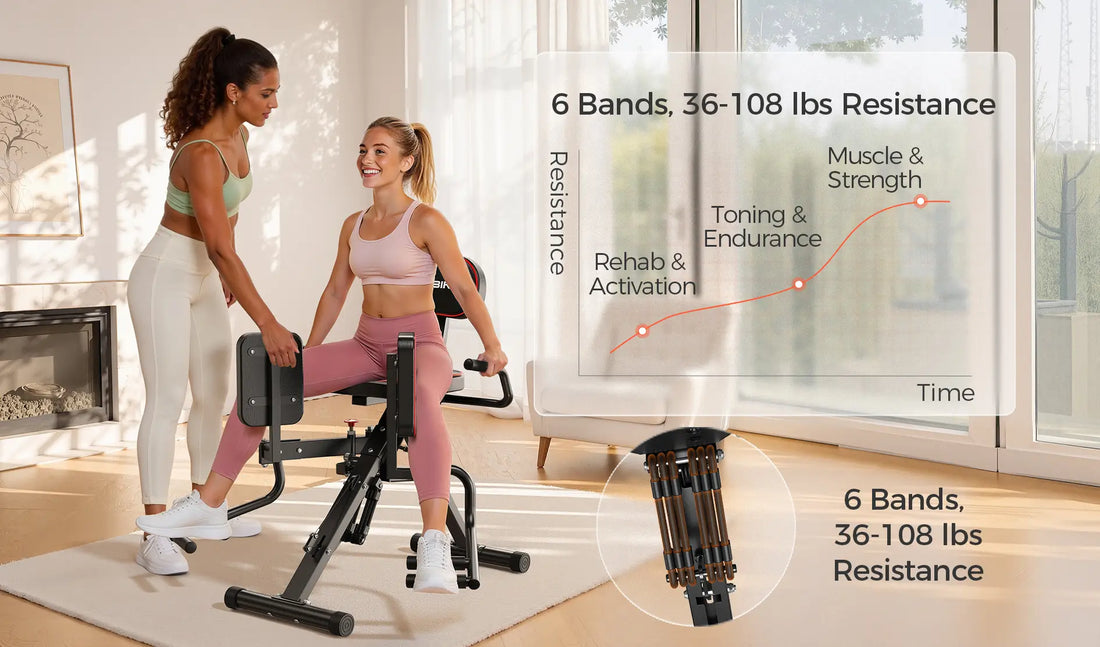
A good starting machine for adductor workouts is the FED Fitness Flybird Series HA1. This is a 2-in-1 device you can use at home. It offers a comfortable seat with adjustable resistance settings while you sit in a comfortable position. Plus, you can flip from hip adductor to hip abductor workouts for a more full lower body workout whenever you want.
2. Sumo Squat
When you perform the sumo squat in a wider stance, it shifts more of the weight emphasis on your hip adductors, even when it’s just body weight. This is a compound movement that is easy for beginners and helps anyone looking to improve general lower body strength.
Primary muscles worked: Adductors, glutes, quadriceps, hamstrings.
How to perform it:
- Stand wider than shoulder-width
- Turn your toes slightly outward
- Lower into a squat
- Push through your heels to stand
Try not to let your knees collapse inward or round your back. You also should avoid rising onto your toes as you shift weight. Otherwise, this is an easier-to-approach workout you can do pretty much anywhere.
3. Resistance Band Hip Adduction
A set of resistance bands is always useful, especially if you prefer at-home exercises. They give you more constant tension and are pretty beginner-friendly, even with an isolated exercise for hip adduction.
Primary muscles worked: Entire adductor group.
How to perform it:
- Anchor the resistance band
- Attach it around your ankle
- Pull your leg across your body
- Return slowly
What’s tricky here is you need to avoid twisting the hips. There are also plenty of videos on social media of people letting the band snap back, so stand with good posture and anchor the band well before starting.
4. Stability Ball Adductor Squeeze
This beginner-friendly adductor workout is more for stability. It is also good for people just warming up for a larger workout routine or seniors needing help with stability.
Primary muscles worked: Adductors and core.
How to perform it:
- Sit or lie comfortably
- Place a stability ball between your knees
- Squeeze gently
- Hold for 3–5 seconds
- Relax and repeat
Breathe normally as you squeeze (gently, not aggressively) and try not to rush any of your repetitions. Slow and steady helps you remain consistent so you can repeat this exercise a few times per week.
5. Side-Lying Hip Adduction
This is a beginner-friendly hip adductor workout that directly isolates the targeted inner thigh. It is often used in combination with other home workouts and is popular with rehabilitation-style strengthening. (Boyle, 2013)
Primary muscles worked: Adductor longus, adductor magnus, gracilis.
How to perform it:
- Lie on your side
- Cross the top leg over the bottom leg
- Lift the bottom leg upward
- Lower slowly
You really should look at a video of this exercise. It can be an odd arrangement for the body if you’ve never done it before. Just don’t swing your leg or roll the hips backward. Move slowly and deliberately.
6. Lateral Lunge
When you add side-to-side movement, you challenge many hip adductor muscles that aren’t typically used in a normal day. As a compound unilateral movement, you’ll see many intermediate athletes and those seeking to improve mobility try this workout.
Primary muscles worked: Adductors, glutes, quadriceps.
How to perform it:
- Stand tall
- Step wide to one side
- Bend the stepping knee
- Keep the opposite leg straight
- Push back to the starting position
Don’t lean too far forward or allow your knees to collapse. When you take a step, make sure it is large enough to feel the workout. Too shallow and you’re really just walking.
7. Copenhagen Plank
If you want a more advanced adductor workout, try this style of plank. It combines strength with stability and is common with athletes and more experienced workout enthusiasts.
Primary muscles worked: Adductors, obliques, core, glutes.
How to perform it:
- Place one leg on a bench
- Support yourself on your forearm
- Lift your hips into a straight line
- Hold while maintaining alignment
Don’t drop your hips as you move or hold your breath. Relax and move with patience so you don’t lose your body alignment during the plank.
8. Cossack Squat
Cossack squats are great for mobility. They help you develop strength through a much larger range of motion. This is a more intermediate-to-advanced compound movement best for improving mobility, so take your time as you attempt the adductor workout.
Primary muscles worked: Adductors, glutes, quadriceps.
How to perform it:
- Stand in a wide stance
- Shift toward one leg
- Keep the opposite leg straight
- Return to center
- Repeat on the other side
It helps to use a table or wall when you’re first trying the Cossack squat out. Don’t let your heel lift or round your spine, and take your time when you descend so you’re not straining your knees.
Sample Adductor Workout Routines
Here are some recommendations for building a solid hip adductor workout at home. Always customize your program to your wellness goals, any worrisome areas that may feel strained, and your daily schedule. Personalization is extremely helpful with exercising.
Beginner Routine (2 times/week)
- Hip Adductor Machine: 2 sets × 12 reps
- Stability Ball Squeeze: 2 sets × 15 reps
- Side-Lying Hip Adduction: 2 sets × 12 reps each side
- Sumo Squat: 2 sets × 10 reps
Intermediate Routine (2-3 times/week)
- Hip Adductor Machine: 3 sets × 10–12 reps
- Lateral Lunges: 3 sets × 10 each side
- Resistance Band Hip Adduction: 3 sets × 15 reps
- Cossack Squats: 3 sets × 8 each side
Strength-Focused Routine (1-2 times/week)
- Hip Adductor Machine: 4 sets × 8 reps
- Copenhagen Plank: 3 holds per side
- Sumo Squats: 4 sets × 8 reps
- Lateral Lunges: 3 sets × 8 each side
The more you repeat the workouts, the better you’ll be able to feel when it’s time to increase repetitions (reps) or add more resistance. Take your time and listen to your body.
That is why adding the FED Fitness Flybird Series HA1 is so useful. It scales hip adductor and abductor muscle training with your workout, offering comfort and progressive loading through adjustable resistance over time.
Common Mistakes During Adductor Training
Unfortunately, there are some common mistakes that people run into with adductor workouts. The basic thought is to stay slow, controlled, and smooth. That will ensure better results. Otherwise, you may run into issues like:
Starting with too much weight
Rushing your repetitions or allowing momentum to move weight
Skipping the full range of motion
Ignoring essential proper posture
Training only adductors while ignoring other hip muscles
Keep it slow and controlled. That is what will produce better muscle engagement. You can also combine training your hip adductors with your hip abductor muscles. That will give you a more supported lower body regimen and stabilize the pelvis while still getting stronger inner thighs.
Conclusion
Strong inner thighs look great in a swimsuit, but they also contribute to all kinds of daily movement like walking, balance, and stability. When you can build a routine that combines compound, isolation, and stability work, you develop a much more balanced set of hips supporting any larger fitness goals.
FAQs
How Often Should I Train Adductors?
Adding adductor workouts to your lower body training 2-3 times per week is enough for most adults.
Are Squats Enough?
Traditional squats help the adductors to a degree, but adding comprehensive workouts provides more targeted strengthening.
Can Adductor Workouts Reduce Inner Thigh Fat?
Not on their own. The scientific evidence on “spot training” is still a little out. It can help reduce body fat when combined with proper nutrition, sleep quality, and total physical activity.
What's the Best Adductor Workout at Home?
Anything that combines side-lying hip adduction, resistance band training, stability squeezes, and using an at-home device like the Flybird Series HA1 for isolated workouts.
References:
- Santas, D. (26 September 2025). Why training your inner thighs matters more than you think. CNN Health.
- Boyle KL. (June 2013). Clinical application of the right sidelying respiratory left adductor pull back exercise. Int J Sports Phys Ther. 8(3):349-58. PMID: 23772350.
This content is for informational purposes only and does not constitute medical advice. For questions related to your health or medical conditions, please consult your physician. Always seek advice from a qualified healthcare professional before starting any exercise program or health regimen. In the event of a medical emergency, call 911.


Leave a Comment
We’d love to hear from you — your insights can inspire others!