


Best Dumbbell Back Exercises for a Stronger, Wider Back
Summary: The best dumbbell back exercises help you get the width and shape you want, without losing strength or definition. Start small, stick to proper form, and maintain consistency. When combined with proper nutrition, sleep, and hydration, these dumbbell workouts can help you reach your fitness goals at home instead of a loud, overcrowded gym.
Going to a busy, crowded, loud gym with a wall of machines isn’t required for a fantastic-looking back. You can get both the strength and definition you want while training right at home with the right dumbbell back exercises.
Some movements might be great for a wide appearance. Others focus on thickness or supporting your spine. The best dumbbell back exercises help you get the aesthetic, movement, strength, and support your body needs.
What Muscles Do Dumbbell Back Exercises Work?
Before launching into the back exercises, it’s a good idea to remember your back isn’t one giant muscle. There are major and minor groupings. Knowing how one complements the other helps you pick the exercises most suitable for your needs.
Latissimus Dorsi (Lats)
The latissimus dorsi (Jeno, 2026) is the large, fan-like muscle that covers the middle and lower parts of your back. They are what you use to lower your upper arm toward your body. If you’re hoping for the wider V-shape look that a lot of lifters shoot for, you'll want rows and dumbbell pullovers targeting the lats.
Traps and Rhomboids
Your trapezius (traps) is a large portion of the upper back. They help control the shoulder blades, which is why rowing and shrugging motions can boost trap strength and complement lats-focused work.
Erector Spinae
These muscles run along the spine. They are necessary to both extend and stabilize your trunk. It’s what you work with to maintain a strong torso position, like bent-over rows and Romanian deadlifts.
Best Dumbbell Back Exercises
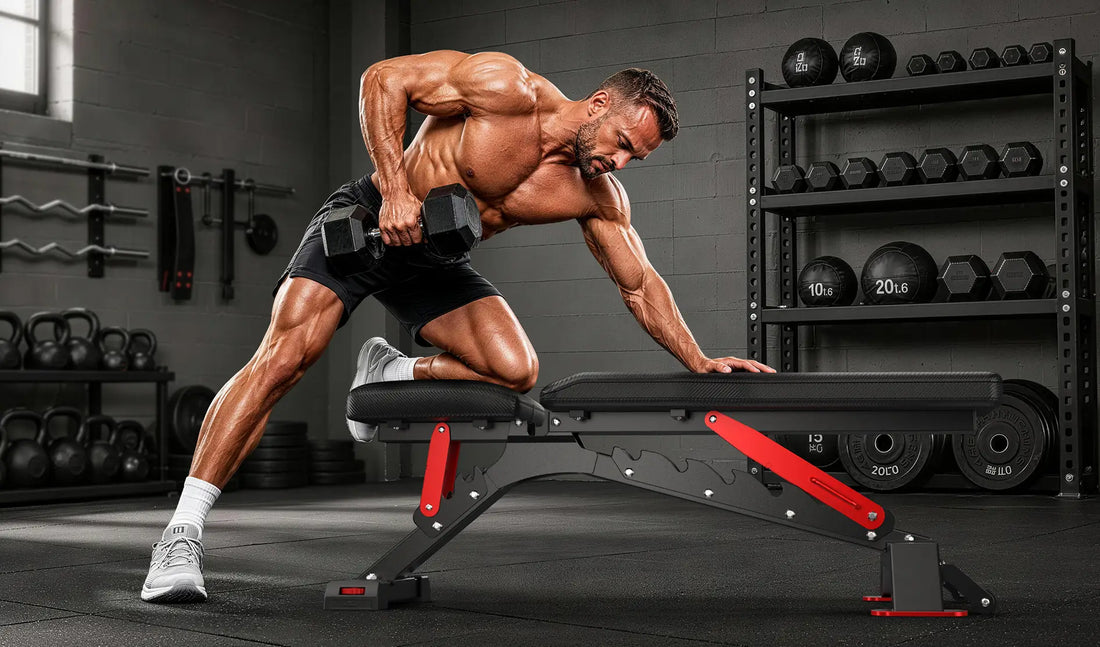
1 - Single-Arm Dumbbell Row
When you’re working a single-arm dumbbell row, you’re using the lats, rhomboids, traps, rear delts, and biceps. As you move, try to avoid rotating your torso to move the weight or shrugging your shoulders. You want clean, controlled movement.
- Place one hand and knee on a bench
- Make sure the opposite foot is on the floor
- Hold the dumbbell with the free hand
- Let your arm extend toward the floor
- Pull the dumbbell to the hip, pause, and then lower under control
2- Dumbbell Pullover
You’ll want a stable bench like the FED Fitness Flybird Series WB5 for this workout. When done right, you’ll work the lats and some parts of the chest and triceps. Make sure the movement is controlled and focused on moving through the shoulders. You want to avoid lowering the dumbbell farther than your shoulder mobility allows or arching the back.
- Lie across the bench (lengthwise)
- Hold one dumbbell above your chest
- Keep a slight bend in your elbows
- Lower the weight behind your head
- Stop at a comfortable range
- Bring it back over your chest
3 - Bent-Over Dumbbell Row
- Hold a dumbbell in each hand
- Push your hips backward so your torso is angled forward
- Maintain a neutral spine
- Allow weights to hang
- Pull both dumbbells toward the torso
- Slowly lower them back down
4 - Chest-Supported Dumbbell Row
A bench makes all the difference in dumbbell back exercises like this one. That way, you can concentrate on the rowing movement as long as your shoulder blades are back while your elbows travel behind you. Don’t shrug toward your ears or bounce your chest off the bench. Keep things smooth and at a comfortable weight. If you don’t want a complex bench, try the FED Fitness Flybird Series WB1 for this workout.
- Set an adjustable bench to a moderate incline
- Lie face down with chest supported
- Let dumbbells hang toward the floor
- Row them toward your sides
- Return them down
5 - Dumbbell Shrug
This is a smaller movement. You don’t need to make it bigger than it is or rely on momentum. The trick to dumbbell shrugs is to move only your shoulders, not the rest of your body. Don’t roll the shoulders, bend the elbows, or bounce with heavy weights. You’re working the upper traps.
- Stand tall with a dumbbell in each hand
- Keep the arms at your sides
- Raise your shoulders toward your ears (shrug)
- Pause for a moment
- Lower them back down under control
6 - Dumbbell Romanian Deadlift
Some people consider the deadlift more of a posterior chain exercise, but it still requires a lot of back muscle groups to work isometrically. That’s because you want to maintain a stable torso through the movement and avoid rounding the back, letting the weights “drift” away, or lowering farther than you can maintain. You’re targeting the erector spinae, hamstrings, and glutes. You’re hinging at the hip and not squatting.
- Hold dumbbells in front of your thighs
- Push your hips backward
- Keep the weights close to your legs
- Lower until you feel a comfortable stretch through the hamstrings
- Drive your hips forward to stand back up
7 - Renegade Row
The renegade row should be considered more of an intermediate-to-advanced lift. If you’re new to dumbbell back exercises, start with supported rows first. You want to keep your hips facing the floor through the row, avoid rotating the torso, avoid letting the hips sag, and avoid going with a heavy weight so you can’t maintain the plank. You’ll be working the lats, rhomboids, shoulders, and core.
- Start in a high plank
- Your hands are supported on dumbbells
- Keep feet wider than a normal plank (more stability)
- Row one dumbbell toward your side
- Lower it down and repeat with the other side
8 - Dumbbell Reverse Fly
This is another intermediate-to-advanced dumbbell back exercise. You’ll want to avoid going too heavy or shrugging the shoulders. Stick to proper form, working the rear deltoids, rhomboids, and middle traps.
- Hinge forward while holding lighter dumbbells (beneath the chest)
- With a slight bend in elbows, raise arms outward
- Go until arms are in line with torso
- Lower back to side slowly
Which Dumbbell Back Exercises Are Best for a Wider Back?
When back width is your goal, focus on the latissimus dorsi muscle. That is where single-arm dumbbell rows and dumbbell pullovers are a good idea. These will help you get a wider-looking back with more developed traps, rhomboids, and shoulders.
You can do other dumbbell back exercises, but keep the reps and sets for the specific workouts higher to get the benefit you want.
Which Dumbbell Back Exercises Are Best for a Thicker Back?
When you’re targeting the upper and mid back muscle groups, look for anything that involves rowing movements. Bent-over and chest-supported rows are great for the lats, rhomboids, and traps. Reverse flys also help, while shrugs will get those pesky upper traps. You’re not really isolating just those muscles, but emphasizing them.
How Women Can Train Their Back with Dumbbells While Building Strength and Definition
Some women don’t necessarily want a visibly powerful back, but still want the strength that comes from proper workouts. Others want carved muscle that would make anyone of any gender jealous. There’s a lot of research on how resistance training (Kraemer, 2025) can strike a balance between power and improved muscular strength, without massive increases in muscle size.
The trick is to start with weights you can control. Do a blend of rows, pullovers, reverse flys, and deadlifts. You can do all the same workouts as a man. Hit a dumbbell weight that allows 8 to 12 reps, then gradually increase it over time until you reach the functional and visible goals you want.
How to Build a Dumbbell Back Workout
If these dumbbell back exercises seem overwhelming, it’s okay to build a program that only uses a few at one time to target different areas and body functions. A good starting point for your back would be to do:
- Single-Arm Dumbbell Row: 3 sets × 8–12 reps per side
- Chest-Supported Dumbbell Row: 3 sets × 8–12 reps
- Dumbbell Romanian Deadlift: 3 sets × 8–10 reps
-
Dumbbell Reverse Fly: 2–3 sets × 10–15 reps
The more you feel your strength increasing, the more you can add weight, exercises, or accessory movements as needed. For example, the FED Fitness Feierdun Series DB1 helps you increase weight in 2.5-pound increments, adjusted to your specific needs. That makes at-home training so much more convenient than owning a large rack full of separate dumbbells.

FED Fitness Feierdun Series DB1 Quick Adjustable Dumbbell 52.5LBS
- Durable Alloy Steel
- Space-Saving Design
- 1-Second Adjustment
Final Takeaway
The best dumbbell back exercises are often the simplest. They’re the ones you can consistently repeat using proper techniques and supplemental equipment like the FED Fitness Feierdun Series DB1 adjustable dumbbells or FED Fitness Flybird Series WB6 foldable/adjustable bench.
Give yourself the time and room to progress at home. Start with control, learn the movements, and gradually ask your back to do more. Over time, you’ll start to see results in the mirror and as you move about the world.
FAQs
How Heavy Should Your Dumbbells Be for Back Exercises?
There is no universal starting point for weight. You want a target weight you can use without sacrificing good and clean technique, but the exercise should still be challenging. If you’re completely new, start with 10 pounds and then adjust as needed.
What are Common Mistakes When Doing Dumbbell Back Exercises?
The biggest mistake you’ll see everyone making in a gym for the first time is prioritizing weight over control. Don’t overrotate during rows or lose your posture during hinging. You want to maintain control. Every dumbbell back exercise is unique, so don’t combine things into one movement.
Can You Build a Bigger Back with Dumbbells Alone?
Absolutely. Dumbbells are a versatile accessory for a wide range of exercises, including those listed in this article. What’s important is making things progressively harder. If the weight is too easy, add resistance, repetitions, or training volume.
How Often Should You Train Your Back with Dumbbells?
A good starting point for dumbbell back exercises is 2 times per week. That will give you enough of a challenge to feel how your body reacts and then adjust up or down so you get enough training volume and recovery time. Always combine your workout with proper sleep, hydration, and nutrition for the best results.
References
- Jeno SH, Varacallo MA. (January, 2026). Anatomy, Back, Latissimus Dorsi. In: StatPearls [Internet]. Treasure Island (FL): StatPearls Publishing; 2026 Jan-.
- Kraemer WJ, Fragala MS, Ratamess NA. (February 3, 2025). Evolution of resistance training in women: History and mechanisms for health and performance. Sports Med Health Sci. 2025 Feb 3;7(5):351-365.
This content is for informational purposes only and does not constitute medical advice. If you have questions about your health or a medical condition, please consult your physician. Always seek guidance from a qualified healthcare professional before starting any exercise program or fitness routine. FED Fitness assumes no responsibility for any consequences resulting from the use of this information.


Leave a Comment
We’d love to hear from you — your insights can inspire others!